- The Bard of Armagh, often attributed to Patrick Donnelly, made Bishop of Dromore in 1697, the same year as the enactment of the 1697 Banishment Act which was intended to clear Catholic clergy from Ireland. Donnelly is believed to have taken the pseudonym and disguise of the travelling harper Phelim Brady, the bar of Armagh of the title.
- The Boys from the County Armagh: A nostalgic tribute to County Armagh, celebrating its beauty as the “orchard of Erin’s green land” and the charm of its people, particularly the men who court the county’s women. It evokes pride in local identity and the landscapes of towns like Newtown, Forkhill, and Crossmaglen. Written by Thomas P. Keenan, popularized by Bridie Gallagher in the 1950s.
- G Stands for Geezer: A lively, contemporary song honoring Armagh’s Gaelic football team and manager Kieran McGeeney, capturing the excitement of their 2024 All-Ireland victory. It reflects local pride and community spirit, especially in Armagh City, with a modern social media resonance. Written by Paul Loughran of the folk band Plenty in the Tank.
- The Bard of Armagh: A 19th-century broadside ballad lamenting the life of a wandering bard, traditionally associated with Bishop Patrick Donnelly, set in Armagh. It reflects themes of exile, longing, and the county’s historical cultural richness. Traditional, associated with Dublin broadside ballads.
- Fightin’ Men of Crossmaglen: A republican ballad celebrating the resilience and defiance of South Armagh’s republican community, particularly in Crossmaglen, during the Troubles. It focuses on local resistance and identity. Written by Attributed to local folk traditions, no specific writer named.
- Joe Coburn: A folk song by Middletown band O’Hanlon’s Horsebox, celebrating Joe Coburn, a local boxing legend from Armagh. It highlights community pride in a hometown hero and his legacy. Written by O’Hanlon’s Horsebox.
- My Old Irish Home: A sentimental song about longing for home in County Armagh, referencing its cathedral city and historical figures like Brian Boru. It captures the emigrant’s nostalgia for the county’s landscapes and heritage. Traditional, often linked to the Wolfe Tones’ rendition.
- Armagh Sniper: A republican song referencing the South Armagh sniper, a figure from the Troubles known for targeting British forces. It reflects the county’s turbulent history and local defiance in areas like Crossmaglen, part of republican folk tradition. General knowledge of Troubles-era ballads.
- The County Armagh Song: A lesser-known folk tune celebrating Armagh’s orchards, rivers, and rural life, often sung in local pubs. It emphasizes the county’s agricultural heritage and community spirit. Traditional.
- Crossmaglen: A ballad focusing on the town of Crossmaglen, known for its spirit of resistance during the Troubles. The song highlights local resistance and pride in the face of conflict, rooted in local oral tradition.
- The Girls of County Armagh: A lighthearted song praising the beauty and charm of the women from Armagh’s towns, such as Lurgan and Portadown. It reflects local pride and the county’s social culture. Traditional, often performed at local gatherings. General knowledge of Armagh folk songs.
Songs
Antrim – Armagh – Carlow – Cavan – Clare – Cork – Derry – Donegal – Down – Dublin – Fermanagh – Galway – Kerry – Kildare – Kilkenny – Laois – Leitrim – Limerick – Longford – Louth – Mayo – Meath – Monaghan – Offaly – Roscommon – Sligo – Tipperary – Tyrone – Waterford – Westmeath – Wexford – Wicklow
County Anthem
Antrim – Armagh – Carlow – Cavan – Clare – Cork – Derry – Donegal – Down – Dublin – Fermanagh – Galway – Kerry – Kildare – Kilkenny – Laois – Leitrim – Limerick – Longford – Louth – Mayo – Meath – Monaghan – Offaly – Roscommon – Sligo – Tipperary – Tyrone – Waterford – Westmeath – Wexford – Wicklow
County Armagh:
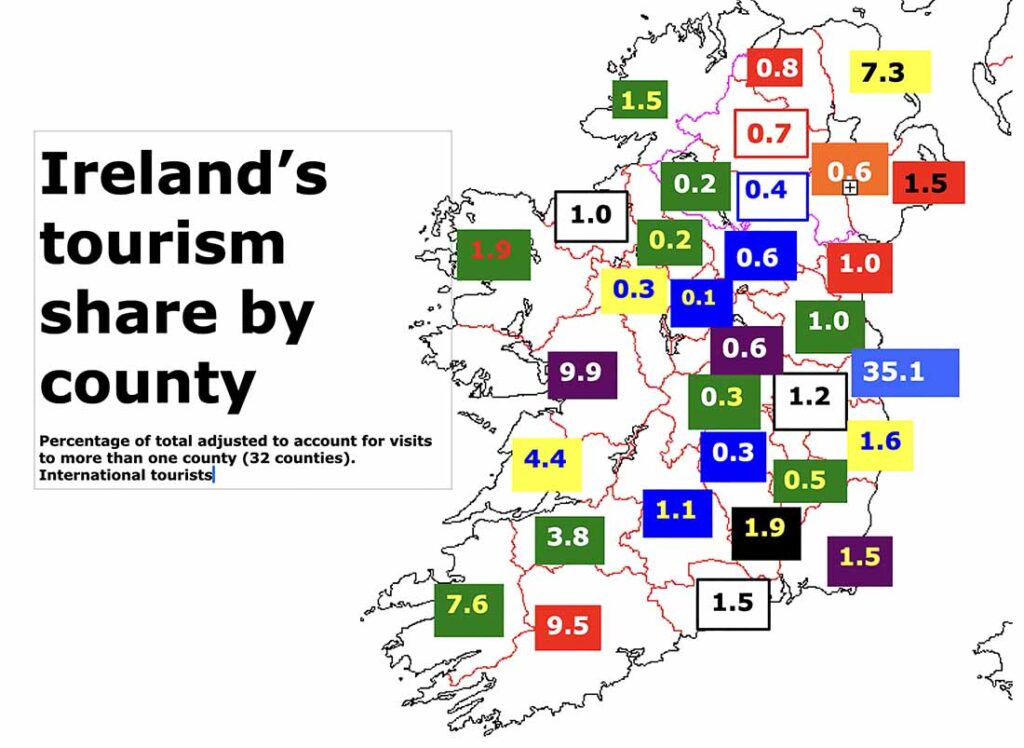
Ireland’s County Armagh is steeped in history and natural beauty, with the Navan Fort, an ancient ceremonial site, offering archaeological intrigue. The Armagh Observatory and Planetarium provide stargazing opportunities, while the city’s two cathedrals reflect its ecclesiastical heritage. Other attractions include the nearby Slieve Gullion Forest Park with its hiking trails and panoramic views. Armagh is Ireland’s fifth smallest county by size (1,253 square km) and tenth largest by population (194,394). Population peaked at 232,393 in 1841 and reached its lowest point, 108,815, in 1937. In terms of hospitality, Armagh is Ireland’s 26th most visited tourist county with around 57,000 international visitors per year.
Introduction – Adventure – Anthem – Archaeology – Attractions – Awards – Birdwatching – Camping – Castles – Churches – Contact list – Cycling – Dining – Equestrian – Festivals – Fishing – Folklore – Gardens – Golf – Graveyards – Happening – Haunted – Highest – Hiking – History – Holy Wells – Hotels – Hotels top 8 – Hunting & shooting – Instagrammable – Itineraries – Largest town – Luxury – MICE – Movies – Music – New – Name – Novelists – Off the beaten track – Poets – Pubs – Quotes – Random Facts – Restaurant Awards – Sacred Places – Saints – Songs – Spas – Sports – Sunsets – Sustainable – Things to do – Towns – Video – Villages – Walking – Wanderlist – Weddings – Wild swimming – Writers – 1837– 1846 – 1852 – 1909 – 1955 – 1980 –