- Navan Centre & Fort: Located just outside Armagh city, Navan Fort (Emain Macha) is one of Ireland’s most significant archaeological sites, once the ancient seat of Ulster’s kings and linked to the legendary warrior Cúchulainn and the goddess Macha. Visitors can explore the Navan Centre, built into a grass bank, which offers interactive exhibits, an audiovisual show about the Ulster Cycle of Cúchulann fame, and a replica Iron Age dwelling. Expect a blend of history, mythology, and hands-on experiences, including Celtic-themed activities like digging in Iron Age herb beds. The fort itself is a large circular mound with scenic views.
- St. Patrick’s Cathedrals (Church of Ireland and Catholic): Armagh, the ecclesiastical capital of Ireland, hosts two cathedrals dedicated to St. Patrick, both offering unique experiences. The Church of Ireland Cathedral, founded by St. Patrick in 445 AD, sits on the Hill of Armagh (Ard Mhacha) and features a medieval crypt with stone carvings and historical artifacts. The Catholic Cathedral, with its twin spires, stands across the valley, offering stunning city views and a serene atmosphere. Visitors can expect guided tours, historical insights, and a sense of spiritual significance, with the Church of Ireland Cathedral charging a small entry fee.
- Armagh Observatory and Planetarium: A leading center for astronomical research, this attraction is a hit with families and space enthusiasts. Visitors can enjoy Full Dome Theatre shows that explore the universe, interactive exhibits showcasing scientific research, and the chance to touch Ireland’s largest meteorite (152kg). The 14-acre Astropark features scale models of the solar system, sundials, and historic telescopes, perfect for a relaxing walk. Pre-booking is recommended for shows and observatory tours. Expect an educational and engaging experience for all ages.
- Armagh County Museum: Located on Armagh’s Georgian tree-lined Mall, this is Ireland’s oldest county museum, opened in 1937. It houses a diverse collection of artifacts, including prehistoric items, military uniforms, ceramics, railway memorabilia, and local art. Visitors can expect to explore centuries of Armagh’s history through engaging displays in a distinctive Greek temple-style building. The museum also serves as a visitor information center, offering maps and local insights. Open Monday to Saturday.
- Slieve Gullion Forest Park and Ring of Gullion: In the south of the county, Slieve Gullion is a scenic mountain within an Area of Outstanding Natural Beauty, surrounded by a unique geological ring dyke. The forest park offers a 10km scenic drive, walking trails, an adventure playpark, and a children’s story trail, “Fionn’s Giant Adventure.” Visitors can climb the mountain for views of the Ring of Gullion, Mourne Mountains, and Cooley Peninsula, or explore Bronze Age cairns and legends tied to Cúchulainn. Expect outdoor adventure and breathtaking scenery.
- Lurgan Park: Ireland’s second-largest public park after Dublin’s Phoenix Park, Lurgan Park surrounds a 59-acre manmade lake with well-maintained paths and green spaces. Visitors can enjoy leisurely walks, rowing boat rentals (£2 per person for 30 minutes), and family-friendly activities. The park is adjacent to Brownlow House, a historic Elizabethan-style mansion with ties to World War I and II, including a room named after General Dwight D. Eisenhower. Expect a relaxing day out with opportunities for picnics and light adventure.
- The Argory: A 1820s Neo-classical gentry house set on a 320-acre wooded estate along the River Blackwater, The Argory is a National Trust property unchanged since 1900. Visitors can take guided tours to explore the MacGeough Bond family’s home, admire sweeping vistas, and stroll through spring bulb gardens or scenic trails. The courtyard features fascinating displays, and there’s a quaint tea room for refreshments. Expect a step back in time with a mix of history and natural beauty.
- Armagh Robinson Library: Established in 1771, this is one of Ireland’s oldest libraries, housing rare books, manuscripts, ancient artifacts, and a first-edition copy of Jonathan Swift’s Gulliver’s Travels with the author’s handwritten script. Located near St. Patrick’s Church of Ireland Cathedral, it offers guided tours by enthusiastic staff, a small children’s area, and accessible facilities. Visitors can expect a cultural and intellectual experience in a beautifully preserved Georgian setting.
- Palace Demesne and Stables Heritage Centre: Set in 300 acres of parkland near Armagh city, the Palace Demesne was the residence of Church of Ireland Archbishops until the 1970s. The restored Georgian stables house a heritage center with lifesize models depicting 18th-century life and a craft shop. Visitors can explore the grounds, formal gardens, and nearby Franciscan Friary ruins, or enjoy guided tours with costumed guides sharing stories of the Archbishop’s palace. Expect a blend of history, architecture, and leisurely walks.
- Lough Neagh Discovery Centre and Oxford Island: Situated on the southern shore of Lough Neagh, Ireland’s largest freshwater lake, this nature reserve offers four miles of footpaths, five birdwatching hides, woodlands, ponds, and wildflower meadows. The Discovery Centre features exhibits on the lake’s history, culture, and wildlife, plus a café and craft shop. Visitors can expect scenic walks, birdwatching, and educational displays, with panoramic lake views..
Attractions
Antrim – Armagh – Carlow – Cavan – Clare – Cork – Derry – Donegal – Down – Dublin – Fermanagh – Galway – Kerry – Kildare – Kilkenny – Laois – Leitrim – Limerick – Longford – Louth\ – Mayo – Meath – Monaghan – Offaly – Roscommon – Sligo – Tipperary – Tyrone – Waterford – Westmeath – Wexford – Wicklow
County Armagh:
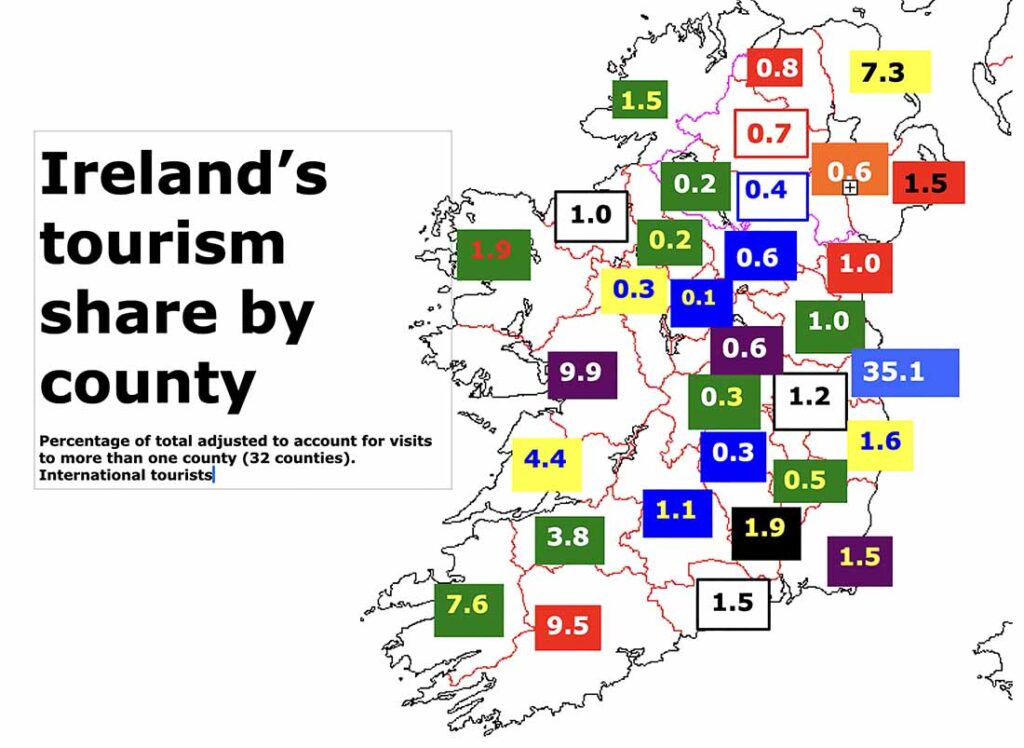
Ireland’s County Armagh is steeped in history and natural beauty, with the Navan Fort, an ancient ceremonial site, offering archaeological intrigue. The Armagh Observatory and Planetarium provide stargazing opportunities, while the city’s two cathedrals reflect its ecclesiastical heritage. Other attractions include the nearby Slieve Gullion Forest Park with its hiking trails and panoramic views. Armagh is Ireland’s fifth smallest county by size (1,253 square km) and tenth largest by population (194,394). Population peaked at 232,393 in 1841 and reached its lowest point, 108,815, in 1937. In terms of hospitality, Armagh is Ireland’s 26th most visited tourist county with around 57,000 international visitors per year.
Introduction – Adventure – Anthem – Archaeology – Attractions – Awards – Birdwatching – Camping – Castles – Churches – Contact list – Cycling – Dining – Equestrian – Festivals – Fishing – Folklore – Gardens – Golf – Graveyards – Happening – Haunted – Highest – Hiking – History – Holy Wells – Hotels – Hotels top 8 – Hunting & shooting – Instagrammable – Itineraries – Largest town – Luxury – MICE – Movies – Music – New – Name – Novelists – Off the beaten track – Poets – Pubs – Quotes – Random Facts – Restaurant Awards – Sacred Places – Saints – Songs – Spas – Sports – Sunsets – Sustainable – Things to do – Towns – Video – Villages – Walking – Wanderlist – Weddings – Wild swimming – Writers – 1837– 1846 – 1852 – 1909 – 1955 – 1980 –