- Gosford Castle: Gosford Castle, located in Markethill, is a 19th-century country house designed in the Norman Revival style by architect Thomas Hopper for the 2nd Earl of Gosford. Construction began in 1819 and was completed in the 1850s. It is one of the largest castles in Ireland, featuring over 150 rooms, a three-story keep, and a massive round tower with a circular drawing room. The castle’s granite structure and neo-Norman details, such as machicolated towers, give it a striking medieval appearance, though it was built as a residence rather than a defensive fortress. It has a varied history, including use as a military barracks, a circus winter quarters, and a Public Record Office store. It also appeared in HBO’s Game of Thrones as a filming location. The castle is not fully open to the public as a traditional tourist attraction, as parts of it have been converted into private residences and apartments. However, its grounds, Gosford Forest Park, are accessible and popular for outdoor activities. Visitors can explore the expansive 590-acre Gosford Forest Park, which offers walking trails, picnic areas, and a chance to view the castle’s exterior. The park is family-friendly, with a deer enclosure, play areas, and cycling paths. Occasionally, guided tours or events may be available, but access to the castle’s interior is limited due to its private status. Check with local tourism boards or visitarmagh.com for any special openings or events. The castle’s imposing Norman-style architecture, the scenic forest park, and its Game of Thrones connection make it a draw for history and pop culture enthusiasts. The dining room, with Armagh marble pilasters, is noted for its aesthetic appeal if interior access is granted. The castle’s condition has fluctuated, with periods of neglect, so visitors should verify current access details before planning a visit.
- Moyry Castle: Moyry Castle, located near Jonesborough in South Armagh, is a small, 17th-century tower house built in 1601 by Lord Mountjoy during the Nine Years’ War to secure the Gap of the North, a strategic pass between Dublin and Ulster. This three-story structure, made of granite, features a rectangular design with a single rounded corner turret. It was a key military outpost, equipped with musket loops for defense, and is one of the few surviving castles from this period in Armagh. Its isolated location near the border adds to its historical intrigue, set against the backdrop of the Ring of Gullion. The castle is a state-care monument managed by the NI Environment Agency, open to the public with free access, though it is relatively remote. Visitors can explore the castle ruins, which are compact but evocative of early modern military architecture. The site offers a glimpse into Ireland’s turbulent past, particularly the conflicts of the early 17th century. The surrounding Ring of Gullion Area of Outstanding Natural Beauty provides scenic hiking opportunities, with trails leading to Slieve Gullion’s summit, where panoramic views of nine counties await. The castle’s stark, functional design, its historical role in controlling a key pass, and the nearby Slieve Gullion Forest Park make it appealing for history buffs and nature lovers. There are no formal facilities on-site, so visitors should come prepared for a self-guided experience. The castle is small and in ruins, so expect a brief visit unless combining it with hiking in the Ring of Gullion.
- Tandragee Castle: Tandragee Castle, located in the town of Tandragee, is a 19th-century baronial-style castle built around 1837 by the 6th Duke of Manchester. It replaced an earlier structure and was later converted into a potato crisp factory in the 1950s, reflecting its varied use over time. The castle is situated on a steep hill along the Cusher River, giving it a commanding presence in the town. While not a medieval castle, its Gothic and baronial architectural elements make it a notable landmark in County Armagh. The castle is privately owned and not generally open to the public as a tourist attraction. It is currently used by Tayto, a well-known crisp manufacturer, as part of their factory operations. Visitors cannot tour the castle’s interior, but the exterior can be admired from Tandragee’s main street, which curves up the hill toward the castle. The town itself offers a charming setting with local shops and eateries, and the castle’s imposing silhouette adds to the area’s historical ambiance. Nearby, visitors can explore other local attractions like the Tayto factory shop for a quirky connection to the castle’s modern use. The castle’s baronial architecture and its unusual history as a crisp factory make it a point of interest for those exploring Tandragee. The surrounding area, with its river and historical street layout, adds to the experience. Since access is restricted, visitors should focus on the castle’s exterior and combine a visit with other local attractions like the Cusher River walkways.
- Aghayalloge Cashel: Aghayalloge Cashel, located in the parish of Killevy, is an early stone fortification, likely dating to the early medieval period. This circular stone enclosure, built with granite boulders, is a type of cashel (a stone ringfort) rather than a traditional castle. It features walls up to 1 meter high and varying in thickness from 1.2 to 3.4 meters. While not a castle in the medieval sense, it represents an early defensive structure associated with ancient Gaelic society and is included here for its historical significance in County Armagh.
- isitor Expectations: The cashel is a ruin and part of the NI Sites and Monuments Record (NISMR), accessible to visitors interested in archaeological sites. Visitors can explore the low, circular stone walls, which offer a tangible connection to early Irish fortifications. The site is remote and lacks formal visitor facilities, so it appeals to those interested in archaeology or off-the-beaten-path exploration. The surrounding Orior Upper barony provides a rugged, rural setting for a quiet visit. The cashel’s simplicity and age provide a stark contrast to later castles, offering insight into pre-Norman defensive structures. Its location near Killevy allows for combination with visits to other historical sites, such as the nearby Killevy Churches. This is a niche site for those with a specific interest in early Irish history, and visitors should be prepared for minimal signage and a self-guided experience.
Visitor Expectations
- Access and Facilities: County Armagh’s castles and fortifications vary in accessibility. Gosford Castle’s grounds are the most developed for visitors, with Gosford Forest Park offering amenities like parking, trails, and picnic areas. Moyry Castle and Aghayalloge Cashel are more remote, with no on-site facilities, requiring visitors to be self-sufficient. Tandragee Castle’s private status limits exploration to its exterior.
- Armagh’s castles reflect a range of periods, from early medieval (Aghayalloge Cashel), early modern (Moyry Castle), to 19th-century romanticism (Gosford and Tandragee). Visitors should expect a mix of ruinous and repurposed structures, with Gosford offering the most visually striking architecture.
- Activities: Beyond the castles, Armagh offers complementary attractions like Navan Fort, a significant Iron Age site with a visitor center, and the two St. Patrick’s Cathedrals, which enhance the historical experience. The county’s apple orchards and food/cider festivals add a cultural dimension.
- Practical Tips: Check opening times and access restrictions, especially for Gosford and Tandragee, as they are not fully public. Moyry and Aghayalloge are free to visit but require navigation to remote locations. Visitarmagh.com is a reliable resource for planning.
Castles
Antrim – Armagh – Carlow – Cavan – Clare – Cork – Derry – Donegal – Down – Dublin – Fermanagh – Galway – Kerry – Kildare – Kilkenny – Laois – Leitrim – Limerick – Longford – Louth – Mayo – Meath – Monaghan – Offaly – Roscommon – Sligo – Tipperary – Tyrone – Waterford – Westmeath – Wexford – Wicklow
County Armagh:
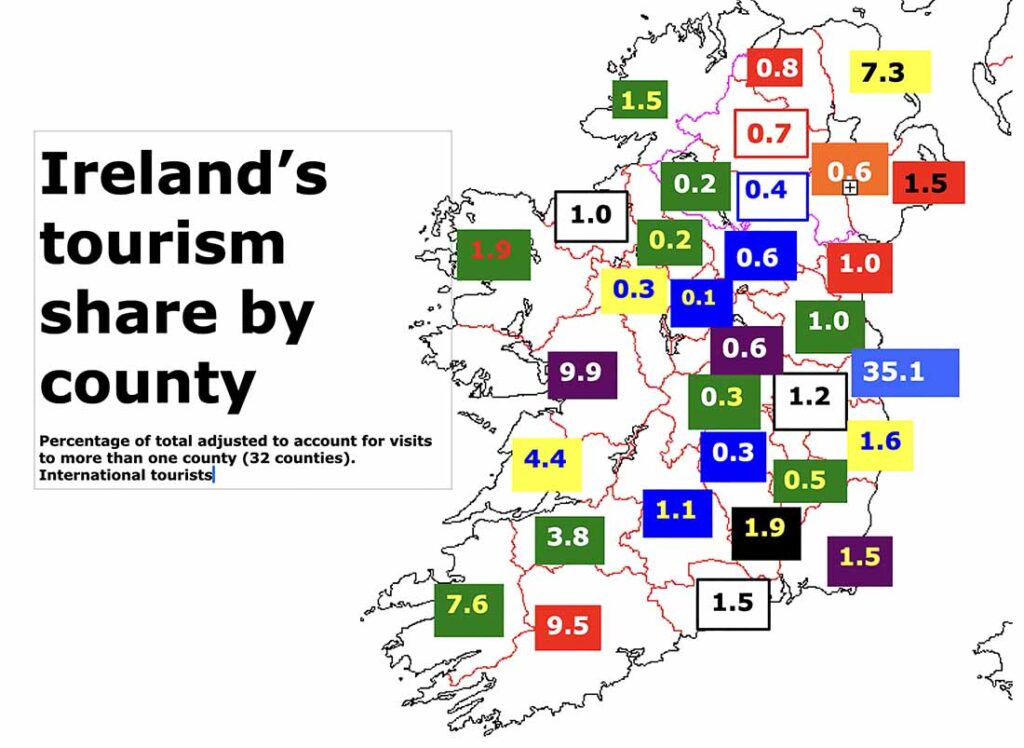
Ireland’s County Armagh is steeped in history and natural beauty, with the Navan Fort, an ancient ceremonial site, offering archaeological intrigue. The Armagh Observatory and Planetarium provide stargazing opportunities, while the city’s two cathedrals reflect its ecclesiastical heritage. Other attractions include the nearby Slieve Gullion Forest Park with its hiking trails and panoramic views. Armagh is Ireland’s fifth smallest county by size (1,253 square km) and tenth largest by population (194,394). Population peaked at 232,393 in 1841 and reached its lowest point, 108,815, in 1937. In terms of hospitality, Armagh is Ireland’s 26th most visited tourist county with around 57,000 international visitors per year.
Introduction – Adventure – Anthem – Archaeology – Attractions – Awards – Birdwatching – Camping – Castles – Churches – Contact list – Cycling – Dining – Equestrian – Festivals – Fishing – Folklore – Gardens – Golf – Graveyards – Happening – Haunted – Highest – Hiking – History – Holy Wells – Hotels – Hotels top 8 – Hunting & shooting – Instagrammable – Itineraries – Largest town – Luxury – MICE – Movies – Music – New – Name – Novelists – Off the beaten track – Poets – Pubs – Quotes – Random Facts – Restaurant Awards – Sacred Places – Saints – Songs – Spas – Sports – Sunsets – Sustainable – Things to do – Towns – Video – Villages – Walking – Wanderlist – Weddings – Wild swimming – Writers – 1837– 1846 – 1852 – 1909 – 1955 – 1980 –