- Armagh cathedral (Church of Ireland cathedral): Brian Boroime (d1014), Brian Boru, who won the High Kingship of Ireland form the House of Niall but died fighting the Vikings at the Battle of Clintarf, His rremains, it is said, were borne to the Cathedral of Armagh by his whole army where it lay in state in the Cathedral for twelve days before burial.
- Armagh cathedral (Church of Ireland cathedral): Máel Sechnaill II (Máel Sechnaill mac Domnaill), High King of Ireland who died on September 2, 1022, he both preceded and anteceded Brian Boru as High King.
- Armagh (St Patrick’s Cathedral): Tomás Ó Fiaich (1923–1990) Prominent Catholic cardinal and archbishop of Armagh (1977–1990), scholar of Irish history and language, and key figure in the Irish church during the Troubles. Born in Cullyhanna, Co. Armagh; buried in the cathedral grounds.
- Armagh (St Patrick’s Cathedral): William Crolly (1780–1849) St. Patrick’s Catholic Cathedral Graveyard, Armagh City Catholic Archbishop of Armagh and Primate of All Ireland, who laid the foundation stone for St. Patrick’s Catholic Cathedral in 1840. A key figure in 19th-century Irish Catholicism, he oversaw the cathedral’s early construction and was a prominent religious leader during a time of social upheaval.
- Armagh cathedral (Church of Ireland cathedral): Marcus Gervais Beresford (1801–1885), Church of Ireland archbishop of Armagh and primate of all Ireland (1862–1885), influential in ecclesiastical reforms and education.
- Armagh cathedral (Church of Ireland cathedral): graveyard, Armagh City. This is the burial site of several notable Archbishops of Armagh, including James Ussher, the renowned 17th-century theologian and scholar famous for his biblical chronology that dated creation to 4004 BC,
- St Malachy’s Cemetery in Whitecros: Majella O’Hare, 12 year old girl shot in the back by a British paratrooper, Pvt. Michael Williams, while walking to morning in August 1976.
- Shankill Graveyard, Lurgan, John B, Magennis, the prominent United Irishman and rebel commander in Armagh during the 1798 Rebellion,
- Shankill Graveyard, Lurgan, Famous grave of Marjorie McCall ,“Lived Once, Buried Twice.”, allegedly buried prematurely only to be revived when someone tried to steal a ring from her finger. The story and the grave are both fabrications. In the 19th century, monumental sculptor Charles Harkin, (whose family gave their name to Harkin’s Court on William Street), was permitted to erect the stone in Shankill cemetery as a tourist attraction.. The “Lady with the Ring” is a well travelled folktale about premature burial from European folklore. Versions of the story were popular throughout Europe in the 14th through the 19th centuries (see the Aarne-Thompson-Uther Index (ATU) type 990, “revived from apparent death”). It is the only undated stone in the cemetery.
- Saint Mark’s Church, Armagh City, John G, Beresford, the influential 19th-century Archbishop of Armagh and Primate of All Ireland, is buried in the church vault,
- Ballymoyer Old Churchyard, near Whitecross, William C, C, MacCormac, the pioneering and celebrated British surgeon who served as President of the Royal College of Surgeons,
- Derrynoose Old Churchyard, near Keady, Art Mac Cumhaigh (Art McCooey), one of the last great poets of the traditional Gaelic bardic school in Ulster,
- Mullavilly Parish Churchyard, near Tandragee, Henry Munro, the United Irishman and commander of the rebel forces at the Battle of Ballinahinch in 1798,
- Saint Patrick’s Cathedral (Church of Ireland), Armagh City, John Bramhall, the 17th-century Anglican theologian and Bishop of Derry who was born in Cavan,
- Creggan churchyard, Co. Armagh Art Mac Cumhaigh (MacCooey) (c.1738–1773): Renowned 18th-century Gaelic poet and bard from south Armagh, celebrated for his lyrical and patriotic verse in Irish, including works set in the local landscape. Buried in (a historic graveyard that inspired some of his poetry).
- Mullaghbawn cemetery, Co. Armagh : Arthur Bennett (Art Mac Bionaid) (c.1793–1879), Gaelic poet and scribe from the Forkhill area, known for preserving and composing traditional Irish verse in the 19th century.
List of Graveyards in Armagh
Acton Graveyard, Aghagallon (Rock Lane Graveyard), Armagh (St. Mark’s Church of Ireland Graveyard), Armagh (St. Patrick’s RC Cathedral Cemetery), Ballinabeck Graveyard (Ballymore Parish), Ballymacnab (St. Patrick’s RC Churchyard), Ballymore Parish (St. Mark’s Churchyard, Tandragee), Ballymoyer (St. Luke’s Churchyard), Bessbrook (Christ Church Graveyard), Bessbrook (Friends Quaker Burial Ground), Blackwatertown (St. Patrick’s RC Churchyard), Camlough (St. Malachy’s RC Churchyard), Carrickcroppan Graveyard, Charlemont Graveyard, Clady (St. Michael’s RC Churchyard), Clare Presbyterian Churchyard, Clonmain Graveyard, Creggan Parish Churchyard, Crossmaglen (St. Patrick’s RC Cemetery), Cullyhanna (St. Patrick’s Cemetery), Derryadd Graveyard, Derrynoose (St. Joseph’s RC Churchyard), Drumcree (St. John’s Churchyard), Drumnakelly Graveyard, Eglish (St. Mary’s RC Churchyard), Forkhill (St. Peter’s RC Churchyard), Glasdrumman (St. Mary’s RC Churchyard), Grange (Holy Trinity Churchyard), Jonesborough (St. Mary’s RC Churchyard), Kilcluney Graveyard, Killevy Old Churchyard, Killylea (St. Mark’s Churchyard), Kilmore (St. Aidan’s Churchyard), Lislooney Presbyterian Churchyard, Lisnadill Graveyard, Loughgall (Old Churchyard), Loughgall (St. Luke’s Churchyard), Loughgilly (St. Patrick’s Churchyard), Lurgan (Dougher Cemetery), Lurgan (Shankill Cemetery), Lurgan (St. Columba’s Churchyard), Lynastown Quaker Burial Ground (1658–1993), Markethill (St. John’s Churchyard), Middletown (St. John’s RC Churchyard), Milltown Graveyard (Tartaraghan), Moy (St. John’s Churchyard), Moyraverty Graveyard, Mullabrack (St. John’s Churchyard), Mullaglass Graveyard, Mullavilly (St. Patrick’s Churchyard), Newry (St. Mary’s RC Cemetery), Newry (St. Patrick’s Church of Ireland Graveyard), Old Tassagh Graveyard (Keady), Portadown (Seagoe Cemetery), Portadown (St. Mark’s Churchyard), Richhill (Old Presbyterian Churchyard), Richhill (St. Matthew’s Churchyard), Seagoe (Lynastown Burial Ground), Seagoe (St. Gobhan’s Churchyard), Tartaraghan (St. Paul’s Churchyard), Tynan (St. Vindic’s Churchyard)
Graveyards
Antrim – Armagh – Carlow – Cavan – Clare – Cork – Derry – Donegal – Down – Dublin – Fermanagh – Galway – Kerry – Kildare –Kilkenny – Laois – Leitrim – Limerick – Longford – Louth – Mayo – Meath – Monaghan – Offaly – Roscommon – Sligo – Tipperary – Tyrone – Waterford – Westmeath – Wexford – Wicklow
County Armagh:
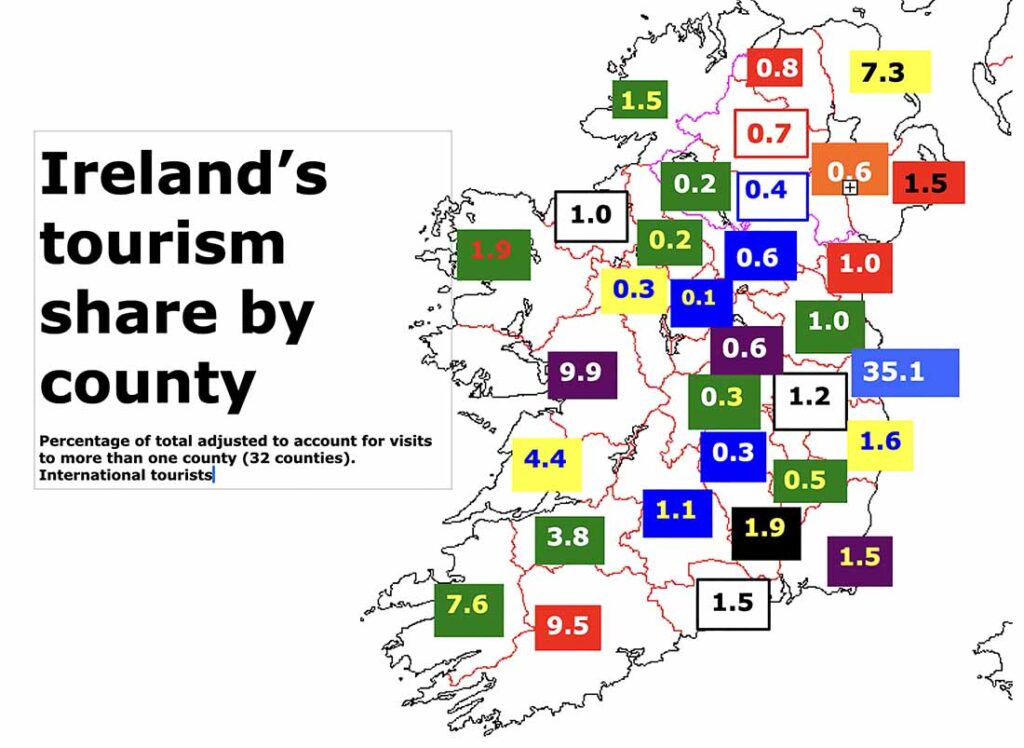
Ireland’s County Armagh is steeped in history and natural beauty, with the Navan Fort, an ancient ceremonial site, offering archaeological intrigue. The Armagh Observatory and Planetarium provide stargazing opportunities, while the city’s two cathedrals reflect its ecclesiastical heritage. Other attractions include the nearby Slieve Gullion Forest Park with its hiking trails and panoramic views. Armagh is Ireland’s fifth smallest county by size (1,253 square km) and tenth largest by population (194,394). Population peaked at 232,393 in 1841 and reached its lowest point, 108,815, in 1937. In terms of hospitality, Armagh is Ireland’s 26th most visited tourist county with around 57,000 international visitors per year.
Introduction – Adventure – Anthem – Archaeology – Attractions – Awards – Birdwatching – Camping – Castles – Churches – Contact list – Cycling – Dining – Equestrian – Festivals – Fishing – Folklore – Gardens – Golf – Graveyards – Happening – Haunted – Highest – Hiking – History – Holy Wells – Hotels – Hotels top 8 – Hunting & shooting – Instagrammable – Itineraries – Largest town – Luxury – MICE – Movies – Music – New – Name – Novelists – Off the beaten track – Poets – Pubs – Quotes – Random Facts – Restaurant Awards – Sacred Places – Saints – Songs – Spas – Sports – Sunsets – Sustainable – Things to do – Towns – Video – Villages – Walking – Wanderlist – Weddings – Wild swimming – Writers – 1837– 1846 – 1852 – 1909 – 1955 – 1980 –