- Dublin in the Rare Ould Times: A nostalgic ballad lamenting the transformation of Dublin City, particularly the loss of its historic communities and landmarks like the Liberties and Moore Street to modern development. It evokes pride in Dublin’s past and sorrow for its changing character. Written by Pete St. John, written in the 1970s; popularized by The Dubliners.
- Raglan Road: A poetic love song set on Raglan Road in Dublin’s Ballsbridge, capturing a fleeting romance with a woman, inspired by poet Patrick Kavanagh’s own experience. It reflects Dublin’s literary heritage and romantic urban atmosphere. Written by Patrick Kavanagh (lyrics, originally a poem, 1946); set to the traditional tune The Dawning of the Day by Luke Kelly of The Dubliners.
- The Foggy Dew: A republican ballad set during the 1916 Easter Rising in Dublin, focusing on the fight for independence at key city locations like the General Post Office. It celebrates Dublin’s revolutionary spirit and sacrifice. Written by Canon Charles O’Neill, written in 1919; often performed by The Dubliners and Sinéad O’Connor.
- Summer in Dublin: A modern pop song capturing the vibrancy of Dublin City in summer, with references to its streets, pubs, and youthful energy. It celebrates the city’s contemporary culture and social life. Written by Liam Reilly, written for Bagatelle in 1980.
- The Auld Triangle: A folk song set in Mountjoy Prison, Dublin, depicting the harsh life of prisoners and the sound of the prison bell. It reflects the city’s historical underbelly and working-class struggles. Written by Brendan Behan, written for his play The Quare Fellow (1954); popularized by The Dubliners.
- Molly Malone: A traditional anthem of Dublin, telling the story of a fictional fishmonger selling cockles and mussels on the city’s streets, particularly around Grafton Street and Trinity College. It embodies Dublin’s street culture and folklore. Traditional; officially adopted as Dublin’s anthem in 1988.
- Ringsend Rose: A sentimental song about a woman from Ringsend, a historic Dublin dockland community, celebrating her beauty and the pride of the city’s working-class neighborhoods. Written by Pete St. John, written in the 1980s; performed by artists like Finbar Furey.
- The Ferryman: A folk song set along Dublin’s River Liffey, telling the story of a ferryman’s love and life in the city’s docklands. It captures Dublin’s maritime heritage and the charm of its river communities. Written by Pete St. John, written in the 1980s; popularized by The Dublin City Ramblers.
- North Wall Quay: A song reflecting on Dublin’s North Wall Quay, a historic dockland area, and the lives of its working-class residents. It evokes the city’s industrial past and community resilience. Traditional; part of Dublin’s folk tradition.
- Finglas Boys: A modern folk song celebrating the community spirit of Finglas, a north Dublin suburb, focusing on its working-class identity and local pride. It reflects the county’s diverse urban neighborhoods. Written by Attributed to local Dublin musicians.; performed at community events.
Songs
Antrim – Armagh – Carlow – Cavan – Clare – Cork – Derry – Donegal – Down – Dublin – Fermanagh – Galway – Kerry – Kildare – Kilkenny – Laois – Leitrim – Limerick – Longford – Louth – Mayo – Meath – Monaghan – Offaly – Roscommon – Sligo – Tipperary – Tyrone – Waterford – Westmeath – Wexford – Wicklow
County Anthem
Antrim – Armagh – Carlow – Cavan – Clare – Cork – Derry – Donegal – Down – Dublin – Fermanagh – Galway – Kerry – Kildare – Kilkenny – Laois – Leitrim – Limerick – Longford – Louth – Mayo – Meath – Monaghan – Offaly – Roscommon – Sligo – Tipperary – Tyrone – Waterford – Westmeath – Wexford – Wicklow
County Dublin:
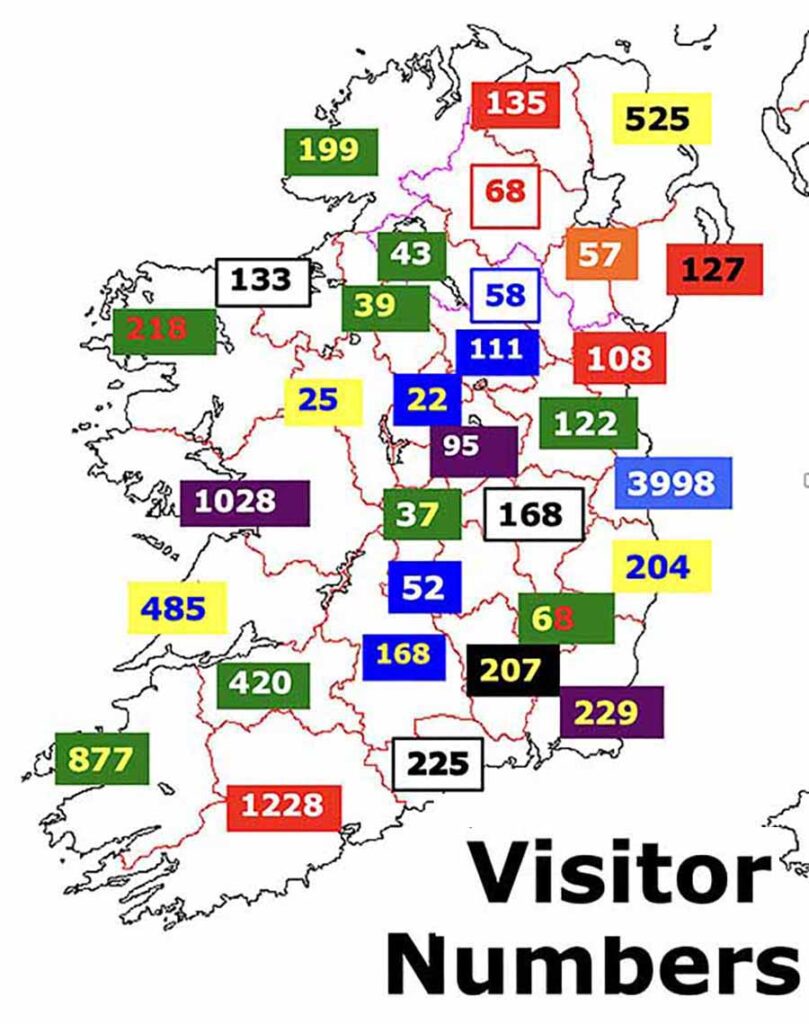
Ireland’s county Dublin combines cultural heritage with urban appeal, with Trinity College’s Book of Kells and Dublin Castle offering historical depth. The Guinness Storehouse provides a journey through Ireland’s iconic stout, while Phoenix Park’s vast green spaces are ideal for cycling. The River Liffey’s scenic walks and Kilmainham Gaol’s historical tours make Dublin a versatile destination for culture and history. Dublin is Ireland’s third smallest county by size (922 square km) and largest by population (1,458,154). Dublin is also Ireland’s most visited tourist county by a margin, with around four million international visitors per year. In terms of hospitality,
Introduction – Adventure – Anthem – Archaeology – Attractions – Awards – Birdwatching – Camping – Castles – Churches – Contact list – Cycling – Dining – Equestrian – Festivals – Fishing – Folklore – Gardens – Golf – Graveyards – Happening – Haunted – Highest – Hiking – History – Holy Wells – Hotels – Hotels top 8 – Hunting & shooting – Instagrammable – Itineraries – Largest town – Luxury – MICE – Movies – Music – New – Name – Novelists – Off the beaten track – Poets – Pubs – Quotes – Random Facts – Restaurant Awards – Sacred Places – Saints – Songs – Spas – Sports – Sunsets – Sustainable – Things to do – Towns – Video – Villages – Walking – Wanderlist – Weddings – Wild swimming – Writers – 1837 – 1846 – 1852 – 1909 – 1955 – 1980 –