- Saint Brigid’s Well, Clondalkin: Pattern day: February 1 (Saint Brigid’s Day), though active patterns have faded. Located near Clondalkin’s round tower, this well is dedicated to Saint Brigid, Ireland’s patroness. Historically used for healing headaches and fertility issues, pilgrims performed rounds and left clooties (rags) on nearby trees. Now surrounded by modern housing, the well is maintained but less visited, preserving its quiet sanctity. Clondalkin, Co. Dublin.
- Saint Patrick’s Well, Trinity College, Dublin: Pattern day: March 17 (Saint Patrick’s Day), historically significant but no longer observed. Beneath Trinity College’s campanile, this well is linked to Saint Patrick, who reputedly baptized converts here in the 5th century. Used for spiritual blessings, it was a key early Christian site. Now inaccessible due to urban development, its historical importance endures in Dublin’s Christian narrative. Trinity College, Dublin City, Co. Dublin.
- Saint Anne’s Well, Raheny: Pattern day: July 26 (Saint Anne’s Day), with past community gatherings. Near Raheny’s All Saints Church, this well is dedicated to Saint Anne, mother of the Virgin Mary. Known for curing skin ailments, pilgrims performed rounds and left offerings like coins or ribbons. Enclosed in a stone structure, it’s now part of a park but retains local reverence, though patterns have ceased. Raheny, Co. Dublin.
- Saint Columba’s Well, Swords: Pattern day: June 9 (Saint Columba’s Day), though patterns are no longer active. Near Swords’ historic round tower, this well is linked to Saint Columba (Colmcille). Used for general healing, pilgrims recited prayers and left clooties. Now overshadowed by suburban growth, the well is maintained by local efforts, reflecting Swords’ monastic past, but it’s rarely visited for devotion. Swords, Co. Dublin.
- Tobar na Súl, Lucan: Pattern day: Unknown, possibly tied to Lughnasa (August 1) or summer gatherings. Known as the “Eye Well,” this well in Lucan was famed for curing eye ailments. Pilgrims bathed their eyes with the water and tied clooties to nearby bushes, believing ailments would fade as the rags decayed. Its rural origins are now encroached by suburbia, making it a hidden gem. Lucan, Co. Dublin.
- Saint Mochua’s Well, Tallaght: Pattern day: August 3 (Saint Mochua’s Day), though records of patterns are scarce. Near Tallaght’s Dominican priory, this well is dedicated to Saint Mochua, a 6th-century saint. Used for healing joint pain, pilgrims performed rounds and left offerings like coins. Now in a modernized area, the well is less prominent but holds historical significance for Tallaght’s monastic heritage. Tallaght, Co. Dublin.
- Our Lady’s Well, Santry: Pattern day: August 15 (Feast of the Assumption), with past local devotions. Dedicated to the Blessed Virgin Mary, this well in Santry was used for spiritual blessings and women’s health. Pilgrims performed rounds, recited the Rosary, and left candles or ribbons. Enclosed in a small grotto, it’s maintained but sees little pilgrimage due to urban surroundings. Santry, Co. Dublin.
- Saint Canice’s Well, Finglas: Pattern day: October 11 (Saint Canice’s Day), though patterns have lapsed. Linked to Saint Canice, this well in Finglas was used for healing, particularly skin conditions. Pilgrims performed rounds and left offerings like rosaries or cloths. Now near a housing estate, the well is preserved but largely forgotten, reflecting Finglas’ early Christian roots. Finglas, Co. Dublin.
- Tobar na nGealt, Near Skerries: Pattern day: Unknown, possibly linked to summer festivals or local saint’s days. The “Well of the Insane” near Skerries was believed to cure mental illnesses, tied to ancient Otherworldly beliefs. Pilgrims performed rounds, recited prayers, and left clooties. Its coastal location and specialized healing focus make it obscure but significant, though now neglected. Near Skerries, Co. Dublin.
- Saint Sylvester’s Well, Malahide: Pattern day: December 31 (Saint Sylvester’s Day), though patterns are not recorded. Dedicated to Saint Sylvester, this well near Malahide Castle was used for general healing. Pilgrims performed rounds and left offerings like coins or medals. Now part of a landscaped estate, the well is maintained as a historical feature but sees little devotional activity. Malahide, Co. Dublin.
- Tobar na Baiste, Near Balbriggan: Pattern day: June 24 (Saint John the Baptist’s Day), likely a historical focus. Known as the “Well of Baptism,” this well near Balbriggan was used for early Christian baptisms and to aid children’s ailments. Pilgrims performed rounds and used the water for purification, leaving tokens like coins. Its rural setting is now near suburban sprawl, making it less visited. Near Balbriggan, Co. Dublin.
- Saint Doulagh’s Well, Balgriffin: Pattern day: Unknown, possibly tied to Saint Doulagh’s feast day (November 17). Near Saint Doulagh’s Church, Ireland’s oldest stone-roofed church, this well is linked to a 7th-century hermit. Housed in a unique octagonal baptistery, it was used for healing and baptisms. Pilgrims performed rounds and left offerings. The well’s architectural significance keeps it a heritage site, though devotional use has declined. Balgriffin, Co. Dublin.
Holy Wells
Antrim – Armagh – Carlow – Cavan – Clare – Cork – Derry – Donegal – Down – Dublin – Fermanagh – Galway – Kerry – Kildare – Kilkenny – Laois – Leitrim – Limerick – Longford – Louth – Mayo – Meath – Monaghan – Offaly – Roscommon – Sligo – Tipperary – Tyrone – Waterford – Westmeath – Wexford – Wicklow
Sacred Places
Antrim – Armagh – Carlow – Cavan – Clare – Cork – Derry – Donegal – Down – Dublin – Fermanagh – Galway – Kerry – Kildare – Kilkenny – Laois – Leitrim – Limerick – Longford – Louth – Mayo – Meath – Monaghan – Offaly – Roscommon – Sligo – Tipperary – Tyrone – Waterford – Westmeath – Wexford – Wicklow
County Dublin:
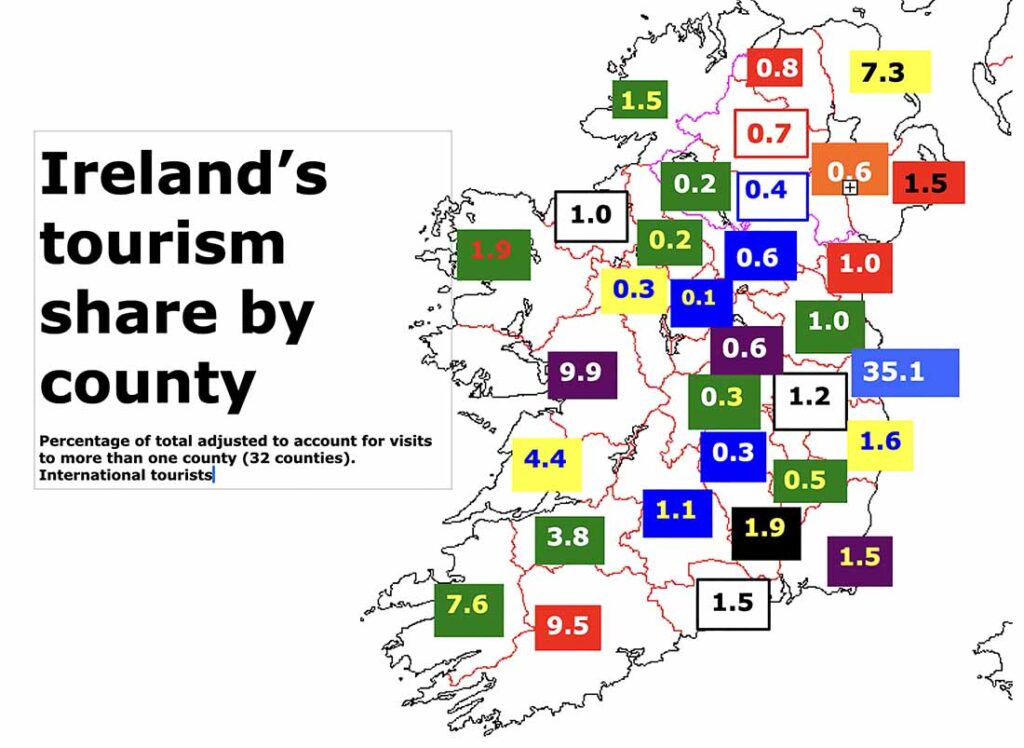
Ireland’s county Dublin combines cultural heritage with urban appeal, with Trinity College’s Book of Kells and Dublin Castle offering historical depth. The Guinness Storehouse provides a journey through Ireland’s iconic stout, while Phoenix Park’s vast green spaces are ideal for cycling. The River Liffey’s scenic walks and Kilmainham Gaol’s historical tours make Dublin a versatile destination for culture and history. Dublin is Ireland’s third smallest county by size (922 square km) and largest by population (1,458,154). Dublin is also Ireland’s most visited tourist county by a margin, with around four million international visitors per year. In terms of hospitality,
Introduction – Adventure – Anthem – Archaeology – Attractions – Awards – Birdwatching – Camping – Castles – Churches – Contact list – Cycling – Dining – Equestrian – Festivals – Fishing – Folklore – Gardens – Golf – Graveyards – Happening – Haunted – Highest – Hiking – History – Holy Wells – Hotels – Hotels top 8 – Hunting & shooting – Instagrammable – Itineraries – Largest town – Luxury – MICE – Movies – Music – New – Name – Novelists – Off the beaten track – Poets – Pubs – Quotes – Random Facts – Restaurant Awards – Sacred Places – Saints – Songs – Spas – Sports – Sunsets – Sustainable – Things to do – Towns – Video – Villages – Walking – Wanderlist – Weddings – Wild swimming – Writers – 1837 – 1846 – 1852 – 1909 – 1955 – 1980 –