- Dublin Castle: Located in the heart of Dublin City off Dame Street, Dublin Castle is a 13th-century fortress built in 1204 on the orders of King John of England. Originally a defensive structure with a moat, it evolved into the seat of colonial until 1922. Today, it’s a government complex and major tourist attraction, featuring Norman towers, Gothic chapels, and Georgian state apartments. Its history spans Viking origins, medieval sieges, and its role in Irish independence. Open year-round, managed by the Office of Public Works, with guided and self-guided tours. Visitors can explore the State Apartments, Viking Excavation, and medieval Record Tower via guided tours (€12 adults, €8 seniors/students, €4 children). Highlights include the Throne Room, St. Patrick’s Hall, and underground Viking remains. Self-guided tours (€8 adults) cover the grounds and select areas. The Dubh Linn Gardens, Chester Beatty Library (free entry), and café enhance the visit. Expect 1-2 hours, with guided tours offering deeper historical insights. The castle hosts events like concerts and exhibitions, so check schedules. The blend of medieval and Georgian architecture, rich political history, and central location make it a must-visit. The Chester Beatty’s world-class art collection is a bonus. Book guided tours in advance during peak seasons (heritageireland.ie). Accessibility is good, but some areas involve stairs.
- Malahide Castle: Situated in Malahide, 14 km north of Dublin City, Malahide Castle is a 12th-century fortress built around 1185 by the Talbot family, who resided there for nearly 800 years until 1975. Set on 260 acres, it’s one of Ireland’s oldest continuously inhabited castles, featuring a medieval keep, Gothic interiors, and a walled garden. Its history includes Cromwellian sieges and ghostly tales, with five resident spirits adding mystique. Open year-round, managed by Shannon Heritage, with guided tours and park access. Guided tours (€15 adults, €10 seniors/students, €6.50 children) explore the castle’s opulent rooms, showcasing period furniture, portraits, and tales of the Talbots and their ghosts. The 22-acre gardens, including a butterfly house and walled garden, are a highlight, with fairy trails for families. A visitor center, Avoca café, and gift shop are on-site. The estate offers playgrounds and sports facilities. Allow 2-3 hours, easily accessible via DART train from Dublin (Malahide Station). Combine with Malahide village’s seaside charm. The castle’s intact interiors, extensive gardens, and family-friendly activities make it ideal for history buffs and casual visitors. The ghost stories add intrigue. Pre-book tours online (malahidecastleandgardens.ie), especially in summer. The castle is wheelchair-accessible on the ground floor.
- Swords Castle: Located in Swords, 13 km north of Dublin City, Swords Castle is a 12th-century Norman fortress built around 1200 by John Comyn, the first Archbishop of Dublin. Originally an ecclesiastical manor, it features a pentagonal curtain wall, a chapel, and a great hall, unique for its non-military design. Partially restored, it reflects Dublin’s Anglo-Norman heritage and is surrounded by a historic town. Open seasonally (typically April-October), managed by Fingal County Council, with free or low-cost guided tours. Visitors can join guided tours (check fingal.ie for schedules, ~€5) to explore the castle’s restored chapel, knights’ quarters, and battlements. The grounds are open year-round for free, offering a peaceful setting with views of the Ward River. No on-site café, but Swords town has dining options. The castle’s ongoing restoration means some areas may be restricted. Allow 1-1.5 hours, ideal for a half-day trip with nearby St. Columba’s Church or the Round Tower. The castle’s unusual ecclesiastical design, quiet atmosphere, and proximity to Dublin make it a hidden gem for history enthusiasts. Limited opening hours; confirm tour availability. The site has uneven surfaces, so wear sturdy shoes.
- Ardgillan Castle: Ardgillan Castle, located in Balbriggan, 32 km north of Dublin City, is an 18th-century country house built in 1738 by the Taylor family. Set on 200 acres of parkland overlooking the Irish Sea, it’s a castellated mansion rather than a defensive castle, featuring Gothic and Georgian elements. Its demesne includes a walled garden, rose garden, and Victorian conservatory. Open year-round, managed by Fingal County Council, with guided tours and free park access. Guided tours (€5-€8 adults, €3-€5 children) explore the castle’s elegant interiors, including period furniture and historical exhibits. The grounds, with sea views, woodland trails, and a playground, are free to explore. A tea room serves refreshments, and events like farmers’ markets or concerts are common. Allow 1-2 hours, easily reached by bus or train from Dublin. Combine with nearby Skerries or Newbridge House. The scenic parkland, sea views, and well-preserved interiors make it ideal for families and nature lovers. The walled garden’s floral displays are a standout. Check ardgillancastle.ie for tour times. The castle is partially wheelchair-accessible.
- Drimnagh Castle: Drimnagh Castle, in Dublin’s Drimnagh suburb, 5 km from the city center, is a 13th-century Norman castle, one of the few in Ireland with a flooded moat. Built by the Barnewall family, it was inhabited until the 1950s, later restored by volunteers. Its medieval features include a great hall, undercroft, and battlemented tower, with a 17th-century formal garden. Open weekdays for guided tours, managed by a local trust, with limited hours. Guided tours (€6 adults, €4 children) showcase the castle’s medieval charm, restored interiors, and unique moat. The formal garden, with box hedges, is a peaceful spot. No on-site café, but nearby Drimnagh has amenities. The castle’s community-driven restoration adds a personal touch, with guides sharing local lore. Allow 1 hour, accessible by Dublin Bus (routes 123, 150). Ideal for those seeking an off-the-beaten-path experience. The rare moat, authentic medieval atmosphere, and community restoration make it a unique stop for history buffs. Limited hours (typically 9 AM-4 PM, weekdays); book tours via drimnaghcastle.org. Uneven surfaces may challenge mobility.
Visiting
- Access and Facilities: Dublin Castle and Malahide Castle are the most developed, with tickets, cafés, and full amenities. Swords and Drimnagh offer more intimate, less commercial experiences, while Ardgillan balances castle tours with extensive parkland. All are accessible from Dublin City via public transport (DART, bus, or train).
- Dublin’s castles span Norman (Dublin, Swords, Drimnagh), medieval (Malahide), and Georgian (Ardgillan) periods, reflecting the county’s role as Ireland’s political and cultural hub.
- Activities: Combine visits with Dublin’s attractions, like the Guinness Storehouse, Trinity College, or coastal towns like Howth and Dalkey. Many castles host events, from Christmas markets (Dublin Castle) to summer festivals (Ardgillan).
- Practical Tips: Book tickets for Dublin and Malahide Castles online to avoid queues. Check seasonal hours for Swords and Drimnagh, as they may close in winter. Wear comfortable shoes for uneven castle grounds.
Castles
Antrim – Armagh – Carlow – Cavan – Clare – Cork – Derry – Donegal – Down – Dublin – Fermanagh – Galway – Kerry – Kildare – Kilkenny – Laois – Leitrim – Limerick – Longford – Louth – Mayo – Meath – Monaghan – Offaly – Roscommon – Sligo – Tipperary – Tyrone – Waterford – Westmeath – Wexford – Wicklow
County Dublin:
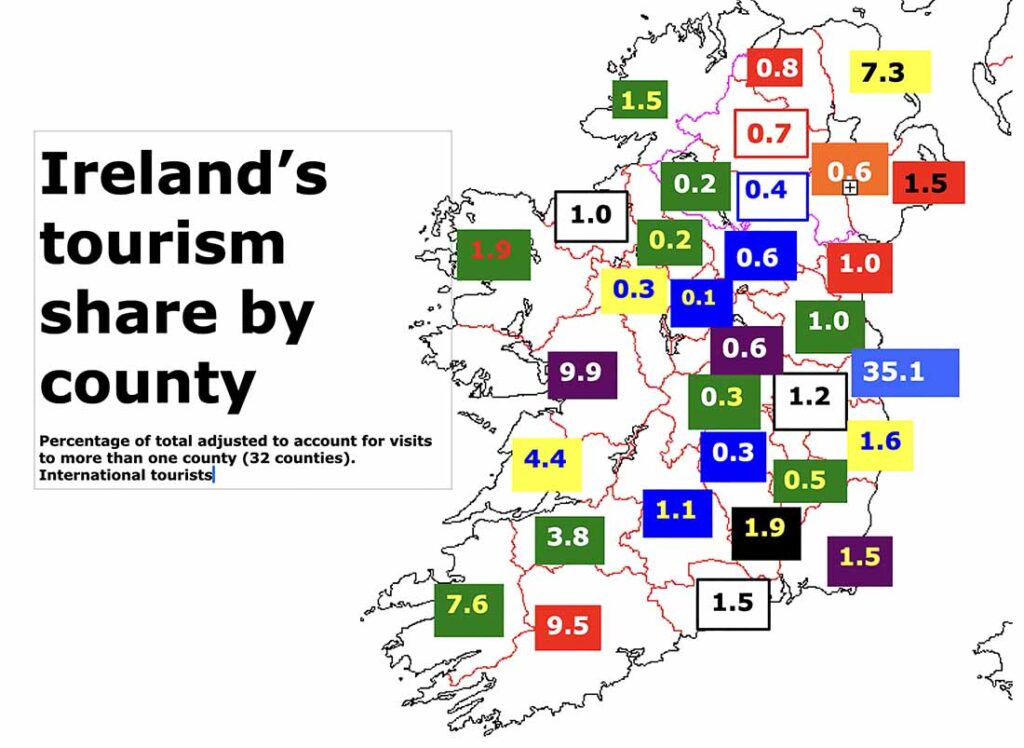
Ireland’s county Dublin combines cultural heritage with urban appeal, with Trinity College’s Book of Kells and Dublin Castle offering historical depth. The Guinness Storehouse provides a journey through Ireland’s iconic stout, while Phoenix Park’s vast green spaces are ideal for cycling. The River Liffey’s scenic walks and Kilmainham Gaol’s historical tours make Dublin a versatile destination for culture and history. Dublin is Ireland’s third smallest county by size (922 square km) and largest by population (1,458,154). Dublin is also Ireland’s most visited tourist county by a margin, with around four million international visitors per year. In terms of hospitality,
Introduction – Adventure – Anthem – Archaeology – Attractions – Awards – Birdwatching – Camping – Castles – Churches – Contact list – Cycling – Dining – Equestrian – Festivals – Fishing – Folklore – Gardens – Golf – Graveyards – Happening – Haunted – Highest – Hiking – History – Holy Wells – Hotels – Hotels top 8 – Hunting & shooting – Instagrammable – Itineraries – Largest town – Luxury – MICE – Movies – Music – New – Name – Novelists – Off the beaten track – Poets – Pubs – Quotes – Random Facts – Restaurant Awards – Sacred Places – Saints – Songs – Spas – Sports – Sunsets – Sustainable – Things to do – Towns – Video – Villages – Walking – Wanderlist – Weddings – Wild swimming – Writers – 1837 – 1846 – 1852 – 1909 – 1955 – 1980 –