- Navan Fort (Eamhain Mhacha): 81 Killylea Road, Armagh, BT60 4LD. Navan Fort, Eamhain Mhacha in Irish, was the ancient capital of Ulster and a major ceremonial site from the Iron Age. Dating back to at least 95 BC, it features a large circular enclosure with a central mound where a great temple was built. Associated with the Ulster Cycle and figures like Cú Chulainn, it was a royal and ritual centre until its decline in the 1st century AD. The Navan Centre offers guided tours, immersive exhibits, and a reconstructed Iron Age settlement.
- St Patrick’s Church of Ireland Cathedral (Ard Mhacha): Cathedral Close, Armagh City, BT61 7EE. Founded by St Patrick in 445 AD, this site on the Hill of Armagh is Ireland’s ecclesiastical capital. The current cathedral, built from 1268, stands on a pre-Christian sacred site linked to the goddess Macha. Its crypt contains prehistoric stone carvings, possibly depicting ancient Irish deities, and a stone slab marks the reputed burial place of Brian Boru, High King of Ireland, killed in 1014. The site reflects the transition from pagan to Christian worship.
- Kilnasaggart Inscribed Stone: Near Jonesborough, Gap of the North, BT35 8HZ. One of Ireland’s oldest datable standing stones, erected around 700 AD, this early Christian monument features an inscribed cross and text commemorating Ternoc, a local figure. Located in a field near the ancient route through the Gap of the North, it marks a transition from pagan to Christian traditions. Access is via a short walk, but visitors should respect the private land setting.
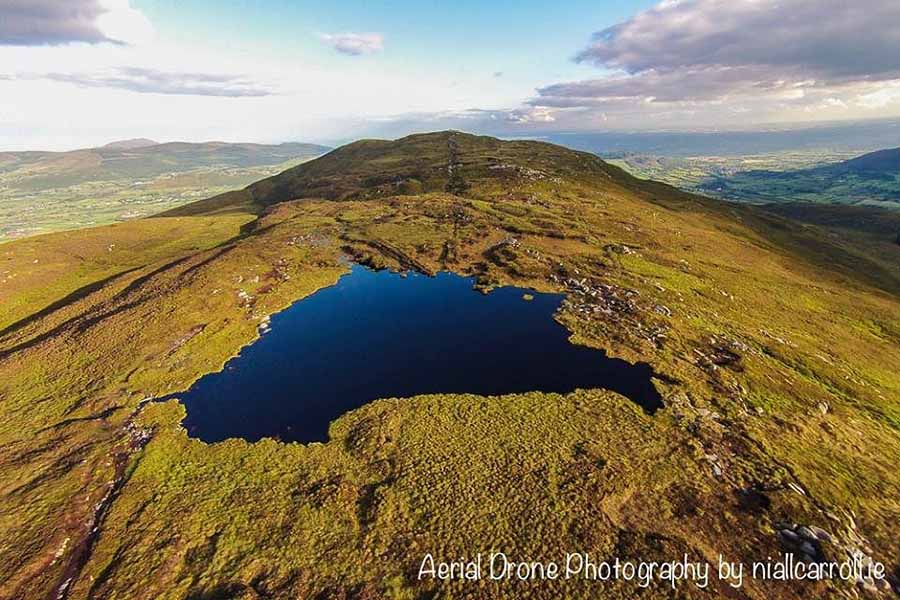
- Slieve Gullion Cairns: Slieve Gullion Forest Park, near Newry, BT35 8SW. Atop Slieve Gullion (1,893 ft), the south cairn is a Neolithic passage grave, approximately 100 feet in diameter, dating to around 3000 BC. The smaller north cairn is Bronze Age. These burial sites, set near a mountain lake called Calliagh Birra, are steeped in mythology, linked to the goddess Macha and Fionn mac Cumhaill. The forest park provides trails for access, offering panoramic views and a mystical atmosphere.
- Clonlum South Cairn: Near Killeavy, half a mile east of Killeavy Churches, BT35 8LQ. This Neolithic round cairn with a portal tomb, excavated in 1934, yielded pottery and a stone bead, indicating burial use around 3000 BC. Located in a rural area, it reflects early farming communities’ funerary practices. The site is state-protected but less developed for tourism, requiring careful navigation to visit.
- Dorsey Entrenchment: Between Silverbridge and Creggan, near H936 190 to H955 197. A large Iron Age earthwork enclosure, possibly a defensive or ceremonial structure, dating to around 100 BC. Spanning several townlands, it consists of ramparts and ditches, suggesting a significant community or tribal boundary. Linked to the nearby Navan Fort complex, it offers insight into Iron Age territorial organisation. Access is limited, often requiring permission from landowners.
- Aghmakane Cashel and Portal Tomb (The Long Stones): Near Mullaghbawn, BT35 9TW (Cashel: J0206 2526, Portal Tomb: J0204 2525). This site includes a Bronze Age cashel (stone enclosure) and a Neolithic portal tomb known as the Long Stones, dating to around 3000 BC. The tomb’s large upright stones mark a burial chamber, while the cashel suggests later settlement or defence. Located in a rugged landscape, it highlights multi-period use, though access may involve private land.
- Loughnashade Votive Site: Near Navan Fort, Armagh, BT60 4LD (H8518 4540). This Iron Age site near Navan Fort is famous for the discovery of four ornate bronze horns, likely used in rituals around 100 BC. Situated by a former lake, it was a votive offering site, reflecting spiritual practices of the time. While part of the Navan complex, specific access may be guided through the Navan Centre’s tours.
- Tullyard Mound: Half a mile north of St Luke’s Hospital, Armagh City, BT61 8AF (H875 477). A prehistoric mound, likely a Bronze Age burial or ceremonial site, situated in a drumlin landscape. Its prominence suggests it was a focal point for local communities. The site is scheduled but not heavily developed for visitors, requiring local knowledge or permission for access.
- Tullymore Mound (Niall’s Mound): Half a mile northeast of Millford, Armagh, BT60 3PA (H861 442). Known locally as Niall’s Mound, this Bronze Age mound is likely a burial site, named after Niall of the Nine Hostages, a legendary Uí Néill king. Its setting in rolling countryside reflects Armagh’s ancient landscape. Access is limited, often on private land, but it underscores the county’s deep mythological connections.
County Armagh:
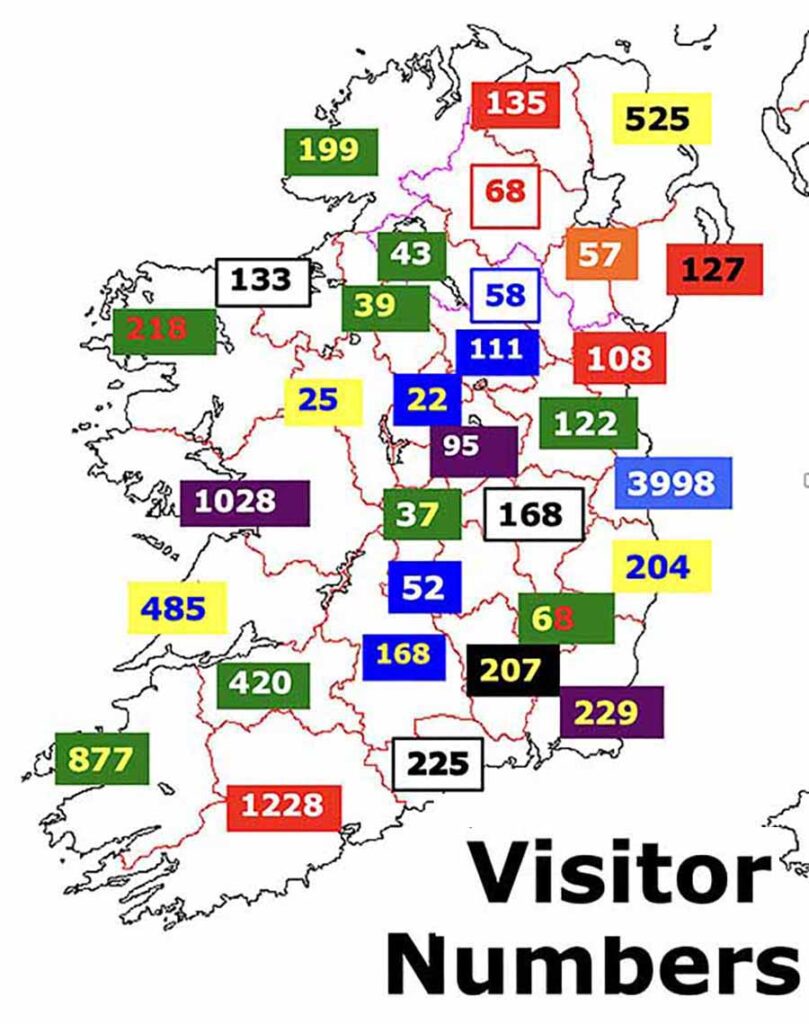
Ireland’s County Armagh is steeped in history and natural beauty, with the Navan Fort, an ancient ceremonial site, offering archaeological intrigue. The Armagh Observatory and Planetarium provide stargazing opportunities, while the city’s two cathedrals reflect its ecclesiastical heritage. Other attractions include the nearby Slieve Gullion Forest Park with its hiking trails and panoramic views. Armagh is Ireland’s fifth smallest county by size (1,253 square km) and tenth largest by population (194,394). Population peaked at 232,393 in 1841 and reached its lowest point, 108,815, in 1937. In terms of hospitality, Armagh is Ireland’s 26th most visited tourist county with around 57,000 international visitors per year.
Introduction – Adventure – Anthem – Archaeology – Attractions – Awards – Birdwatching – Camping – Castles – Churches – Contact list – Cycling – Dining – Equestrian – Festivals – Fishing – Folklore – Gardens – Golf – Graveyards – Happening – Haunted – Highest – Hiking – History – Holy Wells – Hotels – Hotels top 8 – Hunting & shooting – Instagrammable – Itineraries – Largest town – Luxury – MICE – Movies – Music – New – Name – Novelists – Off the beaten track – Poets – Pubs – Quotes – Random Facts – Restaurant Awards – Sacred Places – Saints – Songs – Spas – Sports – Sunsets – Sustainable – Things to do – Towns – Video – Villages – Walking – Wanderlist – Weddings – Wild swimming – Writers – 1837– 1846 – 1852 – 1909 – 1955 – 1980 –