- Drombeg Stone Circle: Near Glandore, Co. Cork, P81 VP30. A Bronze Age recumbent stone circle, dating to c. 1500-1000 BC, consisting of 17 stones aligned with the winter solstice sunset. Excavations uncovered a central pit with cremated remains, indicating ritual use. Known as the “Druid’s Altar,” it includes nearby fulacht fiadh (cooking pits). Managed by the Office of Public Works (OPW), it’s freely accessible with parking, offering insight into prehistoric astronomy and ritual.
- Charles Fort: Summercove, Kinsale, Co. Cork, P17 AY18. A 17th-century star-shaped fort built in the 1670s under Charles II to defend Kinsale Harbour. It played a key role in the Williamite War (1690) and was used until the 1920s. Its well-preserved ramparts and barracks reflect military architecture. Managed by the OPW, it offers guided tours and a visitor centre, showcasing Cork’s colonial history.
- Carrigaphooca Castle: Near Macroom, Co. Cork, P12 DW93. A 14th-century tower house built by Donal O’Mahony, featuring five storeys and a defensive bawn. Its name, meaning “stone of the fairy,” ties to local folklore. Used by Gaelic lords, it reflects medieval power structures. Accessible on private land with permission, it’s a striking example of Cork’s Gaelic architecture.
- Timoleague Friary: Timoleague, Co. Cork, P72 K160. A 13th-century Franciscan friary founded by the O’Donovan clan, later patronised by the MacCarthys. Its well-preserved cloister and church, with intricate stonework, served as a religious centre until the 17th century. Managed by the OPW, it’s freely accessible, reflecting Cork’s medieval ecclesiastical heritage.
- Mizen Head Signal Station: Mizen Head, Co. Cork, P81 NX43. While primarily a 20th-century signal station, the site includes archaeological features like a promontory fort from the Iron Age (c. 500 BC-400 AD), used for defence or ritual. The rugged coastal setting enhances its historical context. Managed as a visitor attraction, it offers tours and exhibits, blending modern and ancient maritime history.
- Knockdrum Stone Fort: Near Castletownshend, Co. Cork, P81 VF66. A well-preserved Iron Age ringfort (c. 500 BC-400 AD) with a circular stone wall and souterrain. Excavations suggest domestic and defensive use, with stunning views of the Atlantic. Accessible via public paths on private land, it showcases Cork’s early settlement patterns and coastal fortifications.
- Garnish Island (Prehistoric Remains): Glengarriff Harbour, Co. Cork, P75 AW66. This island, known for its gardens, contains Bronze Age remains, including a possible cist burial and standing stones (c. 2000-1000 BC). Reached by ferry from Glengarriff, the site reflects prehistoric activity in Bantry Bay. Managed by the OPW, it combines archaeological interest with scenic beauty, though the gardens are the main draw.
- Kilnaruane Pillar Stone: Near Bantry, Co. Cork, P75 YR70. An early Christian carved stone, dating to c. 600-800 AD, featuring a high cross and boat imagery, possibly commemorating a maritime community or St. Brendan. Located near a medieval church site, it’s accessible via public paths. The stone reflects Cork’s transition from pagan to Christian traditions.
- Ardintenant Castle: Near Castletownshend, Co. Cork, P81 T293. A 14th-century O’Mahony clan tower house, one of many along Cork’s coast, used for defence and maritime control. Its ruins include a bawn and corner towers. Accessible on private land with permission, it highlights Gaelic maritime power in medieval Cork.
- Bohonagh Stone Circle and Boulder Burial: Near Rosscarbery, Co. Cork, P85 XW81. A Bronze Age complex (c. 1500-1000 BC) with a recumbent stone circle and a rare boulder burial, used for ritual purposes. Excavations revealed cremated remains and pottery. Similar to Drombeg, it’s aligned with celestial events. Managed by the OPW, it’s accessible with parking, offering insight into Cork’s prehistoric ritual landscape.
Archaeological sites
Antrim – Armagh – Carlow – Cavan – Clare – Cork – Derry – Donegal – Down – Dublin – Fermanagh – Galway – Kerry – Kildare – Kilkenny – Laois – Leitrim – Limerick – Longford – Louth – Mayo – Meath – Monaghan – Offaly – Roscommon – Sligo – Tipperary – Tyrone – Waterford – Westmeath – Wexford – Wicklow
County Cork:
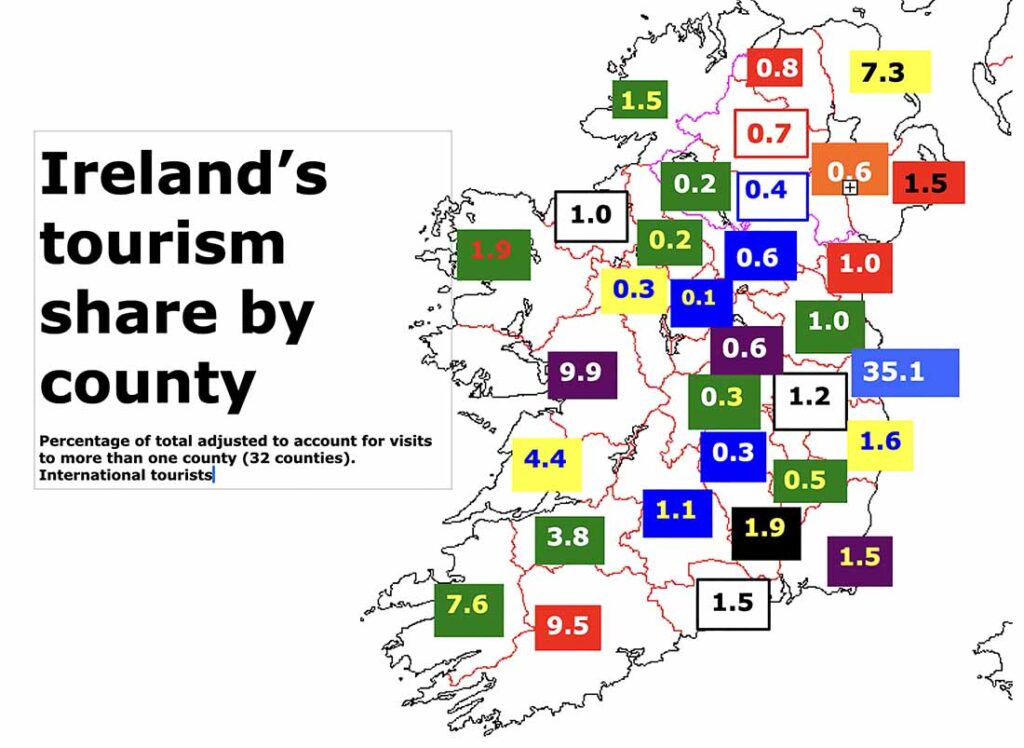
Ireland’s county Cork blends historic sites with scenic beauty, with Cork City’s English Market and St Fin Barre’s Cathedral offering cultural and architectural depth. Blarney Castle, home to the famous Blarney Stone, provides historic allure, while the coastal town of Kinsale offers sailing and seafood. Other attractions include the Beara Peninsula’s rugged trails. Cork is Ireland’s largest county by size (7,460 sq km) and third largest by population (584,156). Population peaked at 854,118 in 1841 (when Cork was Ireland’s most populous county) and reached its lowest point, 330,443 in 1961. In terms of hospitality, Cork is Ireland’s second most visited tourist county with around 1,228,000 international visitors per year.
Introduction – Adventure – Anthem – Archaeology – Attractions – Awards – Birdwatching – Camping – Castles – Churches – Contact list – Cycling – Dining – Equestrian – Festivals – Fishing – Folklore – Gardens – Golf – Graveyards – Happening – Haunted – Highest – Hiking – History – Holy Wells – Hotels – Hotels top 8 – Hunting & shooting – Instagrammable – Itineraries – Largest town – Luxury – MICE – Movies – Music – New – Name – Novelists – Off the beaten track – Poets – Pubs – Quotes – Random Facts – Restaurant Awards – Sacred Places – Saints – Songs – Spas – Sports – Sunsets – Sustainable – Things to do – Towns – Video – Villages – Walking – Wanderlist – Weddings – Wild swimming – Writers – 1837– 1846 – 1852 – 1909 – 1955 – 1980 –