- Lough Erne and Upper and Lower Loughs: This vast lake system, with 154 islands, dominates Fermanagh’s landscape. Visitors can expect boating, kayaking, or cruises to explore islands like Devenish, with its 12th-century monastic ruins and round tower. Fishing for pike and trout is popular, and scenic shores offer cycling and walking trails. Expect tranquil water activities and stunning views, with boat hire available in Enniskillen.
- Marble Arch Caves: Part of the Cuilcagh Lakelands UNESCO Geopark, near Florencecourt, these limestone caves are a subterranean wonder. Visitors can expect a 75-minute guided tour through illuminated caverns, featuring stalactites, stalagmites, and an underground river, including the “Moses Walk” through shallow water. Warm clothing and pre-booking are essential. A thrilling experience for families and geology enthusiasts.
- Enniskillen Castle and Museums: In Enniskillen, this 15th-century castle on the River Erne houses the Fermanagh County Museum and the Inniskillings Museum. Visitors can expect exhibits on the region’s history, from prehistoric times to the Maguires’ rule, and military displays of the Royal Inniskilling Fusiliers. The castle’s turrets and ramparts offer photo opportunities. Open Monday to Saturday, with a small entry fee.
- Florence Court: A National Trust 18th-century Georgian mansion near Enniskillen, set in a 5,500-acre estate. Visitors can expect guided tours of opulent interiors, showcasing rococo plasterwork, and strolls through pleasure gardens, a rose garden, and parkland with yew trees. Trails lead to the Florencecourt Yew, the ancestor of all Irish yews. Entry fees apply for non-members; a café enhances the visit. Ideal for history and garden lovers.
- Devenish Island: A monastic site in Lower Lough Erne, accessible by ferry from Trory (near Enniskillen). Founded in the 6th century by St. Molaise, it features a 12th-century round tower, medieval church ruins, and a high cross. Visitors can expect a short boat trip and self-guided exploration of the tranquil island, with interpretive signs. Seasonal access, with a small fee for the ferry. Perfect for history buffs.
- Cuilcagh Boardwalk Trail (Stairway to Heaven): In the Cuilcagh Lakelands Geopark, this 7.4km return trail near Swanlinbar ascends Cuilcagh Mountain via a boardwalk and staircase. Visitors can expect a moderate hike through boglands, with panoramic views of Fermanagh, Cavan, and beyond. Pre-booking parking is required, and sturdy footwear is advised. A must for hikers and those seeking Instagram-worthy vistas.
- Castle Coole: A National Trust neo-classical mansion near Enniskillen, built in the 1790s. Visitors can expect guided tours of lavish interiors, including a state bedroom prepared for King George IV, and walks through 1,500 acres of parkland with a lake and grand avenue. The servant tunnels offer a unique glimpse into estate life. Entry fees apply; open seasonally. Ideal for architecture and history enthusiasts.
- Belleek Pottery: In Belleek village, this world-famous pottery, founded in 1857, offers a visitor center and factory tours. Visitors can expect to see artisans crafting intricate porcelain, browse the showroom for unique pieces, and enjoy a café. Guided tours (Monday to Friday) showcase the pottery’s heritage. A small entry fee applies for tours. Perfect for craft lovers and those seeking souvenirs.
- Ely Lodge Forest and Lough Navar Forest: These forests near Enniskillen offer scenic drives and trails with lake and mountain views. Lough Navar’s 7-mile scenic drive includes a viewpoint over Lower Lough Erne, while Ely Lodge has walking paths through woodlands. Visitors can expect peaceful hikes, birdwatching, and picnic spots. Free entry, with minimal parking fees. Ideal for nature lovers and families.
- Boa Island and Caldragh Cemetery: On Lower Lough Erne, Boa Island is home to the ancient Caldragh Cemetery, featuring two pre-Christian stone figures, the Janus Stone and Lustymore Idol, linked to Celtic mythology. Visitors can expect a short walk to this atmospheric site, accessible by road, with interpretive signs explaining its pagan and early Christian significance. Free to visit, it’s a quiet stop for those intrigued by ancient history.
Attractions
Antrim – Armagh – Carlow – Cavan – Clare – Cork – Derry – Donegal – Down – Dublin – Fermanagh – Galway – Kerry – Kildare – Kilkenny – Laois – Leitrim – Limerick – Longford – Louth\ – Mayo – Meath – Monaghan – Offaly – Roscommon – Sligo – Tipperary – Tyrone – Waterford – Westmeath – Wexford – Wicklow
County Fermanagh:
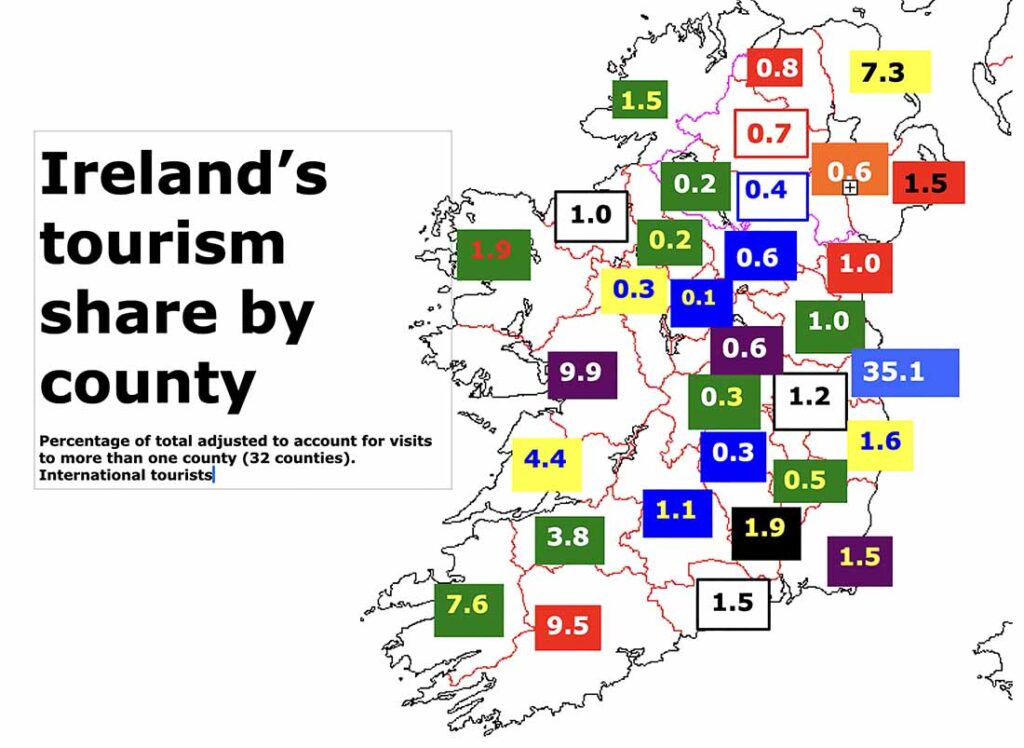
Ireland’s county Fermanagh is a county of lakes and historic charm, with Lough Erne’s waterways offering boating and fishing amidst serene islands. Enniskillen Castle and its museums explore local history, while the Marble Arch Caves, part of a UNESCO Geopark, showcase stunning underground caverns. Other attractions include the historic Florence Court estate and its gardens. Fermanagh is Ireland’s 20th largest county by size (1,876 square km) and fourth smallest by population (63,585). Population peaked at 156,481 in 1841 and reached its lowest point, 49,886 in 1966. In terms of hospitality, Fermanagh is Ireland’s 28th most visited tourist county with around 43,000 international visitors per year.
Introduction – Adventure – Anthem – Archaeology – Attractions – Awards – Birdwatching – Camping – Castles – Churches – Contact list – Cycling – Dining – Equestrian – Festivals – Fishing – Folklore – Gardens – Golf – Graveyards – Happening – Haunted – Highest – Hiking – History – Holy Wells – Hotels – Hotels top 8 – Hunting & shooting – Instagrammable – Itineraries – Largest town – Luxury – MICE – Movies – Music – Name – New – Novelists – Off the beaten track – Poets – Pubs – Quotes – Random Facts – Restaurant Awards – Sacred Places – Saints – Songs – Spas – Sports – Sunsets – Sustainable – Things to do – Towns – Video – Villages – Walking – Wanderlist – Weddings – Wild swimming – Writers – 1837 – 1846 – 1852 – 1909 – 1955 – 1980 –