- Cliffs of Moher: Ireland’s most visited natural attraction, these iconic sea cliffs stretch 8 km along the Atlantic coast, reaching 214 meters at their highest point near O’Brien’s Tower. Visitors can expect breathtaking views, paved pathways for safe exploration, and an eco-friendly visitor center with exhibits on geology, wildlife, and folklore. Options include cliff-top walks, boat tours from Doolin for a sea-level perspective, and spotting seabirds like puffins. Early visits (before 8:30 AM) help avoid crowds.
- Bunratty Castle and Folk Park: A 15th-century medieval castle, fully restored, and Ireland’s largest open-air museum, the Folk Park recreates 19th-century Irish village life. Visitors can explore the furnished castle, wander through period buildings like cottages and a school, and interact with costumed characters. Nightly medieval banquets offer a four-course meal with music and entertainment. Ideal for families, with farm animals and a fairy village. Booking is recommended for banquets.
- The Burren National Park: A UNESCO Global Geopark, the Burren features a unique karst limestone landscape with rare flora and fauna. Visitors can expect guided walks through limestone pavements, hazel woodlands, and meadows, with highlights like the Poulnabrone Dolmen, a 5,800-year-old Neolithic tomb. Free shuttle buses from Corofin enhance access to trails. The park’s visitor center in Corofin offers insights into its ecology and history. Perfect for hikers and nature lovers.
- Aillwee Burren Experience: A multifaceted attraction featuring the Aillwee Cave, one of Ireland’s oldest, with stalactites, an underground waterfall, and extinct bear bones. Visitors can enjoy guided cave tours, watch dynamic bird of prey displays at the Birds of Prey Centre, and taste Burren Gold Cheese at the farm shop. Walking trails and a café add to the experience. Ideal for families and those interested in geology and wildlife.
- Doolin Cave: Home to Europe’s longest free-hanging stalactite (7.3 meters), this cave offers guided tours through its underground passages, showcasing dramatic rock formations. Visitors can expect an educational experience about the cave’s geology, plus a nature trail with local flora and fauna. The visitor center includes a café and gift shop. A great stop for eco-tourism enthusiasts and families.
- Loop Head Peninsula: A scenic coastal drive (81 km) through villages like Kilrush, Carrigaholt, and Kilkee, culminating at Loop Head Lighthouse. Visitors can expect panoramic cliff views, a guided lighthouse tour with a Fresnel lens, and activities like sea kayaking or the Kilkee Cliff Walk, featuring natural sites like the Pollock Holes and Intrinsic Bay. The peninsula offers unspoiled scenery and a tranquil escape.
- Scattery Island: A monastic island in the Shannon Estuary, accessible by a 30-minute boat from Kilrush Marina. Visitors can expect guided tours of its 6th-century monastic settlement, including Ireland’s tallest round tower (36 meters) and ancient church ruins. The island’s history includes Viking raids and tales of St. Senan. Picnicking and swimming in the estuary are popular, with multiple daily sailings in summer.
- Aran Islands (Day Trip from Doolin): Inishmore, Inishmaan, and Inisheer, accessible by a 45-minute ferry from Doolin, offer rugged limestone landscapes and Irish culture. Visitors can expect to explore ancient sites like Dun Aonghasa on Inishmore, cycle or take pony cart tours, and experience traditional Irish-speaking communities. The islands’ dramatic cliffs and quaint villages make for a memorable day trip.
- Ennis Friary and Clare Museum: In Ennis, the county’s picturesque capital, the 13th-century Ennis Friary offers a glimpse into Franciscan monastic life with well-preserved medieval architecture. The nearby Clare Museum showcases 8,000 years of local history through themes like earth, power, and faith. Visitors can expect historical insights, guided friary tours, and a chance to explore Ennis’ narrow streets, vibrant pubs, and traditional music sessions.
- Vandeleur Walled Garden: Located in Kilrush Wood, this restored 19th-century garden spans 170 hectares of native woodland. Visitors can expect serene walks among ornamental plants, a maze, and guided tours (11 AM and 3 PM). The visitor center provides historical context, and the setting is ideal for families or those seeking a peaceful botanical experience
Attractions
Antrim – Armagh – Carlow – Cavan – Clare – Cork – Derry – Donegal – Down – Dublin – Fermanagh – Galway – Kerry – Kildare – Kilkenny – Laois – Leitrim – Limerick – Longford – Louth\ – Mayo – Meath – Monaghan – Offaly – Roscommon – Sligo – Tipperary – Tyrone – Waterford – Westmeath – Wexford – Wicklow
County Clare:
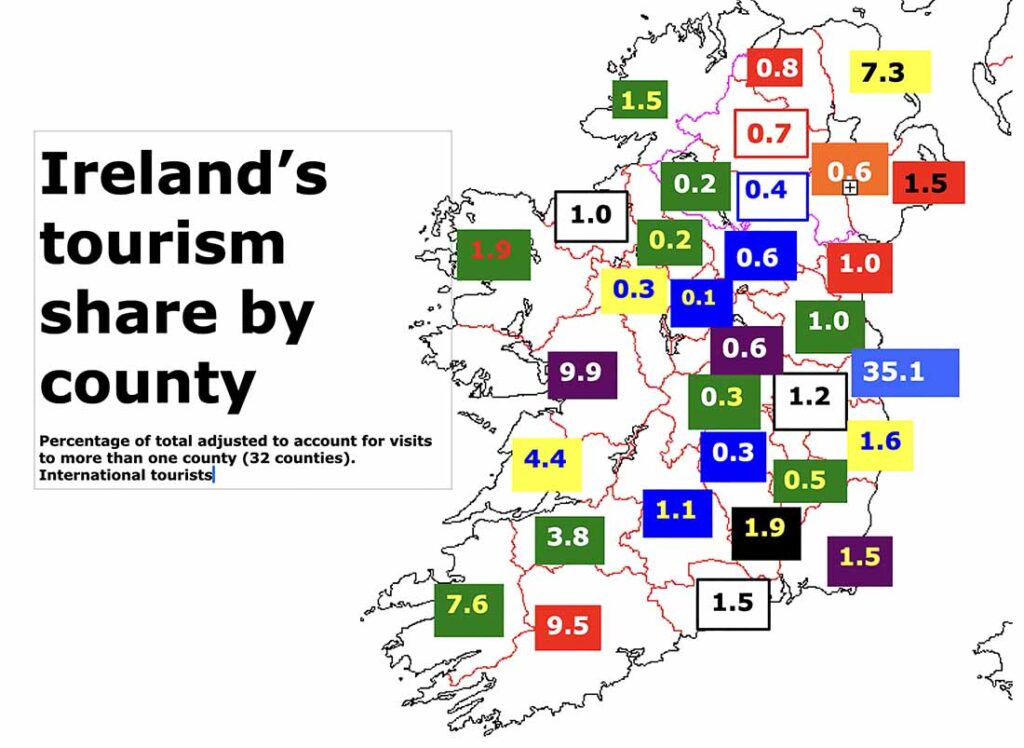
Ireland’s county Clare is renowned for its dramatic cliffs and traditional heritage, with the Cliffs of Moher offering breathtaking views over the Atlantic. The Burren’s unique limestone landscape provides hiking and rare flora, while Bunratty Castle offers medieval history with its restored interiors. Check out the traditional music scene in Doolin and the county’s coastal beaches. Clare is Ireland’s eighth largest county by size (3,188 square km) and 19th largest by population (127,938). Population peaked at 286,394 in 1841 and reached its lowest point, 73,597 in 1966. In terms of hospitality, Clare is Ireland’s sixth most visited tourist county with around 485,000 international visitors per year.
Introduction – Adventure – Anthem – Archaeology – Attractions – Awards – Birdwatching – Camping – Castles – Churches – Contact list – Cycling – Dining – Equestrian – Festivals – Fishing – Folklore – Gardens – Golf – Graveyards – Happening – Haunted – Highest – Hiking – History – Holy Wells – Hotels – Hotels top 8 – Hunting & shooting – Instagrammable – Itineraries – Largest town – Luxury – MICE – Movies – Music – New – Name – Novelists – Off the beaten track – Poets – Pubs – Quotes – Random Facts – Restaurant Awards – Sacred Places – Saints –Songs – Spas – Sports – Sunsets – Sustainable – Things to do – Towns – Video – Villages – Walking – Wanderlist – Weddings – Wild swimming – Writers – 1837– 1846 – 1852 – 1909 – 1955 – 1980 –