County Louth, with its historic towns, medieval sites, coastal villages, and proximity to the border, has been used for filming in a variety of productions, often standing in for period settings or providing authentic Irish backdrops in dramas and comedies. While it lacks a single globally iconic landmark like Skellig Michael or the Cliffs of Moher, it features in several notable films, including recent releases and classics
- Carlingford village (Cooley Peninsula, northeast Louth): This picturesque medieval town, with its narrow streets, stone buildings, castle ruins, and harbour views along Carlingford Lough, served as a key location in Finding You (2021), the romantic drama starring Rose Reid and Jedidiah Goodacre. The film used the village’s charming, historic setting for scenes depicting a young violinist’s semester abroad in Ireland, capturing small-town Irish life, romance, and scenic coastal walks; it also appeared in Saipan (2025), the sports drama about the Republic of Ireland soccer team’s infamous 2002 World Cup preparations, for additional Irish sequences.
- Dundalk town (various spots including New Street and The Spirit Store venue): This market town provided urban and nightlife backdrops in Kneecap (2024), the critically acclaimed Irish-language comedy-drama about the Belfast rap trio of the same name. Scenes were filmed at the popular music venue The Spirit Store and on New Street to capture energetic live performances and street atmosphere, contributing to the film’s raw, rebellious portrayal of Irish resistance culture and hip-hop scene.
- Clogherhead village (Main Street and coastal areas, east Louth): The village’s main street and seaside setting featured in Captain Lightfoot (1955), the swashbuckling adventure starring Rock Hudson as an 19th-century Irish highwayman. The location stood in for period Irish village scenes, with its traditional buildings and harbour helping evoke early 19th-century rural Ireland in this historical tale of rebellion and romance.
- Drogheda town (various streets and areas): This historic town on the River Boyne was used for key exteriors in Cal (1984), the acclaimed drama starring Helen Mirren and John Lynch, set during the Troubles in the north. Despite the story’s Northern setting, much of the film was shot here (alongside Meath) for its urban streets and atmosphere, providing realistic backdrops for scenes of everyday life amid conflict and moral complexity.
- Greenore village (Cooley Peninsula, seaside near Carlingford): This quiet coastal village appeared in Kneecap (2024) for additional scenes, adding to the film’s mix of urban and rural Irish elements with its harbour and seaside views.
Other productions have used County Louth intermittently, such as parts of Disenchanted (2022) for some sequences (alongside Dublin and Wicklow), Wildfire (2020) for emotional family drama around border areas, or horror like Fréwaka (2023) in Ravensdale woods. The county also hosted minor scenes in titles like The Butcher Boy (1997) or older films like Where’s Jack (1969). Louth’s film heritage leans toward authentic Irish stories, recent indies like Kneecap and romantic dramas like Finding You, rather than massive blockbusters, with Carlingford and Dundalk as the most prominent and visitable spots for their recurring screen presence and scenic appeal. The Cooley Peninsula stands out for its recurring use in coastal and village settings.
Movie locations in the county
Antrim – Armagh – Carlow – Cavan – Clare – Cork – Derry – Donegal – Down – Dublin – Fermanagh – Galway – Kerry – Kildare – Kilkenny – Laois – Leitrim – Limerick – Longford – Louth – Mayo – Meath – Monaghan – Offaly – Roscommon – Sligo – Tipperary – Tyrone – Waterford – Westmeath – Wexford – Wicklow
County Louth:
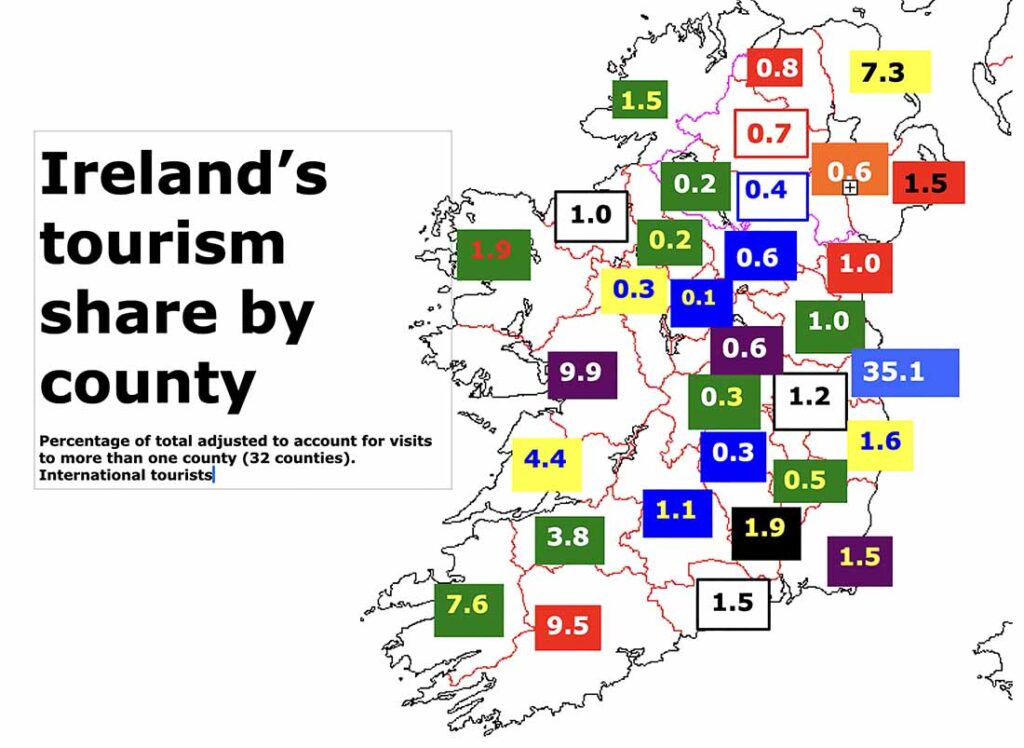
Ireland’s county Louth is a county of historic depth and coastal beauty, with Drogheda’s St Peter’s Church housing a historic shrine and the Boyne Valley offering ancient sites like Newgrange, a UNESCO-listed passage tomb just over the border in county Meath. Carlingford’s medieval streets and castle provide scenic walks, while Dundalk’s coastal paths add natural allure. Other attractions include the Cooley Peninsula’s hiking trails. Louth is Ireland’s smallest county by size (821 sq km) and 17th largest by population (139,703). Population peaked at 128,240 in 1841 and reached its lowest point, 63,665 in 1926. In terms of hospitality, Louth is Ireland’s 21st most visited tourist county with around 108,000 international visitors per year.
Introduction – Adventure – Anthem – Archaeology – Attractions – Awards – Birdwatching – Camping – Castles – Churches – Contact list – Cycling – Dining – Equestrian – Festivals – Fishing – Folklore – Gardens – Golf – Graveyards – Happening – Haunted – Highest – Hiking – History – Holy Wells – Hotels – Hotels top 8 – Hunting & shooting – Instagrammable – Itineraries – Largest town – Luxury – MICE – Movies – Music – Name – New – Novelists – Off the beaten track – Poets – Pubs – Quotes – Random Facts – Restaurant Awards – Sacred Places – Saints – Songs – Spas – Sports – Sunsets – Sustainable – Things to do – Towns – Video – Villages – Walking – Wanderlist – Weddings – Wild swimming – Writers – 1837 – 1846 – 1852 – 1909 – 1955 – 1980 –