- Dundalk, Castletown Road: A ghost known as “Old Murphy” haunts Castletown Road, appearing at night with the sound of rattling chains and clattering feet. Reported in the 1930s Dúchas Schools’ Collection, Murphy, who lived at Castletown Mount, could transform into a dog or become invisible. His spirit walks to Castletown Bridge before vanishing.
- Carlingford, Carlingford Castle and Abbey Ruins: A female spectre, possibly a former pirate turned abbess, haunts the ruins of Carlingford Castle and Abbey. Sightings date to the 20th century, with her shade among others seen within the crumbling walls, tied to the site’s history of piracy and religious life.
- Carlingford, Rectory: In the 1960s, a ghostly girl was seen moving toward the rectory door, followed by a priest, both vanishing abruptly. The girl has reappeared inside the building, with no clear backstory, though the rectory’s age suggests lingering unrest.
- Donore, Athcarne Castle: Athcarne Castle is haunted by multiple spirits, including James II, who stayed there before his defeat at the Battle of the Boyne in 1690. A blood-stained girl and a soldier hanging from a tree also appear, their origins unclear but linked to the castle’s turbulent past.
- Drogheda, Barney Mac’s Public House: In March 2015, CCTV captured a beer glass breaking in two on a table at Barney Mac’s, attributed to a phantom by some, though others cite thermal stress. The pub’s history is not detailed, but the incident fuels local ghost lore.
- Drogheda, Newtown Meadows Estate: In September 2012, Boyne Paranormal Investigators probed four houses in this deserted estate after reports of toys activating on their own, banging noises, and footsteps in empty rooms. The disturbances lack a specific backstory but suggest restless spirits.
- Drogheda, River Boyne: The shades of Sir Edward Golding and Elizabeth Fleming, drowned in a boating accident, haunt the River Boyne. A 10th-century tale also describes poet Erard Mac Cossi witnessing a swan transform into a woman, cursed by demons, adding to the river’s eerie reputation.
- Drogheda, Stagrennan House, Mornington Road: In the 2000s, Frank K saw a woman in a striped corset with a rope around her neck floating in his bedroom at Stagrennan House. She vanished quickly, her identity unknown, but the vision suggests a tragic death tied to the property.
- Termonfeckin, Haunted House. A house in Termonfeckin was haunted after a man stole a priest’s Mass book, as recorded in the 1930s Dúchas Collection. The priest, on horseback, threatened to circle the house unless the book was returned, and the man complied, but the house retained a spectral presence.
- Darver, Churchyard. A woman near Darver churchyard, recorded in the 1930s Dúchas Collection, heard noises and saw two men lifting a coffin, one planning to steal a sheep. Her repeated requests to get closer to the scene, aided by her servant boy, suggest a ghostly encounter linked to desecration of a graveyard
Haunted
Antrim – Armagh – Carlow – Cavan – Clare – Cork – Derry – Donegal – Down – Dublin – Fermanagh – Galway – Kerry – Kildare – Kilkenny – Laois – Leitrim – Limerick – Longford – Louth – Mayo – Meath – Monaghan – Offaly – Roscommon – Sligo – Tipperary – Tyrone – Waterford – Westmeath – Wexford – Wicklow
County Louth:
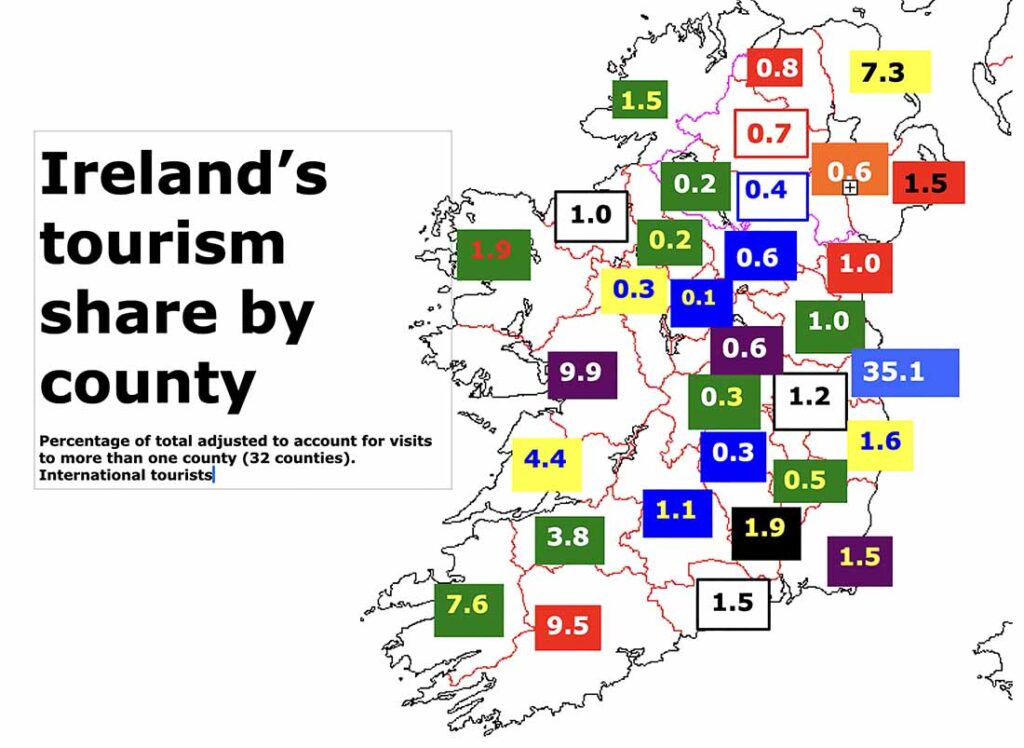
Ireland’s county Louth is a county of historic depth and coastal beauty, with Drogheda’s St Peter’s Church housing a historic shrine and the Boyne Valley offering ancient sites like Newgrange, a UNESCO-listed passage tomb just over the border in county Meath. Carlingford’s medieval streets and castle provide scenic walks, while Dundalk’s coastal paths add natural allure. Other attractions include the Cooley Peninsula’s hiking trails. Louth is Ireland’s smallest county by size (821 sq km) and 17th largest by population (139,703). Population peaked at 128,240 in 1841 and reached its lowest point, 63,665 in 1926. In terms of hospitality, Louth is Ireland’s 21st most visited tourist county with around 108,000 international visitors per year.
Introduction – Adventure – Anthem – Archaeology – Attractions – Awards – Birdwatching – Camping – Castles – Churches – Contact list – Cycling – Dining – Equestrian – Festivals – Fishing – Folklore – Gardens – Golf – Graveyards – Happening – Haunted – Highest – Hiking – History – Holy Wells – Hotels – Hotels top 8 – Hunting & shooting – Instagrammable – Itineraries – Largest town – Luxury – MICE – Movies – Music – Name – New – Novelists – Off the beaten track – Poets – Pubs – Quotes – Random Facts – Restaurant Awards – Sacred Places – Saints – Songs – Spas – Sports – Sunsets – Sustainable – Things to do – Towns – Video – Villages – Walking – Wanderlist – Weddings – Wild swimming – Writers – 1837 – 1846 – 1852 – 1909 – 1955 – 1980 –