- King John’s Castle (Carlingford Castle): Built in the late 12th century by Anglo-Norman lord Hugh de Lacy, King John’s Castle is a Norman fortress overlooking Carlingford Lough in the medieval town of Carlingford. Named after King John of England, who reputedly stayed there in 1210, it features a D-shaped enclosure with massive grey stone walls and a curtain wall. A National Monument, it was upgraded over centuries and remains a prominent ruin with scenic views of the lough and Mourne Mountains. Open year-round (free, no formal hours, managed by the Office of Public Works), the castle is a ruin with no interior access due to safety concerns (falling masonry). Visitors can explore the exterior and grounds, enjoying stunning lough-side views, ideal for photography. Guided tours are available via Carlingford Heritage Centre (start at 11 AM, €5–€10, book at carlingfordheritagecentre.com), lasting 30–45 minutes and covering Norman history. Expect a 30–60 minute visit, with parking and toilets at the nearby visitor center. The castle’s location, a 10-minute walk from Carlingford’s medieval town, pairs well with local pubs and the Carlingford Oyster Festival. A must-visit for its dramatic setting and historical significance, best for those exploring Carlingford’s medieval charm.
- Ardee Castle (St. Leger’s Castle): Built in the 13th century by Roger de Peppard and modified in the 15th century by John St. Leger, Ardee Castle is Ireland’s largest fortified medieval tower house, located on Ardee’s main street. A National Monument, it served as a defensive and residential stronghold on the Pale’s border. Since the 19th century, it has functioned as a courthouse, blending medieval architecture with civic use. Open by appointment for guided tours (contact Louth County Council or visit louthcoco.ie, €5–€10), visitors can explore the tower’s interior, including vaulted rooms and battlements, learning about its military and judicial history. Expect a 30–45 minute tour, with no regular public access due to its courthouse function. Exterior viewing is free, with the castle’s imposing presence visible from Ardee’s streets. Parking and cafes are nearby, but facilities at the castle are limited. A 15–30 minute stop suits those passing through Ardee, 20 km from Drogheda. Ideal for history buffs, though access requires planning due to its civic use.
- Castle Roche: Constructed in 1236 by Lady Rohesia de Verdun, Castle Roche is an Anglo-Norman fortress on a rocky outcrop 10 km northwest of Dundalk. Featuring a fragmented curtain wall, a great hall (possibly three stories), and a moat, it marked the boundary between Gaelic Ulster and the Pale. Its ruins reflect its strategic importance and turbulent history, including de Verdun family feuds. A National Monument, it offers panoramic views of the Cooley Peninsula. Open year-round (free, dawn–dusk), visitors can explore the ruins, including the hall and walls, via a short, steep walk from limited roadside parking (no formal car park). Expect a 30–60 minute visit, with no facilities like restrooms or a visitor center. Information boards detail the castle’s history. The rugged terrain and isolation suit adventurers and photographers, with stunning countryside views. Combine with Dundalk’s County Museum or Proleek Dolmen for a day trip. A dramatic, off-the-beaten-path ruin for those seeking medieval history and scenic vistas.
- Taaffe’s Castle: Built in the early 16th century by the Taaffe family, a wealthy merchant clan, Taaffe’s Castle is a fortified residence near Carlingford’s old harbor. Featuring murder holes, machicolations, and turrets, it served as a trading post and home. Now a pub and private property, its robust stone structure reflects late-medieval urban life in Carlingford’s historic town. Open as a pub (check local listings for hours, typically 12 PM–11 PM), visitors can view the exterior and ground floor, enjoying drinks in a historic setting. Interior access above the pub is restricted, but guided tours via Carlingford Heritage Centre (11 AM, €5–€10) may include upper floors by arrangement. Expect a 15–30 minute visit for exterior viewing or longer if dining. Parking is behind the Carlingford Visitor Centre, with toilets and cafes nearby. The lough-side location is perfect for photography and pairs with King John’s Castle. Best for a casual visit, combining history with Carlingford’s lively pub scene.
- Roodstown Castle: Built in the 15th century, likely by the Taaffe family, Roodstown Castle is a rectangular four-story tower house 3.6 km north-northeast of Ardee, near the River Glyde. A National Monument, it features a spiral staircase, garderobes, a vaulted cellar, a murder hole, and a crenelated parapet, blending defense and comfort. Its strategic location made it a lookout for the Pale. Open year-round (free, dawn–dusk), visitors can explore the exterior and grounds, as interior access is restricted due to private ownership and safety concerns. Expect a 30–45 minute visit, with no facilities or guided tours. The castle’s rural setting, accessible via minor roads, offers scenic views but requires sturdy footwear. Parking is limited; check with local landowners for access. Ideal for history enthusiasts visiting nearby Ardee Castle or Monasterboice. A quiet, authentic tower house for those seeking lesser-known sites.
Louth has minor castle ruins like Dún Dealgan Motte (Cú Chulainn’s Castle) (Iron Age fort, misnamed as a castle, near Dundalk, free but tricky parking, with broken glass reported), Castlebellingham Castle (17th-century, private event venue, no public tours), and Smarmore Castle (14th-century, now a private rehab clinic, no tours). Termonfeckin Castle (15th-century tower house, private, exterior viewing only) and Hatch’s Castle (medieval, private in Ardee) are less prominent due to limited access.
Castles
Antrim – Armagh – Carlow – Cavan – Clare – Cork – Derry – Donegal – Down – Dublin – Fermanagh – Galway – Kerry – Kildare – Kilkenny – Laois – Leitrim – Limerick – Longford – Louth – Mayo – Meath – Monaghan – Offaly – Roscommon – Sligo – Tipperary – Tyrone – Waterford – Westmeath – Wexford – Wicklow
County Louth:
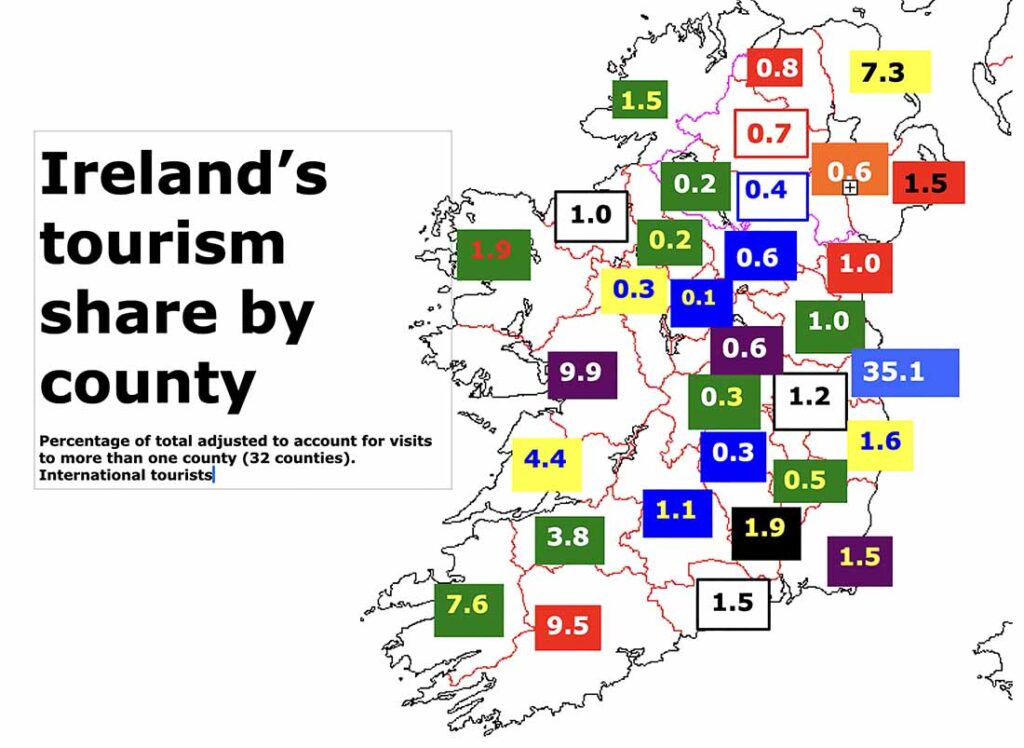
Ireland’s county Louth is a county of historic depth and coastal beauty, with Drogheda’s St Peter’s Church housing a historic shrine and the Boyne Valley offering ancient sites like Newgrange, a UNESCO-listed passage tomb just over the border in county Meath. Carlingford’s medieval streets and castle provide scenic walks, while Dundalk’s coastal paths add natural allure. Other attractions include the Cooley Peninsula’s hiking trails. Louth is Ireland’s smallest county by size (821 sq km) and 17th largest by population (139,703). Population peaked at 128,240 in 1841 and reached its lowest point, 63,665 in 1926. In terms of hospitality, Louth is Ireland’s 21st most visited tourist county with around 108,000 international visitors per year.
Introduction – Adventure – Anthem – Archaeology – Attractions – Awards – Birdwatching – Camping – Castles – Churches – Contact list – Cycling – Dining – Equestrian – Festivals – Fishing – Folklore – Gardens – Golf – Graveyards – Happening – Haunted – Highest – Hiking – History – Holy Wells – Hotels – Hotels top 8 – Hunting & shooting – Instagrammable – Itineraries – Largest town – Luxury – MICE – Movies – Music – Name – New – Novelists – Off the beaten track – Poets – Pubs – Quotes – Random Facts – Restaurant Awards – Sacred Places – Saints – Songs – Spas – Sports – Sunsets – Sustainable – Things to do – Towns – Video – Villages – Walking – Wanderlist – Weddings – Wild swimming – Writers – 1837 – 1846 – 1852 – 1909 – 1955 – 1980 –