- Saint Brigid’s Well, Faughart Upper: Pattern day: February 1 (Saint Brigid’s Day), with active pilgrimage and Mass. Located in an old graveyard beside a ruined medieval church at Faughart Upper, mistakenly believed to be Saint Brigid’s birthplace, this well is a major pilgrimage site. Pilgrims perform rounds, drink the water using a provided cup, and tie rags to a cherry laurel bush (mistakenly called a tree). Known for general healing, it draws crowds for its historical and spiritual significance. Faughart Upper, near Dundalk, Co. Louth.
- Ladywell (Saint Mary’s Well), Dundalk: Pattern day: August 15 (Feast of the Assumption), with devotions. Situated off the Dublin Road in Dundalk, this well is dedicated to the Virgin Mary. Housed in a small shrine, it’s used for spiritual blessings and healing. Pilgrims perform rounds, recite the Rosary, and leave offerings like candles or medals. Its urban setting makes it accessible, but patterns are less formal today. Dublin Road, Dundalk, Co. Louth.
- Tobar Dhomhaigh, Tullyallen: Pattern day: Unknown, possibly tied to Sunday devotions. Located roadside in Tullyallen village center, this well’s name translates to “Sunday Well.” Used for general healing, it lacks a specific saintly dedication but reflects pre-Christian water veneration. Pilgrims historically performed rounds, but the well is now neglected and overgrown, with minimal modern use. Tullyallen, Co. Louth.
- Saint Eoin’s Well, Dundalk: Pattern day: June 24 (Saint John the Baptist’s Day), historically observed. Dedicated to Saint Eoin (John), this well in Dundalk is near the Castletown River’s lowest high-tide fording point, close to the old Tara-Ulster road. Housed in a small, overgrown building with an Irish inscription, it was used for healing. Patterns have ceased, and its urban setting has reduced its prominence. Near Castletown River, Dundalk, Co. Louth.
- Saint Patrick’s Well, Ardee: Pattern day: March 17 (Saint Patrick’s Day), with historical patterns. In Ardee, this well is linked to Saint Patrick, who reportedly baptized converts here. Known for curing sore eyes and general ailments, pilgrims performed rounds and left clooties on nearby trees. Now on private land, it’s less visited but noted in Stone and Tree Sheltering Water for its historical significance. Ardee, Co. Louth.
- Saint Brigid’s Well, Termonfeckin: Pattern day: February 1 (Saint Brigid’s Day), though patterns are rare. Near Termonfeckin’s historic monastery, this well is dedicated to Saint Brigid. Used for healing, particularly women’s ailments, pilgrims performed rounds and left offerings like Brigid’s crosses. Its rural setting near a medieval church adds historical depth, but it’s now neglected, with minimal modern devotion. Termonfeckin, Co. Louth.
- Tobar na Súl, Near Drogheda: Pattern day: Unknown, possibly Lughnasa (August 1). Known as the “Eye Well,” this well near Drogheda was famed for curing eye ailments. Pilgrims bathed their eyes with the water and tied clooties to bushes, believing ailments would fade as the rags decayed, per Patrick Logan’s The Holy Wells of Ireland. Its rural location is obscure, with no active patterns. Near Drogheda, Co. Louth.
- Tobar na nGealt, Near Louth Village: Pattern day: Unknown, possibly summer festivals. The “Well of the Insane” near Louth Village was believed to cure mental illnesses, reflecting pre-Christian Otherworldly beliefs. Pilgrims performed rounds and left clooties, as noted in Logan’s The Holy Wells of Ireland. Its secluded setting keeps it hidden, with no modern use but strong folklore ties. Near Louth Village, Co. Louth.
- Saint Finian’s Well, Clogherhead: Pattern day: September 18 (Saint Finian’s Day), historically observed. In Clogherhead, this well is dedicated to Saint Finian, a local saint. Used for general healing, pilgrims performed rounds and left offerings like coins or rags. Its coastal setting near a fishing village adds charm, but it’s now on private land and rarely visited, per Stone and Tree Sheltering Water. Clogherhead, Co. Louth.
- Saint Columba’s Well, Blackrock: Pattern day: June 9 (Saint Columba’s Day), though patterns have lapsed. Near Blackrock, this well is linked to Saint Columba (Colmcille). Known for curing headaches, pilgrims performed rounds and left clooties. Its proximity to the coast and urban growth have reduced its prominence, but it remains noted in local heritage records for its early Christian ties. Blackrock, Co. Louth.
- Saint Fursey’s Well, Dunleer: Pattern day: February 16 (Saint Fursey’s Day), with past devotions. Dedicated to Saint Fursey, a 7th-century missionary, this well in Dunleer was used for healing, particularly rheumatism. Pilgrims performed rounds and left offerings like medals. Its rural setting near a historic church site preserves its sanctity, but it’s now obscure, with patterns long ceased. Dunleer, Co. Louth.
- Holy Well, Dromin: Pattern day: possibly August 15 (Feast of the Assumption). In Dromin, this well lacks a specific saintly dedication but was used for general healing. Pilgrims performed rounds and left clooties, as noted in dúchas.ie. Its rural location and lack of clear records make it obscure, but it reflects Louth’s tradition of smaller, unnamed wells. Now likely neglected. Dromin, Co. Louth.
Visiting:
- Access and Condition: Many Louth wells are on private land (e.g., Ardee, Clogherhead) or overgrown (e.g., Tobar Dhomhaigh); seek permission where needed (check www.louthheritage.ie or www.ihwcbc.omeka.net). Saint Brigid’s (Faughart) and Ladywell are maintained, while others, like Saint Eoin’s, are neglected or urbanized.
- Visiting Tips: Use a map or GPS (www.ihwcbc.omeka.net) (www.ihwcbc.omeka.net), as signage is often absent. Wear waterproof boots for rural or boggy sites, and respect offerings like clooties or cups. For Faughart, attend February 1 for a communal pilgrimage; for Ladywell, visit on August 15 for devotions.
- Pattern Days: Where unknown, visits likely peaked in summer (May-August), tied to saints’ feast days or Lughnasa. Patterns declined post-19th century due to Penal Laws, Famine, and church disapproval of “excessive” festivities, but Faughart and Ladywell remain active.
- Cultural Context: Louth’s wells were Mass sites during Penal Times, with sunwise rounds (deiseal), Rosary prayers, and clooties to transfer ailments. Specialized cures (e.g., eyes, mental illness) reflect pre-Christian beliefs, often enhanced by sacred trees or stones.
Holy Wells
Antrim – Armagh – Carlow – Cavan – Clare – Cork – Derry – Donegal – Down – Dublin – Fermanagh – Galway – Kerry – Kildare – Kilkenny – Laois – Leitrim – Limerick – Longford – Louth – Mayo – Meath – Monaghan – Offaly – Roscommon – Sligo – Tipperary – Tyrone – Waterford – Westmeath – Wexford – Wicklow
Sacred Places
Antrim – Armagh – Carlow – Cavan – Clare – Cork – Derry – Donegal – Down – Dublin – Fermanagh – Galway – Kerry – Kildare – Kilkenny – Laois – Leitrim – Limerick – Longford – Louth – Mayo – Meath – Monaghan – Offaly – Roscommon – Sligo – Tipperary – Tyrone – Waterford – Westmeath – Wexford – Wicklow
County Louth:
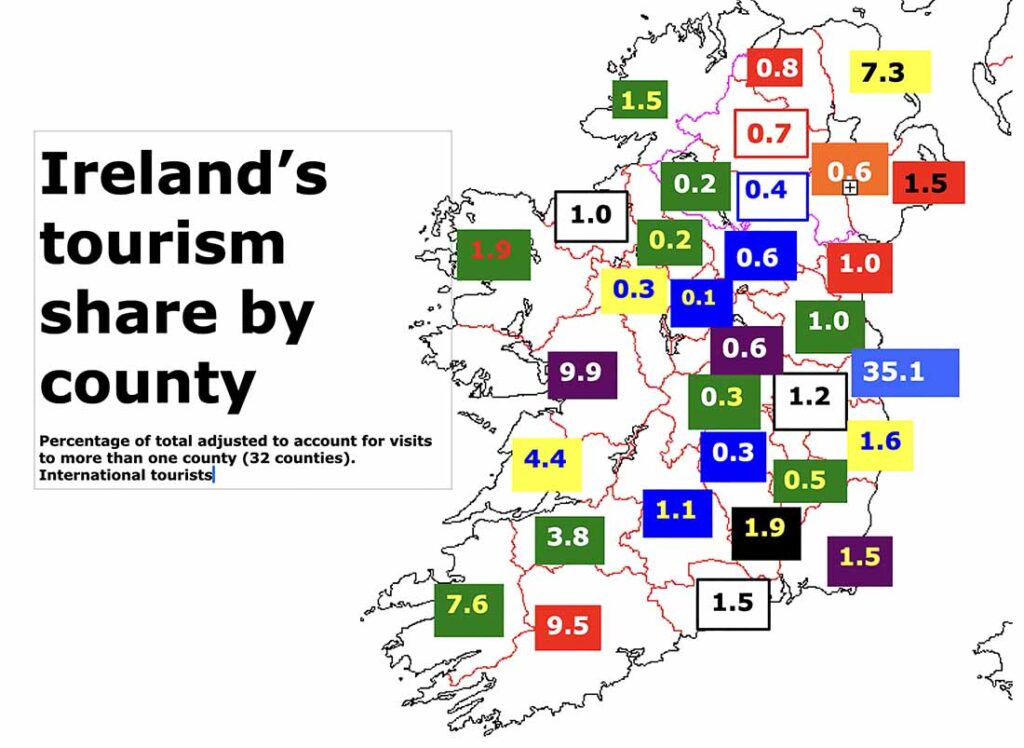
Ireland’s county Louth is a county of historic depth and coastal beauty, with Drogheda’s St Peter’s Church housing a historic shrine and the Boyne Valley offering ancient sites like Newgrange, a UNESCO-listed passage tomb just over the border in county Meath. Carlingford’s medieval streets and castle provide scenic walks, while Dundalk’s coastal paths add natural allure. Other attractions include the Cooley Peninsula’s hiking trails. Louth is Ireland’s smallest county by size (821 sq km) and 17th largest by population (139,703). Population peaked at 128,240 in 1841 and reached its lowest point, 63,665 in 1926. In terms of hospitality, Louth is Ireland’s 21st most visited tourist county with around 108,000 international visitors per year.
Introduction – Adventure – Anthem – Archaeology – Attractions – Awards – Birdwatching – Camping – Castles – Churches – Contact list – Cycling – Dining – Equestrian – Festivals – Fishing – Folklore – Gardens – Golf – Graveyards – Happening – Haunted – Highest – Hiking – History – Holy Wells – Hotels – Hotels top 8 – Hunting & shooting – Instagrammable – Itineraries – Largest town – Luxury – MICE – Movies – Music – Name – New – Novelists – Off the beaten track – Poets – Pubs – Quotes – Random Facts – Restaurant Awards – Sacred Places – Saints – Songs – Spas – Sports – Sunsets – Sustainable – Things to do – Towns – Video – Villages – Walking – Wanderlist – Weddings – Wild swimming – Writers – 1837 – 1846 – 1852 – 1909 – 1955 – 1980 –