- Dorothy Macardle (1889-1958) Born in Dundalk, Macardle was a historian, novelist, and playwright known for The Irish Republic (1937), a seminal history of Ireland’s independence struggle. Her gothic novels, The Uninvited (1942) and The Unforeseen (1946), gained international acclaim and were adapted into films. A republican activist, she was imprisoned during the Civil War, and her writings reflect Louth’s revolutionary heritage.
- Paul Vincent Carroll (1900-1968) Born in Dundalk, Carroll was a playwright whose works, such as Shadow and Substance (1937) and The White Steed (1939), won acclaim at the Abbey Theatre. His plays explored Irish rural life, religion, and conflict, earning him a New York Drama Critics’ Circle Award. His Louth roots shaped his vivid depictions of Irish communities.
- Thomas D’Arcy McGee (1825-1868) Born in Carlingford, McGee was a poet, journalist, and politician who contributed to Irish nationalist literature through poems like “The Irish Raparees” and writings in the Nation. After emigrating to Canada, he became a Father of Confederation, but his early work reflected Louth’s revolutionary spirit. He was assassinated in Ottawa.
- Henry Boylan (1912-1993) Born in Drogheda, Boylan was a writer and historian known for A Dictionary of Irish Biography (1978), a key reference work. His novels, such as The Darkest Flower (1964), and contributions to local history captured Louth’s cultural landscape. He also served as a civil servant and broadcaster.
- John Foster (1740-1828) Born in Collon, Foster was a politician and writer whose speeches and pamphlets, including An Essay on the Principles of Commercial Exchanges (1804), addressed Irish economic and political issues. As Speaker of the Irish House of Commons, his writings influenced pre-Union debates, rooted in Louth’s landed gentry tradition.
- David Keenan (1971-) Born in Dundalk, Keenan is a novelist, musician, and writer whose works, like This Is Memorial Device (2017) and For the Good Times (2019), explore music, memory, and the Troubles. His experimental style and Louth roots have earned him critical acclaim in contemporary Irish literature.
Writers
Antrim – Armagh – Carlow – Cavan – Clare – Cork – Derry – Donegal – Down – Dublin – Fermanagh – Galway – Kerry – Kildare – Kilkenny – Laois – Leitrim – Limerick – Longford – Louth – Mayo – Meath – Monaghan – Offaly – Roscommon – Sligo – Tipperary – Tyrone – Waterford – Westmeath – Wexford – Wicklow
County Louth:
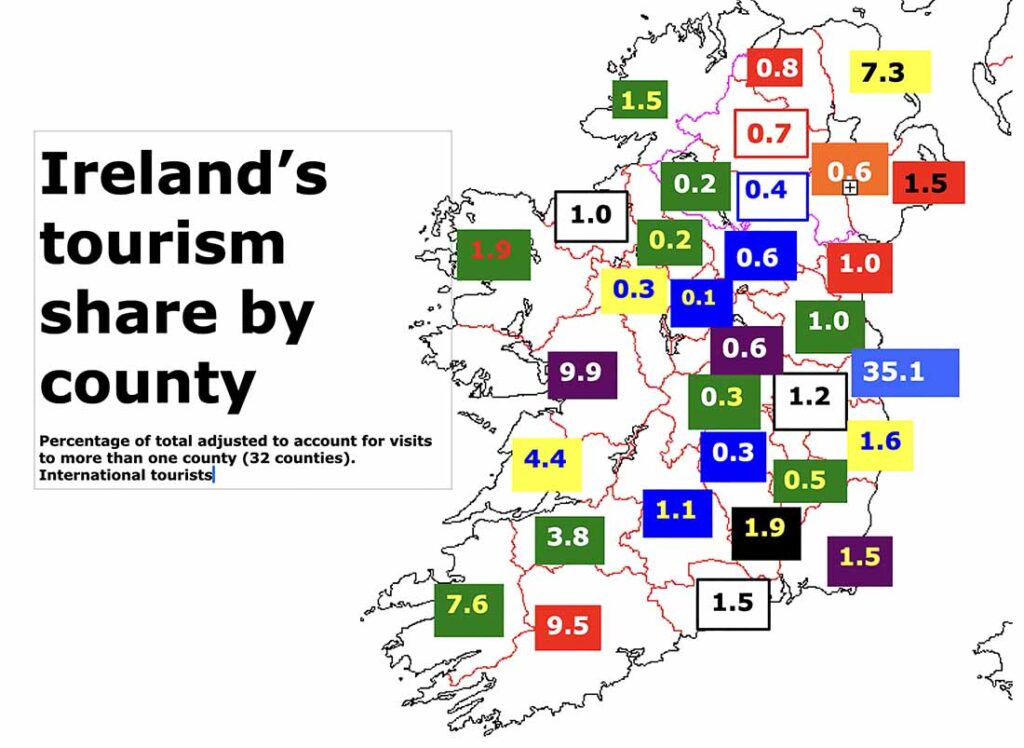
Ireland’s county Louth is a county of historic depth and coastal beauty, with Drogheda’s St Peter’s Church housing a historic shrine and the Boyne Valley offering ancient sites like Newgrange, a UNESCO-listed passage tomb just over the border in county Meath. Carlingford’s medieval streets and castle provide scenic walks, while Dundalk’s coastal paths add natural allure. Other attractions include the Cooley Peninsula’s hiking trails. Louth is Ireland’s smallest county by size (821 sq km) and 17th largest by population (139,703). Population peaked at 128,240 in 1841 and reached its lowest point, 63,665 in 1926. In terms of hospitality, Louth is Ireland’s 21st most visited tourist county with around 108,000 international visitors per year.
Introduction – Adventure – Anthem – Archaeology – Attractions – Awards – Birdwatching – Camping – Castles – Churches – Contact list – Cycling – Dining – Equestrian – Festivals – Fishing – Folklore – Gardens – Golf – Graveyards – Happening – Haunted – Highest – Hiking – History – Holy Wells – Hotels – Hotels top 8 – Hunting & shooting – Instagrammable – Itineraries – Largest town – Luxury – MICE – Movies – Music – Name – New – Novelists – Off the beaten track – Poets – Pubs – Quotes – Random Facts – Restaurant Awards – Sacred Places – Saints – Songs – Spas – Sports – Sunsets – Sustainable – Things to do – Towns – Video – Villages – Walking – Wanderlist – Weddings – Wild swimming – Writers – 1837 – 1846 – 1852 – 1909 – 1955 – 1980 –