- Edward Bruce, Faughart Graveyard, near Dundalk. Edward Bruce (c. 1280-1318), a military and political figure (Scottish prince and brother of Robert the Bruce), proclaimed High King of Ireland during his campaign against Norman rule; his reputed grave marks the site of his defeat and death at the Battle of Faughart in 1318.
- Blessed Oliver Plunkett (head relic), St Peter’s Church, Drogheda. Oliver Plunkett (1625-1681), Archbishop of Armagh and Primate of All Ireland, a key figure in politics and religion; martyred in London for alleged treason during the Popish Plot, canonised in 1975; his head is enshrined here as a major relic (body buried in Louth’s St Peter’s, with other relics elsewhere).
- Castlebellingham, O’Bryen Bellingham (1805–1857), Physician and medical practitioner from the prominent Bellingham family of Castlebellingham; noted for his contributions to local medicine. Buried in the family tomb at Castlebellingham, Co. Louth.
- Drogheda, Richard Jebb (1766–1834), Author, judge, and legal figure; served in Irish courts and wrote on legal topics. Born in Drogheda; buried in the family grave in Drogheda, Co. Louth.
- Henry Ussher (d. 1613), Church of Ireland archbishop of Armagh; influential in early 17th-century ecclesiastical politics during plantation era. Died at Termonfeckin; buried in St Peter’s, Drogheda, Co. Louth.
- Michael Plunkett (1652–1727), Catholic priest and scholar; ordained in Ardpatrick and active in Irish church history post-Reformation. Buried in the graveyard associated with his later life (likely local or Dublin, but ties to Co. Louth ordination site).
List of Graveyards in Louth
Ardee (St. Mary’s Churchyard), Ballapousta Graveyard, Ballapousta RC Cemetery, Ballymakenny Churchyard, Ballymascanlan (St. Mary’s Churchyard), Barmeath Graveyard, Beaulieu Churchyard, Bellurgan Graveyard, Carlingford (Holy Trinity Churchyard), Carlingford (St. Michael’s RC Churchyard), Castletown Graveyard (Dundalk), Clogherhead (St. Michael’s Churchyard), Clonmore Graveyard, Collon (Church of Ireland Graveyard), Collon RC Cemetery, Darver Churchyard, Dromin Churchyard, Dromiskin (St. Ronan’s Churchyard), Drogheda (Calvary Cemetery), Drogheda (Chord Cemetery), Drogheda (St. Mary’s Churchyard), Drogheda (St. Peter’s Church of Ireland Graveyard), Drogheda (St. Peter’s RC Cemetery), Drumcar (St. Finian’s Churchyard), Drumshallon Graveyard, Dunany Churchyard, Dundalk (Castletown Old Graveyard), Dundalk (St. Nicholas’ Churchyard), Dundalk (St. Patrick’s RC Cemetery), Dunleer (St. Brigid’s Churchyard), Faughart Graveyard, Greenmount Cemetery (Castlebellingham), Haynestown Graveyard, Kane Graveyard, Kildemock (Jumping Church Graveyard), Killincoole Graveyard, Kilsaran (St. Peter’s Churchyard), Knockbridge (St. Mary’s RC Churchyard), Ladywell Graveyard (Dundalk), Louth Village (St. Mary’s Churchyard), Mansfieldstown Churchyard, Monasterboice (St. Mary’s Churchyard), Mosstown Graveyard, Mullary Graveyard, Newtownstalaban Graveyard, Port (St. Colman’s Churchyard), Rathdrumin Graveyard, Salterstown Graveyard, Shanlis Graveyard, Smarmore Graveyard, Stabannon (St. Nicholas’ Churchyard), Termonfeckin (St. Fechin’s Churchyard), Tullyallen (Our Lady of the Assumption Churchyard)
Graveyards
Antrim – Armagh – Carlow – Cavan – Clare – Cork – Derry – Donegal – Down – Dublin – Fermanagh – Galway – Kerry – Kildare –Kilkenny – Laois – Leitrim – Limerick – Longford – Louth – Mayo – Meath – Monaghan – Offaly – Roscommon – Sligo – Tipperary – Tyrone – Waterford – Westmeath – Wexford – Wicklow
County Louth:
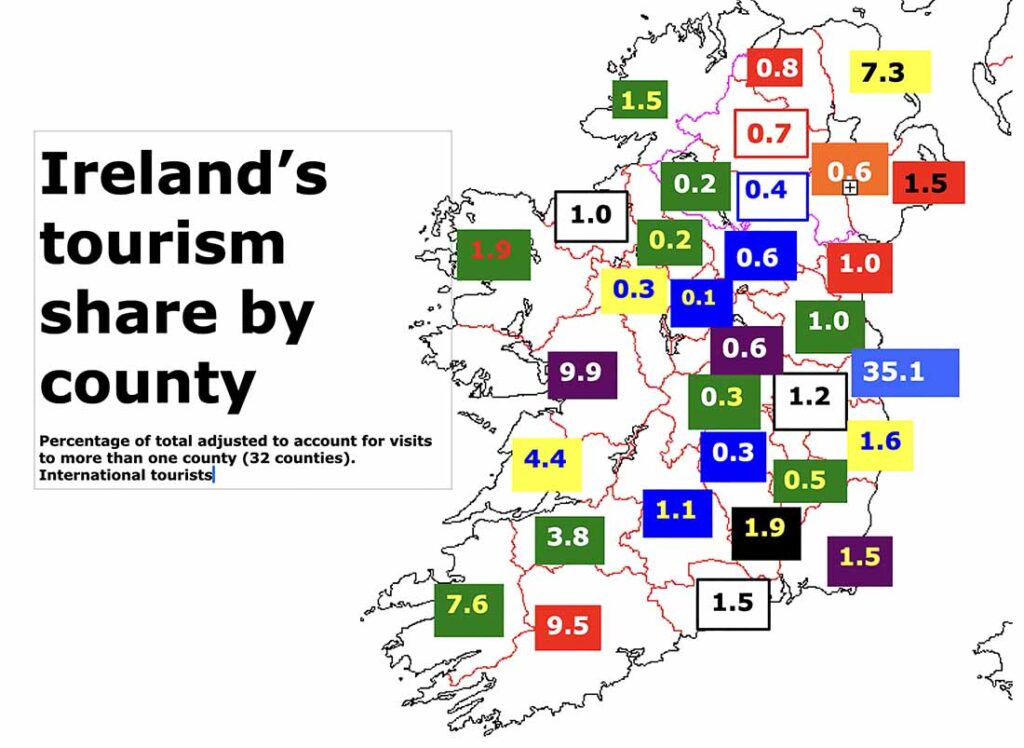
Ireland’s county Louth is a county of historic depth and coastal beauty, with Drogheda’s St Peter’s Church housing a historic shrine and the Boyne Valley offering ancient sites like Newgrange, a UNESCO-listed passage tomb just over the border in county Meath. Carlingford’s medieval streets and castle provide scenic walks, while Dundalk’s coastal paths add natural allure. Other attractions include the Cooley Peninsula’s hiking trails. Louth is Ireland’s smallest county by size (821 sq km) and 17th largest by population (139,703). Population peaked at 128,240 in 1841 and reached its lowest point, 63,665 in 1926. In terms of hospitality, Louth is Ireland’s 21st most visited tourist county with around 108,000 international visitors per year.
Introduction – Adventure – Anthem – Archaeology – Attractions – Awards – Birdwatching – Camping – Castles – Churches – Contact list – Cycling – Dining – Equestrian – Festivals – Fishing – Folklore – Gardens – Golf – Graveyards – Happening – Haunted – Highest – Hiking – History – Holy Wells – Hotels – Hotels top 8 – Hunting & shooting – Instagrammable – Itineraries – Largest town – Luxury – MICE – Movies – Music – Name – New – Novelists – Off the beaten track – Poets – Pubs – Quotes – Random Facts – Restaurant Awards – Sacred Places – Saints – Songs – Spas – Sports – Sunsets – Sustainable – Things to do – Towns – Video – Villages – Walking – Wanderlist – Weddings – Wild swimming – Writers – 1837 – 1846 – 1852 – 1909 – 1955 – 1980 –