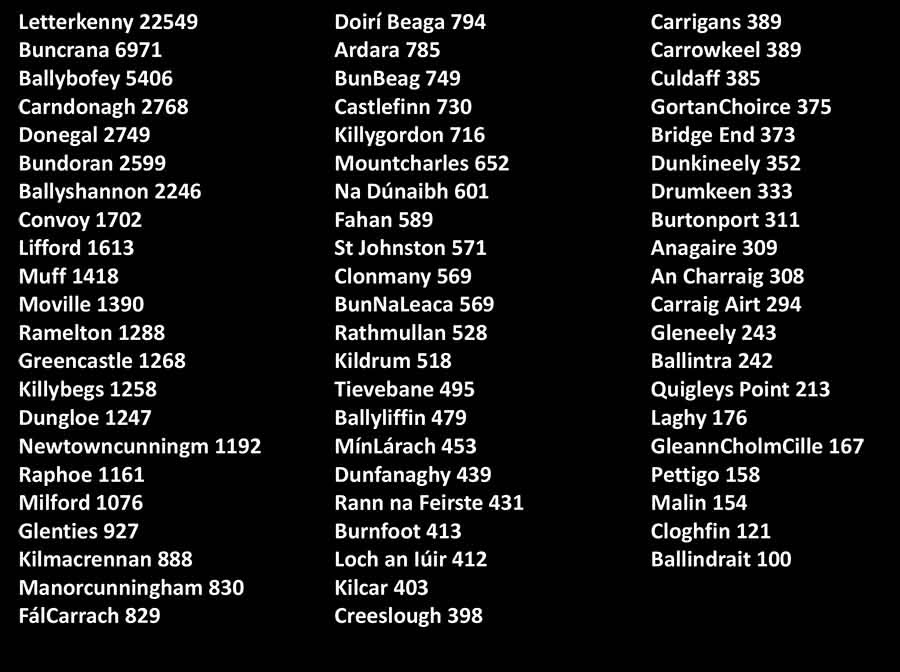
- Letterkenny (22,549 inhabitants): Letterkenny serves as the largest town in Donegal and a main commercial centre. Visitors can expect shops, pubs, and eateries in the town centre, along with St Eunan’s Cathedral featuring stained glass windows, the Donegal County Museum in a former workhouse building with local artefacts, and a town park for walks. The location provides a base for trips to Glenveagh National Park and castle nearby, with trails and gardens accessible by short drive.
- Buncrana (6,971 inhabitants): Buncrana lies on the shores of Lough Swilly on the Inishowen peninsula. Visitors might expect a beachfront with walks, a promenade, and facilities for seaside leisure. The area offers access to nearby historical sites such as forts and opportunities for outdoor activities in the surrounding landscape.
- Ballybofey-Stranorlar (5,406 inhabitants): Ballybofey-Stranorlar forms twin towns along the River Finn. Visitors can expect woodland paths in Drumboe Woods for strolling, a golf course, and local amenities. The towns provide a quiet base close to river scenery and nearby forest features.
- Carndonagh (2,768 inhabitants): Carndonagh is a market town on the Inishowen peninsula with a central diamond square. Visitors might expect to see the ancient Donagh Cross from early centuries in the town centre, an imposing church overlooking the area, and access to nearby beaches, wildlife sites, and rural drives towards Malin Head.
- Donegal (2,749 inhabitants): Donegal is a historic market town with a diamond at its centre. Visitors can expect Donegal Castle with guided tours, a bay for boat trips, and local shops and dining options. The town acts as a gateway to south Donegal landscapes and coastal routes.
- Bundoran (2,599 inhabitants): Bundoran is a coastal town known for its beach and surfing conditions. Visitors might expect shore walks including the Rougey Cliff path to natural rock features such as the Fairy Bridges, golf on a seaside course, and facilities for water activities along Donegal Bay with views towards distant mountains.
- Ballyshannon (2,246 inhabitants): Ballyshannon stands on the River Erne near the coast. Visitors can expect river scenery, historical sites, and a peaceful town atmosphere with local amenities and access to nearby beaches.
- Convoy (1,702 inhabitants): Convoy is a small inland town. Visitors might expect a quiet community setting with basic facilities and surrounding countryside for relaxed exploration.
- Lifford (1,613 inhabitants): Lifford lies close to the Tyrone border. Visitors can expect a modest town with local services and proximity to river areas for gentle outings.
- Muff (1,418 inhabitants): Muff is a small settlement near Lough Foyle. Visitors might expect rural surroundings and a calm base close to cross-border routes.
- Moville (1,390 inhabitants): Moville sits on the Inishowen peninsula overlooking Lough Foyle. Visitors can expect coastal paths, harbour views, and a peaceful location for seaside strolls.
- Ramelton (1,288 inhabitants): Ramelton is a former planned town on the River Lennon. Visitors might expect riverside walks, historical buildings, and a quiet setting with local amenities.
- Greencastle (1,268 inhabitants): Greencastle functions as a fishing port on Lough Foyle. Visitors can expect harbour activity, ferry access to nearby areas, and coastal scenery.
- Killybegs (1,258 inhabitants): Killybegs is a busy fishing town on the coast. Visitors might expect to see working boats in the harbour, local seafood options, and access to nearby bays and walks.
- An Clochán Liath (1,247 inhabitants): An Clochán Liath (Dungloe) serves as a centre in the northwest Gaeltacht area. Visitors can expect local facilities, proximity to beaches, and access to rural and coastal landscapes.
- Newtowncunningham (1,192 inhabitants): Newtowncunningham is a modest village near Lough Swilly. Visitors might expect peaceful rural lanes and basic community amenities.
- Raphoe (1,161 inhabitants): Raphoe features cathedral ruins and a diamond square. Visitors can expect historical sites from early periods and a quiet town atmosphere.
- Milford (1,076 inhabitants): Milford lies near the coast with river access. Visitors might expect scenic surroundings, local services, and proximity to nearby bays.
- Glenties (927 inhabitants): Glenties is a small town in a valley setting. Visitors can expect access to countryside paths and a calm base for regional exploration.
- Kilmacrennan (888 inhabitants): Kilmacrennan is a rural settlement. Visitors might expect quiet surroundings and local facilities in open landscapes.
- Manorcunningham (830 inhabitants): Manorcunningham is a small community near Lough Swilly. Visitors can expect peaceful rural access and basic amenities.
- An Fál Carrach (829 inhabitants): An Fál Carrach (Falcarragh) functions as a Gaeltacht village near the coast. Visitors might expect Irish-language culture, nearby beaches, and mountain views.
- Doirí Beaga (794 inhabitants): Doirí Beaga (Derrybeg) lies in a coastal Gaeltacht area. Visitors can expect seaside proximity and rural surroundings.
- Ardara (785 inhabitants): Ardara is a small town near the coast. Visitors might expect local craft heritage, access to beaches, and quiet countryside.
- An Bun Beag (749 inhabitants): An Bun Beag (Bunbeg) is a coastal village in the Gaeltacht. Visitors can expect harbour views, traditional settings, and access to Atlantic scenery.
- Castlefinn (730 inhabitants): Castlefinn stands on the River Finn. Visitors might expect river scenery and a modest rural community.
- Killygordon (716 inhabitants): Killygordon is a small settlement along the river. Visitors can expect peaceful surroundings and local life.
- Mountcharles (652 inhabitants): Mountcharles overlooks Donegal Bay. Visitors might expect coastal outlooks and a quiet village atmosphere.
- Na Dúnaibh (601 inhabitants): Na Dúnaibh (Downings) lies on the Rosguill peninsula. Visitors can expect beach access, harbour facilities, and proximity to coastal walks.
Population of towns in county Donegal
Towns
Antrim – Armagh – Carlow – Cavan – Clare – Cork – Derry – Donegal – Down – Dublin – Fermanagh – Galway – Kerry – Kildare – Kilkenny – Laois – Leitrim – Limerick – Longford – Louth – Mayo – Meath – Monaghan – Offaly – Roscommon – Sligo – Tipperary – Tyrone – Waterford – Westmeath – Wexford – Wicklow
Villages
Antrim – Armagh – Carlow – Cavan – Clare – Cork – Derry – Donegal – Down – Dublin – Fermanagh – Galway – Kerry – Kildare – Kilkenny – Laois – Leitrim – Limerick – Longford – Louth – Mayo – Meath – Monaghan – Offaly – Roscommon – Sligo – Tipperary – Tyrone – Waterford – Westmeath – Wexford – Wicklow
Largest town in the county: a walking tour
Antrim – Armagh – Carlow – Cavan – Clare – Cork – Derry – Donegal – Down – Dublin – Fermanagh – Galway – Kerry – Kildare – Kilkenny – Laois – Leitrim – Limerick – Longford – Louth – Mayo – Meath – Monaghan – Offaly – Roscommon – Sligo – Tipperary – Tyrone – Waterford – Westmeath – Wexford – Wicklow
County Donegal:
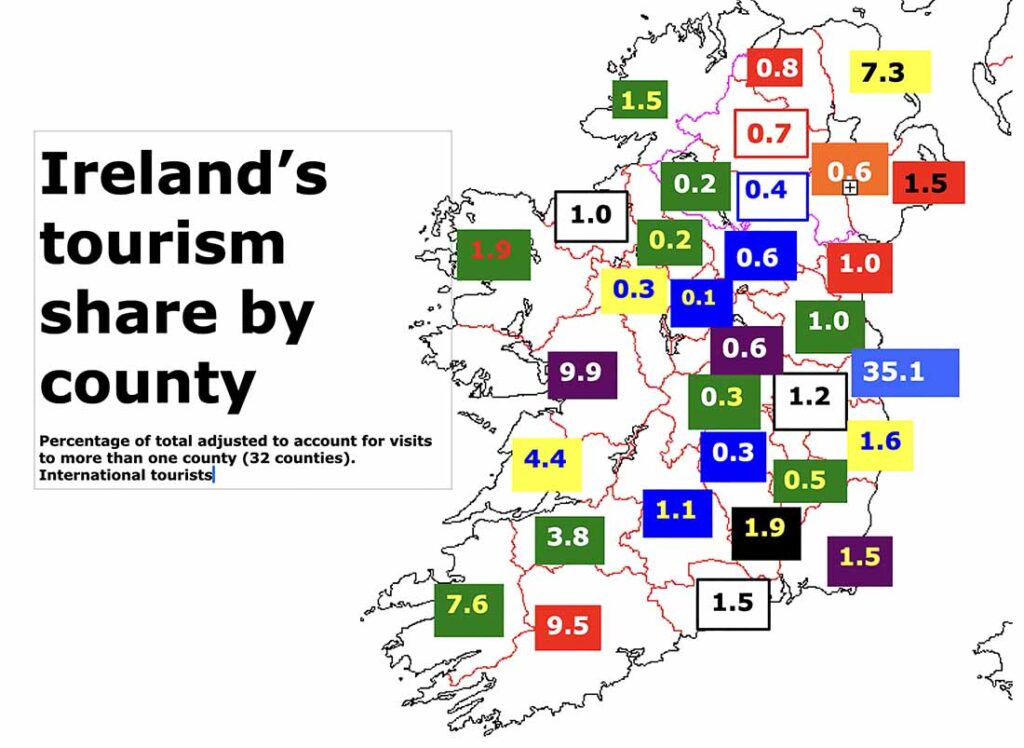
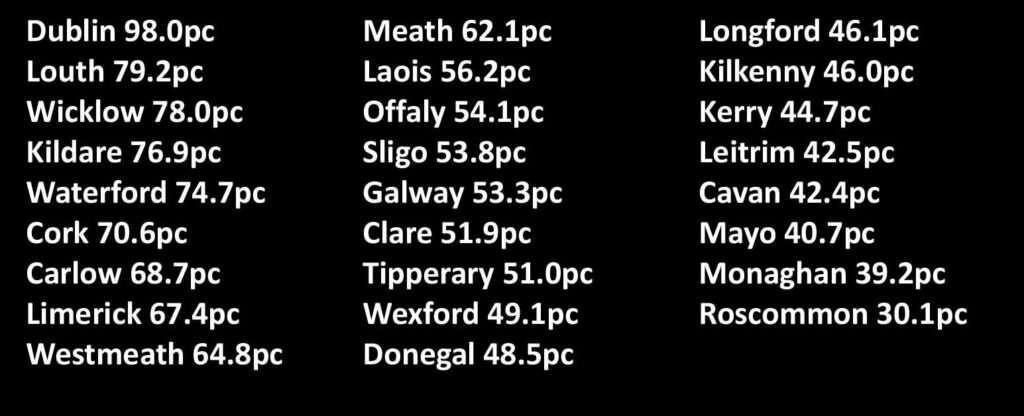
Ireland’s county Donegal is a land of wild coastlines and Gaelic heritage, with Slieve League’s towering sea cliffs offering some of Europe’s highest coastal views. Glenveagh National Park features a historic castle and sprawling gardens amidst rugged mountains. The beaches of Bundoran and the traditional tweed workshops of Ardara make Donegal an engaging destination for nature and cultural enthusiasts. The Grianan of Aileach stone fort adds ancient intrigue and splendid views. Donegal is Ireland’s fourth largest county by size (4,830 square km) and 13th largest by population (167,084). Population peaked at 296,448 in 1841 and reached its lowest point, 108,344 in 1971. In terms of hospitality, Donegal is also Ireland’s 13th most visited tourist county with around 199,000 international visitors per year.
Introduction – Adventure – Anthem – Archaeology – Attractions – Awards – Birdwatching – Camping – Castles – Churches – Contact list – Cycling – Dining – Equestrian – Festivals – Fishing – Folklore – Gardens – Golf – Graveyards – Happening – Haunted – Highest – Hiking – History – Holy Wells – Hotels – Hotels top 8 – Hunting & shooting – Instagrammable – Itineraries – Largest town – Luxury – MICE – Movies – Music – New – Name – Novelists – Off the beaten track – Poets – Pubs – Quotes – Random Facts – Restaurant Awards – Sacred Places – Saints – Songs – Spas – Sports – Sunsets – Sustainable – Things to do – Towns – Video – Villages – Walking – Wanderlist – Weddings – Wild swimming – Writers – 1837 – 1846 – 1852 – 1909 – 1955 – 1980 –