- Carrowmore Megalithic Cemetery: Carrowmore, near Sligo Town, County Sligo, approximately 5 km southwest of Sligo Town (Coordinates: 54.251°N, 8.519°W).. Carrowmore is one of Ireland’s largest and oldest megalithic cemeteries, dating to c. 3700–3000 BC, predating Newgrange. The site includes over 30 passage tombs, dolmens, and stone circles, with Tomb 51 (Listoghil) being the largest, featuring a central chamber and cairn. Excavations have uncovered cremated remains, pottery, and antler pins, indicating Neolithic burial practices. The cemetery is part of a broader ritual landscape linked to Knocknarea and Carrowkeel, reflecting a sophisticated prehistoric society. Its proximity to Sligo’s mythological sites ties it to the Táin Bó Cúailnge and Queen Medb. Managed by Heritage Ireland, the Carrowmore Visitor Centre is open seasonally (April–October) with guided tours and exhibits. Admission fees apply; check www.heritageireland.ie for hours and tickets.
- Knocknarea (Maeve’s Cairn): Knocknarea, near Strandhill, County Sligo, approximately 8 km west of Sligo Town (Coordinates: 54.259°N, 8.575°W).. Knocknarea is a prominent hill topped by a large unexcavated Neolithic passage tomb, known as Maeve’s Cairn or Miosgán Médhbh, dating to c. 3200–3000 BC. The 55-metre-wide cairn, traditionally associated with Queen Medb of Connacht, is one of Ireland’s largest unopened tombs. The hill also features smaller satellite tombs and a possible hillfort, suggesting a major ceremonial centre. Archaeological surveys indicate alignments with Carrowmore and Carrowkeel, reinforcing Sligo’s prehistoric ritual landscape. The site’s mythological significance enhances its cultural allure. Publicly accessible with free entry via a walking trail from Strandhill. No formal facilities; check www.discoverireland.ie or www.sligotourism.ie for trail information.
- Carrowkeel Passage Tomb Cemetery: Carrowkeel, near Castlebaldwin, County Sligo, approximately 25 km southeast of Sligo Town (Coordinates: 54.060°N, 8.376°W).. Carrowkeel is a Neolithic passage tomb complex (c. 3200–2500 BC) on the Bricklieve Mountains, comprising 14 cairns, with Cairns G, H, and K being the most accessible. The tombs feature corbelled chambers and megalithic art, with Cairn G aligned to the summer solstice sunset. Excavations in the early 20th century uncovered cremated remains, beads, and pottery, indicating ritual use. The site’s elevated position offers views to Knocknarea and Carrowmore, suggesting a connected sacred landscape. Carrowkeel reflects advanced Neolithic engineering and cosmology. Managed by Heritage Ireland, the site is open year-round with free access via a hiking trail. A small visitor centre operates seasonally (June–August). Check www.heritageireland.ie for details.
- Creevykeel Court Tomb: Near Cliffoney, County Sligo, approximately 20 km north of Sligo Town (Coordinates: 54.430°N, 8.462°W).. Creevykeel is one of Ireland’s finest court tombs, dating to c. 3500–3000 BC. This Neolithic monument features a large oval court leading to a double-chambered gallery for burials, covered by a cairn. Excavations in 1935 revealed pottery, flint tools, and cremated remains, indicating communal burial practices. The tomb’s sophisticated design reflects early farming communities in northwest Ireland. Its location near the Atlantic coast ties it to Sligo’s prehistoric maritime culture. Managed by the OPW, the site is publicly accessible with free entry and interpretive signage. No formal visitor centre; check www.heritageireland.ie or www.archaeology.ie for details.
- Drumcliffe Monastic Site: Drumcliffe, near Sligo Town, County Sligo, approximately 8 km north of Sligo Town (Coordinates: 54.325°N, 8.493°W).. Founded in the 6th century by St. Columba (Colmcille), Drumcliffe was an early Christian monastery. The site includes a 10th-century high cross with biblical carvings, a round tower stump, and a medieval church ruin. Archaeological evidence suggests a larger monastic enclosure with cross-inscribed slabs. The site is also famous for its association with W.B. Yeats, whose grave lies in the churchyard, linking it to Ireland’s cultural history. Drumcliffe reflects the spread of Christianity in Sligo and its enduring spiritual significance. Publicly accessible with free entry, managed by the OPW. Limited facilities, but the churchyard and visitor centre (seasonal) provide context. Check www.heritageireland.ie or www.sligotourism.ie for details.
- Inishmurray Island Monastic Site: Inishmurray Island, off Streedagh Point, County Sligo, approximately 25 km northwest of Sligo Town (Coordinates: 54.432°N, 8.661°W).. Inishmurray, an early Christian monastic site founded by St. Molaise in the 6th century, is a remote island complex featuring a stone-walled enclosure (cashel), three churches, beehive huts, altars, and cross-inscribed stones. Dating from the 6th to 12th centuries, it was a centre of pilgrimage and learning, with archaeological evidence of Viking raids in the 9th century. The island’s isolation preserved its structures, offering insights into early monastic life. Local folklore links it to cursing stones and healing wells. Accessible by boat from Mullaghmore or Grange (weather-dependent). No formal facilities; private boat hire is required. Check www.archaeology.ie or www.sligotourism.ie for access guidance.
Archaeological sites
Antrim – Armagh – Carlow – Cavan – Clare – Cork – Derry – Donegal – Down – Dublin – Fermanagh – Galway – Kerry – Kildare – Kilkenny – Laois – Leitrim – Limerick – Longford – Louth – Mayo – Meath – Monaghan – Offaly – Roscommon – Sligo – Tipperary – Tyrone – Waterford – Westmeath – Wexford – Wicklow
County Sligo:
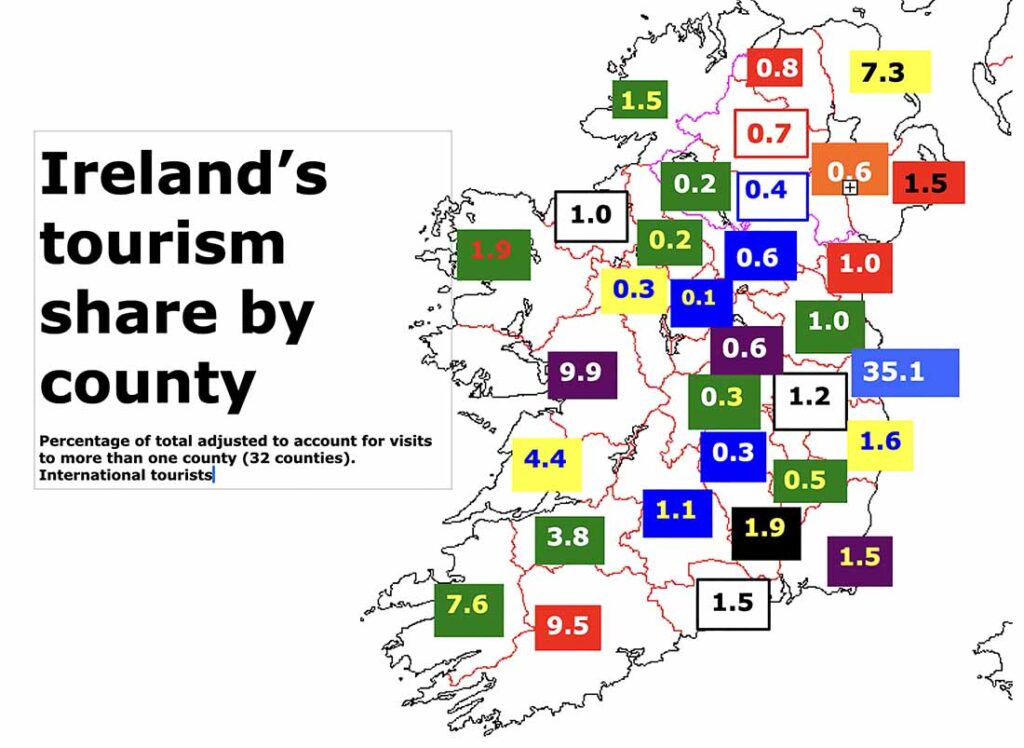
Ireland’s county Sligo is renowned for its poetic heritage and coastal scenery, with the Carrowmore Megalithic Cemetery offering one of Europe’s oldest prehistoric sites. The Benbulben mountain provides striking hiking trails, while Strandhill’s beaches are ideal for surfing. Other attractions include the historic Lissadell House and its gardens. Sligo is Ireland’s 22nd largest county by size (1,796 square km) and seventh smallest by population (70,198). Population peaked at 180,886 in 1841 and reached its lowest point, 50,275 in 1971. In terms of hospitality, Sligo is Ireland’s 17th most visited tourist county with around 133,000 international visitors per year.
Introduction – Adventure – Anthem – Archaeology – Attractions – Awards – Birdwatching – Camping – Castles – Churches – Contact list – Cycling – Dining – Equestrian – Festivals – Fishing – Folklore – Gardens – Golf – Graveyards – Happening – Haunted – Highest – Hiking – History – Holy Wells – Hotels – Hotels top 8 – Hunting & shooting – Instagrammable – Itineraries – Largest town – Luxury – MICE – Movies – Music – Name – New – Novelists – Off the beaten track – Poets – Pubs – Quotes – Random Facts – Restaurant Awards – Sacred Places – Saints – Songs – Spas – Sports – Sunsets – Sustainable – Things to do – Towns – Video – Villages – Walking – Wanderlist – Weddings – Wild swimming – Writers – 1837 – 1846– 1852 – 1909 – 1955 – 1980 –