- The Battle of Moytura: The great Battle of South Moytura was fought on the plains of County Sligo between the invading Tuatha Dé Danann and the native Firbolg; in the fierce combat, the Tuatha Dé leader Nuadha lost his arm, later replaced with one of silver, as the victors claimed dominion over Ireland.
- Cashelgarron and the Fianna: At the foot of Benbulbin mountain lies Cashelgarron, a stone fort believed to have been the dwelling place of Fionn Mac Cumhaill and his warrior band the Fianna; local tradition holds that they resided in a castle there in ancient times.
- Saint Patrick and the Witch: When Saint Patrick preached in Sligo, a wicked witch and her two daughters relentlessly opposed him, attempting to thwart his mission; in frustration, the saint banished her from Ireland, transforming her into a monstrous form associated with nearby mountains.
- Fairies Singing in the Rath: In a prominent ring fort such as that in Lisnalung near Shannon, fairies are said to emerge each night to sing songs commemorating ancient kings and warriors who once lived there, with stone pillars marking spots used for defence in old battles.
- The Shipwreck at Streedagh Bay: Long ago, a ship—possibly a tourist vessel from England—was wrecked on a stormy night at Streedagh Point near Grange; driven against the rocks, the vessel foundered, leaving tales of loss and survival passed down in the coastal community.
Folklore
Antrim – Armagh – Carlow – Cavan – Clare – Cork – Derry – Donegal – Down – Dublin – Fermanagh – Galway – Kerry – Kildare – Kilkenny – Laois – Leitrim – Limerick – Longford – Louth – Mayo – Meath – Monaghan – Offaly – Roscommon – Sligo – Tipperary – Tyrone – Waterford – Westmeath – Wexford – Wicklow
County Sligo:
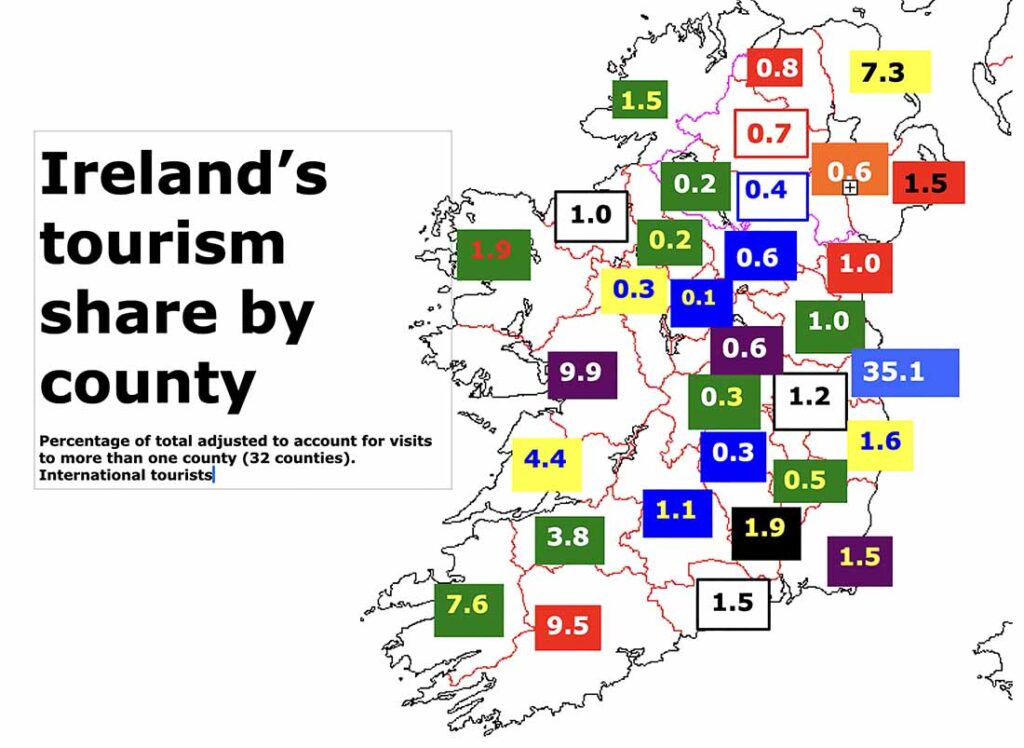
Ireland’s county Sligo is renowned for its poetic heritage and coastal scenery, with the Carrowmore Megalithic Cemetery offering one of Europe’s oldest prehistoric sites. The Benbulben mountain provides striking hiking trails, while Strandhill’s beaches are ideal for surfing. Other attractions include the historic Lissadell House and its gardens. Sligo is Ireland’s 22nd largest county by size (1,796 square km) and seventh smallest by population (70,198). Population peaked at 180,886 in 1841 and reached its lowest point, 50,275 in 1971. In terms of hospitality, Sligo is Ireland’s 17th most visited tourist county with around 133,000 international visitors per year.
Introduction – Adventure – Anthem – Archaeology – Attractions – Awards – Birdwatching – Camping – Castles – Churches – Contact list – Cycling – Dining – Equestrian – Festivals – Fishing – Folklore – Gardens – Golf – Graveyards – Happening – Haunted – Highest – Hiking – History – Holy Wells – Hotels – Hotels top 8 – Hunting & shooting – Instagrammable – Itineraries – Largest town – Luxury – MICE – Movies – Music – Name – New – Novelists – Off the beaten track – Poets – Pubs – Quotes – Random Facts – Restaurant Awards – Sacred Places – Saints – Songs – Spas – Sports – Sunsets – Sustainable – Things to do – Towns – Video – Villages – Walking – Wanderlist – Weddings – Wild swimming – Writers – 1837 – 1846– 1852 – 1909 – 1955 – 1980 –