- William Butler Yeats (1865-1939) Born in Sandymount, Dublin, but raised in Sligo, W.B. Yeats was a poet, dramatist, and key figure in the Irish Literary Revival. He won the Nobel Prize in Literature in 1923 for works like The Lake Isle of Innisfree and The Second Coming, which drew heavily on Sligo’s landscapes and mythology. He co-founded the Abbey Theatre and served as an Irish Senator. His childhood in Sligo shaped his poetic vision.
- Eva Gore-Booth (1870-1926) Born in Lissadell, Sligo, Eva Gore-Booth was a poet, dramatist, and suffragist. Her poetry collections, such as Poems (1898), reflect her mystical and social concerns. She was also a committed activist for women’s rights and pacifism, often collaborating with her partner Esther Roper. Her work intertwined literature with social reform.
- Neil Jordan (1950-) Born in Sligo, Neil Jordan is a renowned filmmaker, novelist, and short-story writer. His first book, Night in Tunisia (1976), won the Guardian Fiction Prize. He is best known for films like The Crying Game (Academy Award for Best Original Screenplay) and novels such as The Past (1980), blending Irish themes with cinematic storytelling.
- Giolla Íosa Mór Mac Fir Bhisigh (fl. 1390-1418) Born in Sligo, Mac Fir Bhisigh was a historian and scribe who compiled the Yellow Book of Lecan and Great Book of Lecan, preserving medieval Irish genealogies, myths, and histories. His work is a cornerstone of Irish historical literature, documenting the cultural heritage of Irish Ireland.
- Philip Rooney (1907-1966) Born in Sligo, Rooney was a writer and screenwriter known for his work on the film Captain Boycott (1947), which depicted Irish land struggles. His writing often explored Irish history and social issues, contributing to both literature and cinema.
- Conor McDermottroe (living) Born in Sligo, McDermottroe is a writer, director, and former actor known for screenplays and plays like Swansong: Story of Occi Byrne (2011), which won awards at the Galway Film Fleadh. His short film A Woman’s Hair won at the Venice International Short Film Festival, reflecting his focus on Irish narratives.
- R.M. “Bertie” Smyllie (1893-1954) Born in Sligo, Smyllie was a journalist and editor of The Irish Times (1934-1954). His witty columns under the pseudonym “Nichevo” and editorial leadership made the newspaper a key voice in Irish intellectual life. He also wrote humorous essays and reviews, shaping public discourse.
- Leland Bardwell (1922-2016) Born in India but raised in Sligo, Bardwell was a poet, novelist, and playwright. Her works, including Girl on a Bicycle (1977) and poetry collections like The White Beach (1998), explore personal and Irish themes with emotional depth. She was a founding member of the Irish Writers’ Co-operative.
- Michael Hargadon (1888-1968) Born in Colgagh, Calry, Sligo, Hargadon was a poet and writer who emigrated to Canada. His poetry, often published in Canadian journals, reflected his Irish roots and Sligo’s landscapes. His work gained local recognition, celebrated by the Calry Local History Society.
- Jim Gray (living) A Sligo native from Cartron Point, Gray was a journalist for the Sligo Champion for nearly 40 years before turning to fiction. His short stories, such as Young Mens’ Heads Full of Young Boys’ Dreams in the Ireland’s Own Anthology (2021), explore Irish life with poignant storytelling.
Writers
Antrim – Armagh – Carlow – Cavan – Clare – Cork – Derry – Donegal – Down – Dublin – Fermanagh – Galway – Kerry – Kildare – Kilkenny – Laois – Leitrim – Limerick – Longford – Louth – Mayo – Meath – Monaghan – Offaly – Roscommon – Sligo – Tipperary – Tyrone – Waterford – Westmeath – Wexford – Wicklow
County Sligo:
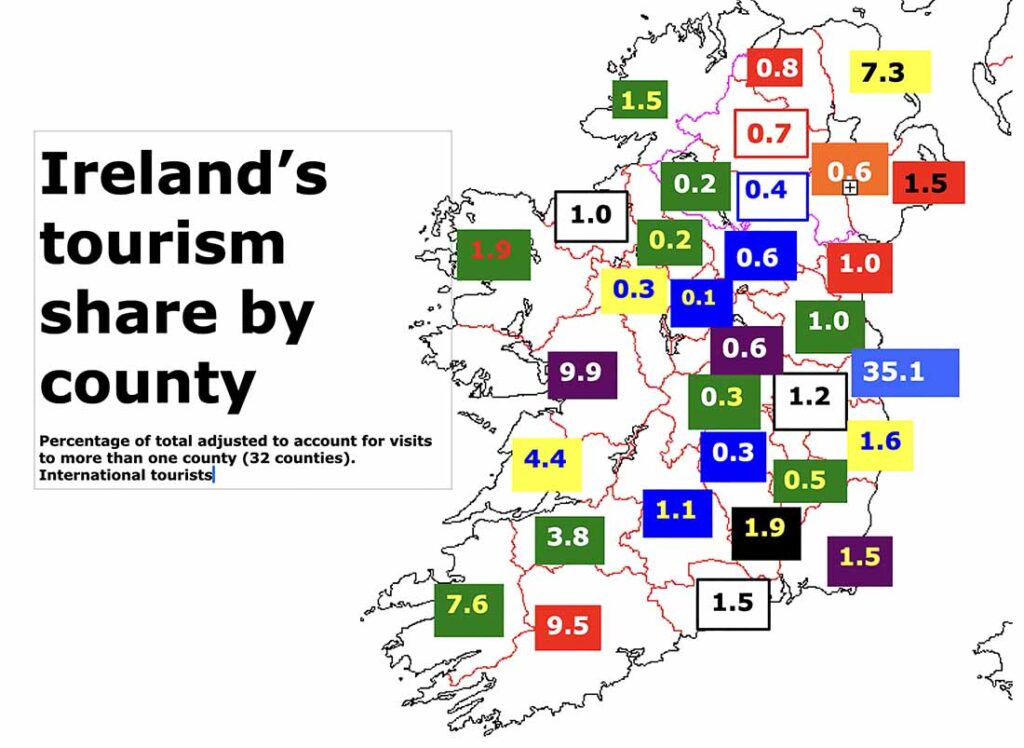
Ireland’s county Sligo is renowned for its poetic heritage and coastal scenery, with the Carrowmore Megalithic Cemetery offering one of Europe’s oldest prehistoric sites. The Benbulben mountain provides striking hiking trails, while Strandhill’s beaches are ideal for surfing. Other attractions include the historic Lissadell House and its gardens. Sligo is Ireland’s 22nd largest county by size (1,796 square km) and seventh smallest by population (70,198). Population peaked at 180,886 in 1841 and reached its lowest point, 50,275 in 1971. In terms of hospitality, Sligo is Ireland’s 17th most visited tourist county with around 133,000 international visitors per year.
Introduction – Adventure – Anthem – Archaeology – Attractions – Awards – Birdwatching – Camping – Castles – Churches – Contact list – Cycling – Dining – Equestrian – Festivals – Fishing – Folklore – Gardens – Golf – Graveyards – Happening – Haunted – Highest – Hiking – History – Holy Wells – Hotels – Hotels top 8 – Hunting & shooting – Instagrammable – Itineraries – Largest town – Luxury – MICE – Movies – Music – Name – New – Novelists – Off the beaten track – Poets – Pubs – Quotes – Random Facts – Restaurant Awards – Sacred Places – Saints – Songs – Spas – Sports – Sunsets – Sustainable – Things to do – Towns – Video – Villages – Walking – Wanderlist – Weddings – Wild swimming – Writers – 1837 – 1846– 1852 – 1909 – 1955 – 1980 –