Pre-1000 The Gaelic Nation
County Sligo, part of the ancient kingdom of Connacht, was dominated by Gaelic dynasties, notably the house of Fiachrach and house of Ailell, with the O’Connor (Ó Conchobhair) and O’Dowd (Ó Dubhda) dynasties rising to prominence by the 8th century. The county’s name derives from Sligeach (‘shelly river’), referring to the Garavogue River. Archaeological sites, such as Carrowmore’s megalithic tombs (c. 3700 BCE), indicate one of Europe’s oldest cemetery complexes, but no trace remains of the people who built them. Either they died out or were displaced by a new wave of settlers from Spain. . Christianity spread early, with St. Colmcille founding monasteries like Drumcliffe (c. 6th century). Viking raids targeted Sligo’s coast, particularly Sligo Bay, as noted in The Annals of Ulster, but its inland areas remained under Gaelic control. The O’Connors established strongholds like Ballinafad, shaping Sligo’s early history.
1000–1100: Gaelic Power and Monastic Growth
Sligo remained a Gaelic stronghold under the O’Connors, who vied for control of Connacht. The O’Dowds dominated coastal areas, particularly Tireragh. Monastic sites, including Drumcliffe and Inishmurray, flourished as centres of learning and spirituality, producing manuscripts and hosting pilgrims. The Annals of the Four Masters record conflicts between the O’Connors and neighbouring house of Niall dynasty, with Sligo as a strategic frontier. The county’s fertile lands and coastal access supported agriculture and fishing. The Synod of Kells (1152) later formalised Sligo’s diocesan role, with Elphin (partly in Sligo) as a bishopric. Sligo’s isolation from Viking strongholds preserved its Gaelic character.
1100–1200: Norman Arrival and Gaelic Resilience
The Norman invasion (1169) had a delayed impact on Sligo due to its western location. By the late 12th century, Norman adventurers, led by the de Burghs (Burkes), entered Connacht, but the O’Connors and O’Dowds resisted, maintaining control. The construction of Sligo Abbey (c. 1253, founded later but with earlier roots) reflects growing monastic influence. The Annals of Tigernach note the O’Connors’ alliances with other Gaelic lords to counter Norman expansion. Sligo’s rugged terrain, including the Ox Mountains, deterred large-scale Norman settlement, preserving Gaelic dominance.
1200–1300: Norman-Gaelic Coexistence
The Normans, particularly the Burkes, established a foothold in Sligo, building castles like Ballymote (c. 1300). The O’Connors retained significant autonomy, with figures like Cathal Crobhdearg O’Connor strengthening Connacht’s resistance. The O’Dowds controlled coastal areas, leveraging Sligo’s maritime trade. Sligo Abbey, founded in 1253 by Maurice Fitzgerald for the Dominicans, became a cultural hub, as noted in historical surveys. The Black Death (1348–1350) reduced Sligo’s population, though records are scarce. The Annals of Connacht detail the O’Connors’ conflicts with Normans and rival clans, while Sligo’s distance from the Pale preserved its Gaelic identity.
1300–1400: Gaelic Resurgence and O’Connor Ascendancy
The decline of Norman power allowed the O’Connors to reassert control over Sligo. The clan, led by figures like Turlough O’Connor, ruled as Kings of Connacht, using castles like Ballymote as strongholds. The O’Dowds maintained coastal dominance, with fortifications at Enniscrone. Sligo Abbey grew in influence, supported by Gaelic and Hiberno-Norman patrons. The county’s economy relied on cattle, oats, and fishing, with trade via Sligo Bay. The Annals of Ulster record the O’Connors’ feuds with the O’Donnells of Donegal, reflecting Sligo’s regional significance.
1400–1500: Late Medieval Autonomy
Sligo remained a Gaelic stronghold under the O’Connors, with the O’Dowds and O’Hara (Ó hEaghra) dynasties holding local influence. The county’s castles, including Ballymote and Moygara, were fortified to counter threats from the O’Donnells and Burkes. Sligo Abbey continued as a religious and cultural centre, hosting pilgrims. The county’s fertile lands and coastal trade supported a stable population. The Annals of Connacht note the O’Connors’ alliances with the Burkes, who became Gaelicised as Mac William Íochtar.
1500–1600: Tudor Conquest and Gaelic Decline
The Tudor reconquest brought Sligo under English scrutiny. The Composition of Connacht (1585) forced the O’Connors and O’Dowds to submit, with their lands regranted under English law. Sligo was shired as a county by 1579, formalising English administration. The Nine Years’ War (1593–1603) saw Sligo’s lords, including the O’Connors, support Hugh O’Donnell, with battles like the Curlew Pass (1599) fought in Sligo, as noted in The Annals of the Four Masters. Sligo Castle was seized by the English, weakening Gaelic power. Early plantation efforts introduced settlers, though less extensively than in Ulster.
1600–1700: Plantation and Cromwellian Upheaval
The plantation of Connacht intensified in Sligo, with lands confiscated from the O’Connors and granted to English settlers like the Gore-Booths and Coopers. The 1641 Rebellion saw Gaelic and Old English forces briefly reclaim Sligo Castle, but Cromwell’s campaign (1649–1653) crushed resistance, redistributing lands to Colonial/protestan settlers. The transplantation to Connacht forced many Gaelic families into Sligo, reshaping its demographics. The Williamite War (1689–1691) saw Sligo town besieged by Jacobite forces, but Williamite victory solidified Colonial/protestan control. Lissadell House and Hazelwood House emerged as Anglo-Irish estates. The Confederate Wars documents detail these shifts.
1700–1800: Anglo-Irish Ascendancy
Sligo’s Anglo-Irish landlords, including the Gore-Booths and Wynnes, dominated under the Penal Laws, building estates like Lissadell and Hazelwood. The county’s economy relied on agriculture and linen, with Sligo town as a port and market centre. The 1798 Rebellion saw French forces land at Killala (near Sligo’s border), briefly occupying Sligo before defeat at Ballinamuck, entries on figures like Edward Cooper. The Act of Union (1800) integrated Sligo into English rule, reducing local influence. The county’s Catholic majority faced restrictions, but Presbyterian settlers added diversity.
1800–1900: Famine and Cultural Revival
The Great Famine (1845–1852) devastated Sligo, with its population falling from 180,000 in 1841 to 128,000 by 1851, per census records. Workhouses in Sligo and Tobercurry were overwhelmed, and emigration surged to America, Scotland and England. The county’s landlords, like the Gore-Booths, faced criticism for evictions, as documented in historical surveys. The Land League, active in Sligo, pushed for tenant rights. The Gaelic Revival, led by figures like W.B. Yeats (born in Dublin but inspired by Sligo’s landscapes), celebrated sites like Benbulben and Lough Gill. Sligo town grew as an administrative centre.
1900–2025: Independence and Modernisation
Sligo played a role in the War of Independence (1919–1921), with IRA ambushes in Sligo town and Tubbercurry, as documented in History Ireland. The county joined the Irish Free State in 1922, with figures like Constance Markievicz (born in Sligo) shaping nationalist sentiment. The population stabilised, reaching 65,535 by 2022, per census data. Infrastructure, including the N4 and N17 roads, improved connectivity. Tourism grew, focusing on Carrowmore, Benbulben, and Yeats-related sites like Drumcliffe. Sligo’s economy diversified, with agriculture, tourism, and tech industries prominent. Sligo is one of 24 Irish counties that still has a smaller population than it did in 1841.
History
Antrim – Armagh – Carlow – Cavan – Clare – Cork – Derry – Donegal – Down – Dublin – Fermanagh – Galway – Kerry – Kildare – Kilkenny – Laois – Leitrim – Limerick – Longford – Louth – Mayo – Meath – Monaghan – Offaly – Roscommon – Sligo – Tipperary – Tyrone – Waterford – Westmeath – Wexford – Wicklow
County Sligo:
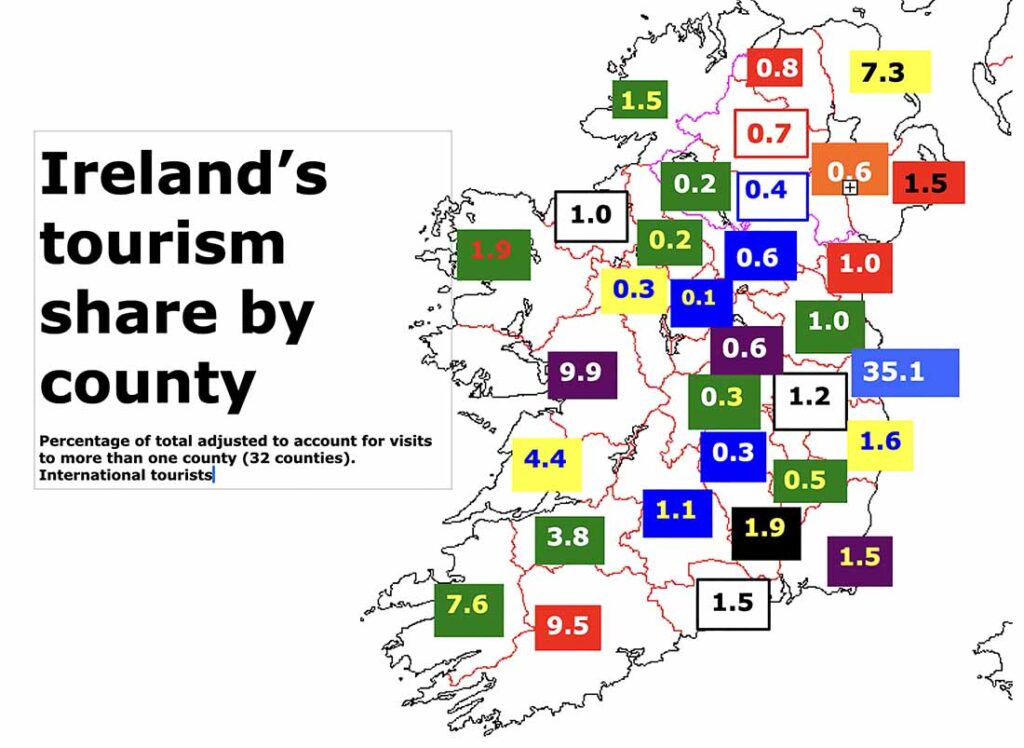
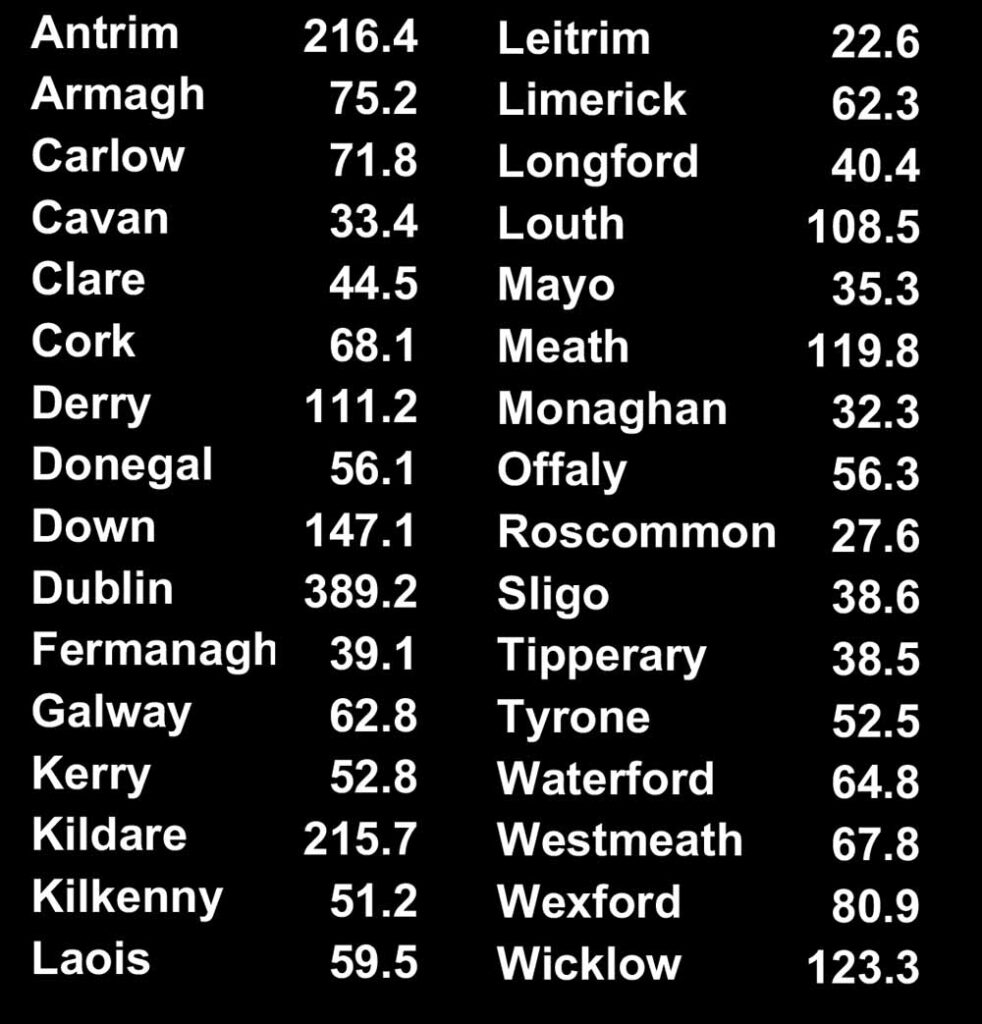
Ireland’s county Sligo is renowned for its poetic heritage and coastal scenery, with the Carrowmore Megalithic Cemetery offering one of Europe’s oldest prehistoric sites. The Benbulben mountain provides striking hiking trails, while Strandhill’s beaches are ideal for surfing. Other attractions include the historic Lissadell House and its gardens. Sligo is Ireland’s 22nd largest county by size (1,796 square km) and seventh smallest by population (70,198). Population peaked at 180,886 in 1841 and reached its lowest point, 50,275 in 1971. In terms of hospitality, Sligo is Ireland’s 17th most visited tourist county with around 133,000 international visitors per year.
Introduction – Adventure – Anthem – Archaeology – Attractions – Awards – Birdwatching – Camping – Castles – Churches – Contact list – Cycling – Dining – Equestrian – Festivals – Fishing – Folklore – Gardens – Golf – Graveyards – Happening – Haunted – Highest – Hiking – History – Holy Wells – Hotels – Hotels top 8 – Hunting & shooting – Instagrammable – Itineraries – Largest town – Luxury – MICE – Movies – Music – Name – New – Novelists – Off the beaten track – Poets – Pubs – Quotes – Random Facts – Restaurant Awards – Sacred Places – Saints – Songs – Spas – Sports – Sunsets – Sustainable – Things to do – Towns – Video – Villages – Walking – Wanderlist – Weddings – Wild swimming – Writers – 1837 – 1846– 1852 – 1909 – 1955 – 1980 –