County Cork in Ireland, often called the “Rebel County,” has provided backdrops for a range of films, particularly those capturing rural West Cork’s rugged coastlines, historic towns, and dramatic Atlantic scenery. While not as dominated by a single blockbuster landmark as some neighbouring counties, it features prominently in critically acclaimed historical dramas and smaller Irish productions.
- Castletownshend village (near Skibbereen, West Cork): This picturesque, quirky seaside village with its steep main street lined with colourful houses featured prominently in The War of the Buttons (1994), Peter Yates’ adaptation of the classic Irish novel about rival gangs of children in two neighbouring villages. The film’s charming, mischievous rural Irish atmosphere drew heavily on the village’s unique layout and harbour views.
- Brow Head and Mizen Head (near Goleen, on the Mizen Peninsula, southwest Cork): These remote, windswept headlands with sheer cliffs, crashing waves, and stark coastal beauty stood in for dramatic ocean-edge scenes in Star Wars: The Last Jedi (2017). Brow Head’s rugged shoreline provided the isolated, elemental feel for key moments in the film’s Ahch-To sequences (with additional CGI enhancement), showcasing County Cork’s wild Atlantic frontier.
- Castletownbere (on the Beara Peninsula, West Cork): This bustling fishing port and harbour town was a main location for Ondine (2009), Neil Jordan’s magical realist drama starring Colin Farrell as a fisherman who finds a mysterious woman in his nets. The town’s working docks, boats, and coastal setting captured the film’s blend of everyday Irish life and folklore.
- Cobh: The historic port town and its harbour were used for harbour and waterfront scenes in John Huston’s Moby Dick (1956), where the whaling ship Pequod sets sail. Cobh’s Victorian architecture and maritime heritage made it an authentic stand-in for 19th-century New Bedford.
- Various locations in West Cork, including Bandon, Ballyvourney, Timoleague, and Coolea: These rural villages, streets, and countryside areas served as primary settings for The Wind That Shakes the Barley (2006), Ken Loach’s Palme d’Or-winning historical drama about the Irish War of Independence and Civil War. Starring Cillian Murphy (a Cork native), the film used North Main Street and the courthouse area in Bandon for key scenes depicting revolutionary activity and community life in 1920s Ireland.
Other notable uses include Schull for The Runway (2010), a feel-good comedy about a plane crash and community spirit, and various West Cork spots in lesser-known titles like The Nephew (1998) or War of the Buttons sequels, but the above stand out for their recognition and impact. County Cork’s film heritage emphasises authentic Irish stories and stunning natural drama over global fantasy spectacles. West Cork, especially around Bandon and the peninsulas, remains the most visited area for movie enthusiasts.
Movie locations in the county
Antrim – Armagh – Carlow – Cavan – Clare – Cork – Derry – Donegal – Down – Dublin – Fermanagh – Galway – Kerry – Kildare – Kilkenny – Laois – Leitrim – Limerick – Longford – Louth – Mayo – Meath – Monaghan – Offaly – Roscommon – Sligo – Tipperary – Tyrone – Waterford – Westmeath – Wexford – Wicklow
County Cork:
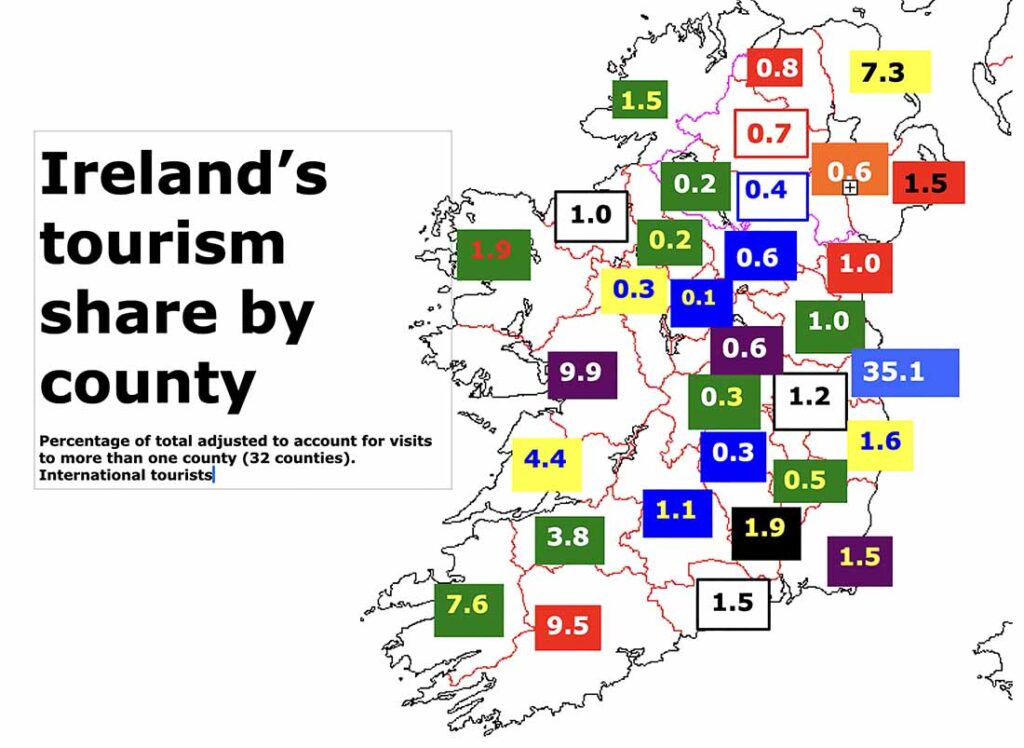
Ireland’s county Cork blends historic sites with scenic beauty, with Cork City’s English Market and St Fin Barre’s Cathedral offering cultural and architectural depth. Blarney Castle, home to the famous Blarney Stone, provides historic allure, while the coastal town of Kinsale offers sailing and seafood. Other attractions include the Beara Peninsula’s rugged trails. Cork is Ireland’s largest county by size (7,460 sq km) and third largest by population (584,156). Population peaked at 854,118 in 1841 (when Cork was Ireland’s most populous county) and reached its lowest point, 330,443 in 1961. In terms of hospitality, Cork is Ireland’s second most visited tourist county with around 1,228,000 international visitors per year.
Introduction – Adventure – Anthem – Archaeology – Attractions – Awards – Birdwatching – Camping – Castles – Churches – Contact list – Cycling – Dining – Equestrian – Festivals – Fishing – Folklore – Gardens – Golf – Graveyards – Happening – Haunted – Highest – Hiking – History – Holy Wells – Hotels – Hotels top 8 – Hunting & shooting – Instagrammable – Itineraries – Largest town – Luxury – MICE – Movies – Music – New – Name – Novelists – Off the beaten track – Poets – Pubs – Quotes – Random Facts – Restaurant Awards – Sacred Places – Saints – Songs – Spas – Sports – Sunsets – Sustainable – Things to do – Towns – Video – Villages – Walking – Wanderlist – Weddings – Wild swimming – Writers – 1837– 1846 – 1852 – 1909 – 1955 – 1980 –