- Blarney Castle and Gardens: A 15th-century castle near Cork City, famous for the Blarney Stone, said to grant eloquence to those who kiss it. Visitors can expect to explore the castle’s towers and battlements, climb to kiss the stone (with safety assistance), and wander 60 acres of gardens, including the Poison Garden and Fern Garden. The site offers historical insights, scenic walks, and a gift shop.
- Cobh Heritage Centre and Titanic Experience: Located in Cobh, the last port of call for the RMS Titanic, this attraction includes the Heritage Centre, which details Cobh’s maritime and emigration history, and the Titanic Experience, a guided tour in the original White Star Line ticket office. Visitors can expect immersive exhibits, personal stories of passengers, and views of Cobh’s harbor. The town’s colorful architecture and cathedral are bonuses.
- Kinsale: A charming coastal town known as Ireland’s gourmet capital, with colorful streets and a historic harbor. Visitors can expect vibrant dining at renowned restaurants, sailing or kayaking in the harbor, and exploring Charles Fort, a 17th-century star-shaped fortress with guided tours and panoramic views. Kinsale’s food and arts festivals, like the Gourmet Festival, add to its appeal.
- Fota Island Resort and Wildlife Park: Near Cork City, Fota Island features a wildlife park with free-roaming animals like giraffes, zebras, and lemurs, set in 100 acres. Visitors can expect self-guided tours, educational talks, and a treetop walkway. The resort also offers an arboretum, gardens, and an 18-hole golf course. Ideal for families and nature enthusiasts.
- Spike Island: A former fortress and prison in Cork Harbour, accessible by a short ferry from Cobh. Visitors can expect guided tours of the 19th-century star fort, prison cells, and tunnels, with stories of its history as “Ireland’s Alcatraz.” The island offers scenic views, walking trails, and a visitor center with exhibits. Booking ferries in advance is recommended.
- Mizen Head Signal Station: Ireland’s southwesternmost point, featuring a historic signal station on dramatic cliffs. Visitors can expect a visitor center with maritime exhibits, a walk across a suspension bridge to the station, and stunning Atlantic views. Wildlife spotting (seals, whales, seabirds) and interactive displays about the area’s history make it a scenic and educational stop.
- English Market: A historic covered market in Cork City, dating back to 1788, known for its local and artisan foods. Visitors can expect bustling stalls offering fresh produce, cheeses, seafood, and baked goods, with a vibrant atmosphere. Cafés like the Farmgate provide a taste of Cork’s culinary scene. It’s a must-visit for food lovers and a cultural hub.
- Bantry House and Gardens: A 17th-century stately home overlooking Bantry Bay, still partly occupied by descendants of the original family. Visitors can expect guided tours of opulent interiors with period furnishings, strolls through Italianate gardens with sea views, and a tearoom. The house’s history, tied to the 1796 French Armada attempt, adds intrigue.
- Old Head of Kinsale: A scenic peninsula with a lighthouse and a world-class golf course, offering dramatic coastal views. Visitors can expect cliff walks (public access to certain areas), whale watching, and photography opportunities. The Lusitania Memorial Garden commemorates the 1915 shipwreck nearby. Access to the golf course is restricted, but the headland’s beauty is open to all.
- Jameson Distillery Midleton: The home of Jameson Irish Whiskey in Midleton, offering immersive tours of the whiskey-making process. Visitors can expect to explore historic buildings, learn about distillation and maturation, and enjoy tastings or blending workshops. The visitor center includes a bar, restaurant, and shop. Booking tours in advance is advised.
Attractions
Antrim – Armagh – Carlow – Cavan – Clare – Cork – Derry – Donegal – Down – Dublin – Fermanagh – Galway – Kerry – Kildare – Kilkenny – Laois – Leitrim – Limerick – Longford – Louth\ – Mayo – Meath – Monaghan – Offaly – Roscommon – Sligo – Tipperary – Tyrone – Waterford – Westmeath – Wexford – Wicklow
County Cork:
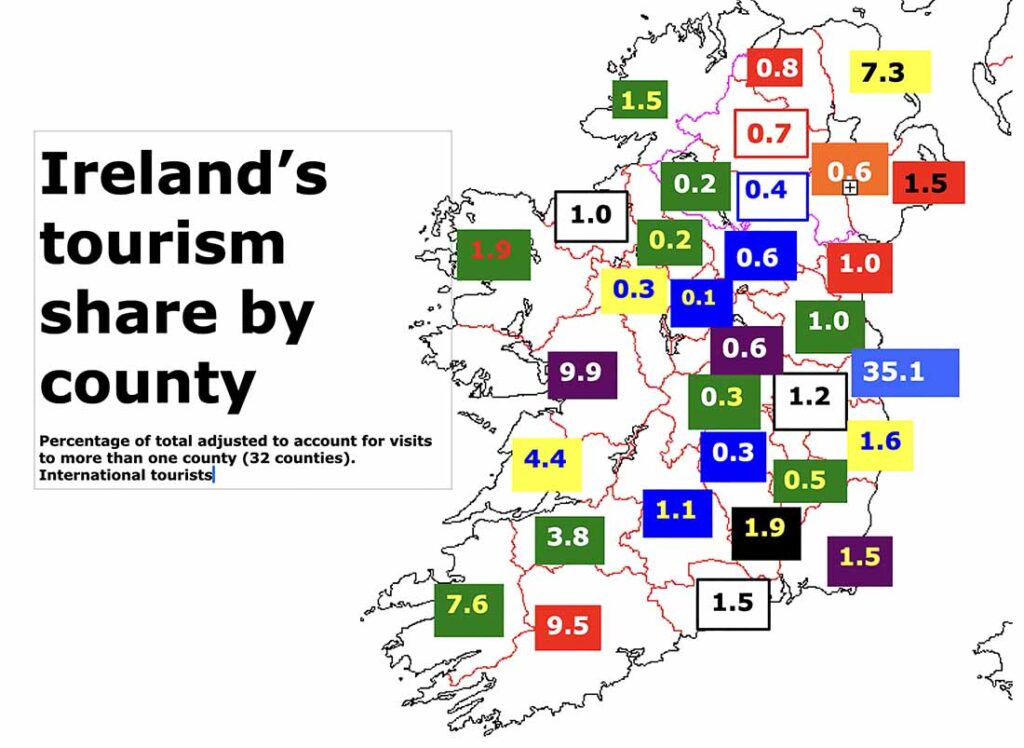
Ireland’s county Cork blends historic sites with scenic beauty, with Cork City’s English Market and St Fin Barre’s Cathedral offering cultural and architectural depth. Blarney Castle, home to the famous Blarney Stone, provides historic allure, while the coastal town of Kinsale offers sailing and seafood. Other attractions include the Beara Peninsula’s rugged trails. Cork is Ireland’s largest county by size (7,460 sq km) and third largest by population (584,156). Population peaked at 854,118 in 1841 (when Cork was Ireland’s most populous county) and reached its lowest point, 330,443 in 1961. In terms of hospitality, Cork is Ireland’s second most visited tourist county with around 1,228,000 international visitors per year.
Introduction – Adventure – Anthem – Archaeology – Attractions – Awards – Birdwatching – Camping – Castles – Churches – Contact list – Cycling – Dining – Equestrian – Festivals – Fishing – Folklore – Gardens – Golf – Graveyards – Happening – Haunted – Highest – Hiking – History – Holy Wells – Hotels – Hotels top 8 – Hunting & shooting – Instagrammable – Itineraries – Largest town – Luxury – MICE – Movies – Music – New – Name – Novelists – Off the beaten track – Poets – Pubs – Quotes – Random Facts – Restaurant Awards – Sacred Places – Saints – Songs – Spas – Sports – Sunsets – Sustainable – Things to do – Towns – Video – Villages – Walking – Wanderlist – Weddings – Wild swimming – Writers – 1837– 1846 – 1852 – 1909 – 1955 – 1980 –