- Ballydehob and the Phantom Piper: Ballydehob is haunted by a ghostly piper, whose music echoes at night, believed to be a musician killed in a feud. The area’s rural history includes local disputes. Dúchas.ie mentions tales of spectral music tied to Ballydehob’s folklore. Ballydehob, County Cork.
- Blarney Castle and the Witch’s Ghost: Blarney Castle is haunted by a witch, seen wandering the grounds at night, tied to the Blarney Stone’s magical gift of eloquence. The 15th-century castle, a MacCarthy stronghold, has folklore linking the witch to ancient druidic spells. Dúchas.ie records tales of her spectral presence. Blarney Castle, Blarney, County Cork.
- The Ghost of Blarney Castle: Blarney Castle is haunted by the ghost of Dermot McCarthy, who roams the battlements, guarding the Blarney Stone, which grants eloquence to those who kiss it. The castle, built in 1446, has a history of sieges and McCarthy clan conflicts. Dúchas.ie records tales of spectral figures tied to the castle’s turbulent past. Blarney Castle, near Blarney, County Cork.
- Carrigadrohid Castle and the Banshee’s Wail: Carrigadrohid Castle is haunted by a banshee, whose cry along the River Lee foretells death for the MacCarthy family. The 15th-century castle was a MacCarthy stronghold. Dúchas.ie records banshee tales linked to the clan’s turbulent history. Carrigadrohid Castle, near Macroom, County Cork.
- Castlelyons and the Spectral Monk: Castlelyons’ ruins are haunted by a spectral monk, seen near the old friary, guarding ancient relics. The 13th-century friary faced suppression during the Reformation. Dúchas.ie records ghostly monks tied to Castlelyons’ religious past. Castlelyons, near Fermoy, County Cork.
- Charles Fort and the White Lady: Charles Fort is haunted by the White Lady, a bride who died tragically on her wedding day, seen drifting through the fort’s walls. Built in the 17th century, the fort saw military tragedies. Local lore ties the ghost to a 19th-century officer’s daughter, per oral tradition. Charles Fort, Kinsale, County Cork.
- Clonakilty and the Ghostly Horseman: Clonakilty’s roads are haunted by a ghostly horseman, believed to be a Jacobite soldier killed in battle, seeking his lost home. The area saw conflict during the Williamite War. Dúchas.ie records tales of spectral riders tied to Clonakilty’s violent past. Clonakilty, County Cork.
- Gougane Barra and the Spectral Monk: Gougane Barra’s monastery ruins are haunted by a spectral monk, seen near the oratory, guarding Saint Finbarr’s sacred site. Founded by Saint Finbarr in the 6th century, the site faced raids. Dúchas.ie mentions ghostly monks tied to its early Christian history. Gougane Barra, near Ballingeary, County Cork.
- Kanturk Castle and the Cursed Builder: Kanturk Castle is haunted by a ghostly builder, killed during its construction, whose spirit roams the unfinished walls. Built in the 1600s by the MacDonagh MacCarthys, the castle was never completed. Local tales link the ghost to construction accidents, per Dúchas.ie. Kanturk Castle, Kanturk, County Cork.
- Mallow Castle and the Lady in Grey: Mallow Castle is haunted by a Lady in Grey, seen in the gardens, believed to be a Jephson family member mourning a lost love. The 16th-century castle was home to the Jephson family. Local lore links the ghost to romantic tragedies, per oral tradition. Mallow Castle, Mallow, County Cork.
- Saint Gobnait’s Well in Ballyvourney: Saint Gobnait’s Well offers cures for ailments, especially skin diseases, when pilgrims perform rituals with its water and nearby sacred trees. Saint Gobnait, a 6th-century saint, is linked to healing and beekeeping in Cork folklore. Dúchas.ie documents the well’s popularity among pilgrims. Ballyvourney, near Macroom, County Cork.
- The Banshee of Carrigadrohid Castle: Carrigadrohid Castle is haunted by a banshee, whose wail along the River Lee foretells death for the MacCarthy family. Banshees are female spirits tied to Gaelic clans. Dúchas.ie includes accounts of banshee cries near the castle, reflecting its history as a MacCarthy stronghold. Carrigadrohid Castle, near Macroom, County Cork.
- The Cursed Stone of Ballinspittle: A standing stone in Ballinspittle is cursed, causing misfortune to those who touch or move it, as it marks a druidic site protected by ancient spells. Megalithic stones are linked to druids or fairies in Irish lore. Dúchas.ie notes local fears of disturbing stones in Cork’s rural areas. Ballinspittle, near Kinsale, County Cork.
- The Fairy Fort of Knockraha: A ring fort in Knockraha is a fairy fort, home to the aos sí (fairy folk), who curse those who disturb it with illness or bad luck. Ring forts, Iron Age structures, are seen as Otherworld portals in Celtic folklore. Dúchas.ie notes local fears in Knockraha of fairy retribution for trespassing. Knockraha, near Glanmire, County Cork.
- The Fairy Hawthorn of Clonakilty: A lone hawthorn tree in Clonakilty is a fairy tree, sacred to the aos sí, and cutting it invites curses like illness or livestock death. Fairy trees are rooted in Celtic beliefs about the Otherworld. Dúchas.ie records farmers in Clonakilty avoiding such trees to appease fairies. Clonakilty, County Cork.
- The Fairy Music of Gougane Barra: Gougane Barra’s lake and woods echo with fairy music at dusk, luring listeners into the Otherworld if they follow the sound. Fairy music is a common motif in Irish folklore, tied to enchanted landscapes. Dúchas.ie mentions supernatural sounds in Gougane Barra, linked to Saint Finbarr’s hermitage. Gougane Barra, near Ballingeary, County Cork.
- The Mermaid of Kinsale: A mermaid haunts Kinsale’s harbour, luring sailors to their deaths with her song or warning them of storms. Mermaids in Irish folklore blend beauty and danger, tied to coastal towns. Dúchas.ie records tales of Kinsale’s mermaid, linked to its maritime history. Kinsale, County Cork.
- The Phantom Ship of Youghal: A ghostly ship appears off Youghal’s coast, crewed by spectral sailors, believed to be a cursed vessel lost in a storm. Youghal’s maritime history fosters tales of phantom ships. Dúchas.ie includes accounts of ghostly sightings along Cork’s coast, tied to shipwrecks. Youghal, County Cork.
- The Púca of Castlelyons: A púca haunts the ruins of Castlelyons, appearing as a black horse or goat, tricking travellers or offering cryptic warnings. The púca is a mischievous figure in Irish mythology, suited to ruined sites. Dúchas.ie mentions púca sightings in Castlelyons, tied to its desolate landscape. Castlelyons, near Fermoy, County Cork.
- Youghal and the Phantom Ship: Youghal’s harbour is haunted by a ghostly ship, crewed by spectral sailors, believed to be a cursed vessel lost in a storm. Youghal’s maritime history includes shipwrecks. Dúchas.ie notes tales of phantom ships tied to 18th-century coastal tragedies. Youghal, County Cork.
Haunted
Antrim – Armagh – Carlow – Cavan – Clare – Cork – Derry – Donegal – Down – Dublin – Fermanagh – Galway – Kerry – Kildare – Kilkenny – Laois – Leitrim – Limerick – Longford – Louth – Mayo – Meath – Monaghan – Offaly – Roscommon – Sligo – Tipperary – Tyrone – Waterford – Westmeath – Wexford – Wicklow
County Cork:
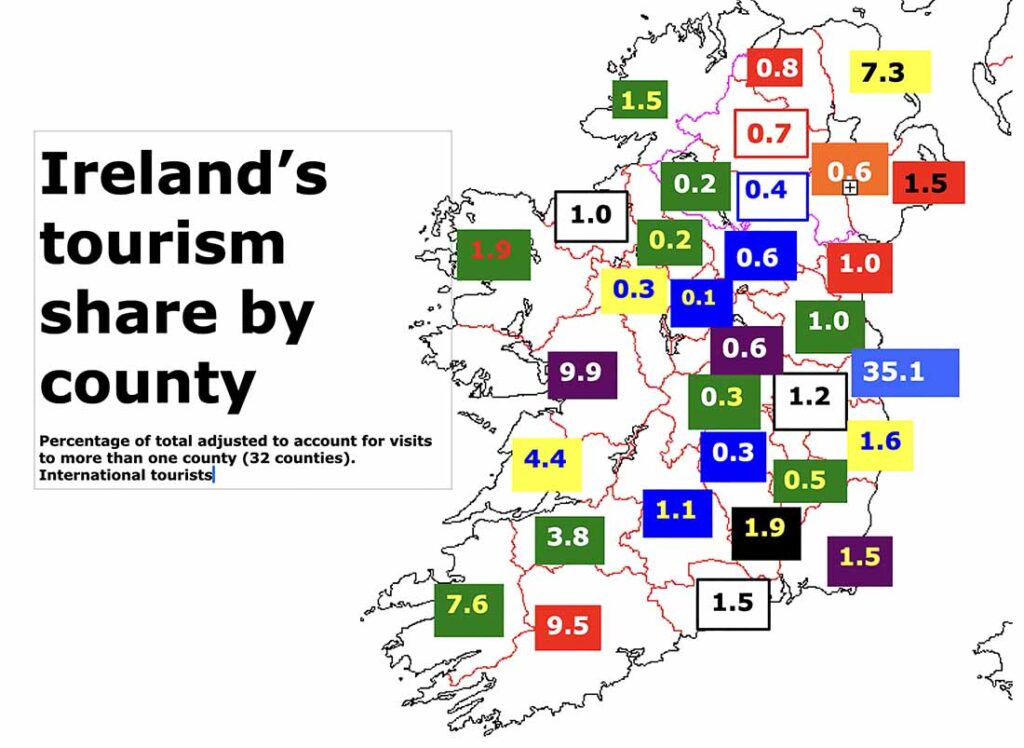
Ireland’s county Cork blends historic sites with scenic beauty, with Cork City’s English Market and St Fin Barre’s Cathedral offering cultural and architectural depth. Blarney Castle, home to the famous Blarney Stone, provides historic allure, while the coastal town of Kinsale offers sailing and seafood. Other attractions include the Beara Peninsula’s rugged trails. Cork is Ireland’s largest county by size (7,460 sq km) and third largest by population (584,156). Population peaked at 854,118 in 1841 (when Cork was Ireland’s most populous county) and reached its lowest point, 330,443 in 1961. In terms of hospitality, Cork is Ireland’s second most visited tourist county with around 1,228,000 international visitors per year.
Introduction – Adventure – Anthem – Archaeology – Attractions – Awards – Birdwatching – Camping – Castles – Churches – Contact list – Cycling – Dining – Equestrian – Festivals – Fishing – Folklore – Gardens – Golf – Graveyards – Happening – Haunted – Highest – Hiking – History – Holy Wells – Hotels – Hotels top 8 – Hunting & shooting – Instagrammable – Itineraries – Largest town – Luxury – MICE – Movies – Music – New – Name – Novelists – Off the beaten track – Poets – Pubs – Quotes – Random Facts – Restaurant Awards – Sacred Places – Saints – Songs – Spas – Sports – Sunsets – Sustainable – Things to do – Towns – Video – Villages – Walking – Wanderlist – Weddings – Wild swimming – Writers – 1837– 1846 – 1852 – 1909 – 1955 – 1980 –