- King John’s Castle: King’s Island, Limerick City, County Limerick (Coordinates: 52.6694°N, 8.6253°W).. Built in the early 13th century (c. 1200–1210) by order of King John of England, this Norman castle is a cornerstone of Limerick’s medieval heritage. Strategically located on the River Shannon, it served as a military and administrative centre during the Anglo-Norman period. The castle features imposing curtain walls, drum towers, and a fortified gatehouse. Archaeological excavations, particularly during the Limerick Main Drainage Scheme (1999–present), have revealed artefacts from the Viking period (pre-Norman) and medieval structures, highlighting Limerick’s role as a Viking settlement (Inis Sibtonn or Luimneach) before Norman conquest. The castle’s visitor centre includes interactive exhibits on its history, sieges, and archaeological finds. Managed by Heritage Ireland, the castle is open year-round with guided tours, interactive displays, and access to battlements. Visit www.heritageireland.ie for tickets and hours.
- Askeaton Friary: Askeaton, County Limerick, approximately 27 km west of Limerick City (Coordinates: 52.6006°N, 8.9706°W).. Founded in the late 14th or early 15th century (c. 1389–1420) by the Franciscan order, Askeaton Friary is closely associated with the Fitzgerald family, the Earls of Desmond. Most surviving structures, including the church, cloister, and domestic buildings, date to the 15th century. The friary features a well-preserved tomb niche, likely marking the burial of an Earl of Desmond or family member, and intricate architectural details. It reflects the religious and political influence of the Desmond earls during the late medieval period. The site was abandoned after the Dissolution of the Monasteries in the 16th century but remains a significant example of Franciscan architecture. Managed by the Office of Public Works (OPW) via Heritage Ireland, the friary is accessible to visitors with free entry. Guided tours may be available seasonally; check www.heritageireland.ie for details.
- Grange Stone Circle (Lios Stone Circle): Lough Gur, near Bruff, County Limerick (Coordinates: 52.5100°N, 8.5400°W).. Part of the Lough Gur complex, the Grange Stone Circle, also known as Lios, is the largest stone circle in Ireland, measuring approximately 46 metres in diameter with 113 standing stones. Constructed during the Late Neolithic or Early Bronze Age (c. 2200 BC), it is one of Western Europe’s oldest and largest stone circles. The circle likely served ceremonial or astronomical purposes, aligned with solar events. Its proximity to other Lough Gur monuments underscores the area’s role as a ritual landscape. The site’s aura of enchantment, as noted in local folklore, continues to captivate visitors. Accessible via the Lough Gur Visitor Centre, with guided tours available. Open to the public; see www.loughgur.com for access information.
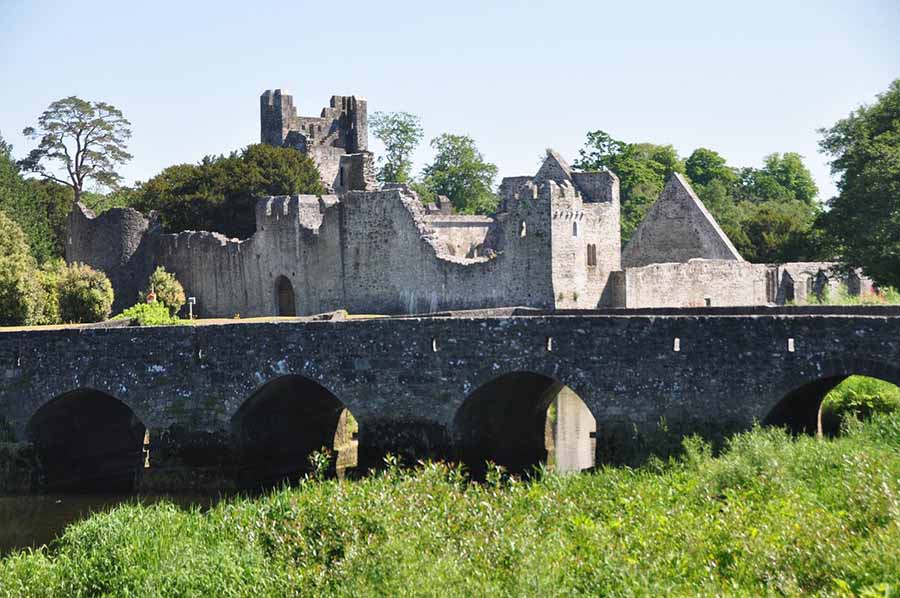
- Desmond Castle (Adare Castle): Adare, County Limerick, approximately 16 km southwest of Limerick City (Coordinates: 52.5644°N, 8.7778°W).. Built in the 13th century (c. 1200–1220) by the Anglo-Norman Fitzgerald family, later Earls of Desmond, this castle is a fine example of Norman military architecture. Situated on the banks of the River Maigue, it features a rectangular keep, curtain walls, and a moat. The castle was a key stronghold during the medieval period, reflecting the power of the Desmond earls. It fell into ruin after the Desmond Rebellions (16th century) but was partially restored in the 19th century. Archaeological investigations have revealed medieval artefacts, enhancing understanding of its role in regional governance. Managed by Heritage Ireland, the castle is open seasonally (typically April–September) with guided tours from Adare Heritage Centre. Visit www.heritageireland.ie for booking details.
- St Mary’s Cathedral: Bridge Street, Limerick City, County Limerick (Coordinates: 52.6683°N, 8.6233°W).. Founded in 1168 by Domnall Mór Ua Briain, King of Munster, St Mary’s Cathedral is one of Ireland’s oldest functioning churches. Built on the site of a Viking palace, it represents the transition from Gaelic to Anglo-Norman ecclesiastical power. The cathedral features Romanesque and Gothic architectural elements, with significant medieval additions, including misericords (15th-century carved choir stalls). Archaeological work in Limerick City has uncovered pre-Norman artefacts nearby, suggesting the site’s long-standing significance. The cathedral remains a focal point of Limerick’s historical and cultural identity. Open to visitors daily, with guided tours available. Check www.saintmaryscathedral.ie for hours and events.
- Giant’s Grave (Lough Gur Wedge Tomb): Lough Gur, near Bruff, County Limerick (Coordinates: 52.5167°N, 8.5333°W, within Lough Gur complex).. This late Neolithic wedge tomb, known locally as the Giant’s Grave, dates to c. 2500 BC. It consists of a chamber formed by large stones covered by a capstone, typical of burial monuments from the period. The tomb is part of the broader Lough Gur archaeological landscape, which includes settlements and ceremonial sites. Its name derives from local folklore, reflecting the site’s enduring cultural significance. Excavations at Lough Gur have provided insights into Neolithic burial practices and community life. Accessible via the Lough Gur Visitor Centre, included in guided tours of the Lough Gur complex. Visit www.loughgur.com for details.
Archaeological sites
Antrim – Armagh – Carlow – Cavan – Clare – Cork – Derry – Donegal – Down – Dublin – Fermanagh – Galway – Kerry – Kildare – Kilkenny – Laois – Leitrim – Limerick – Longford – Louth – Mayo – Meath – Monaghan – Offaly – Roscommon – Sligo – Tipperary – Tyrone – Waterford – Westmeath – Wexford – Wicklow
County Limerick:
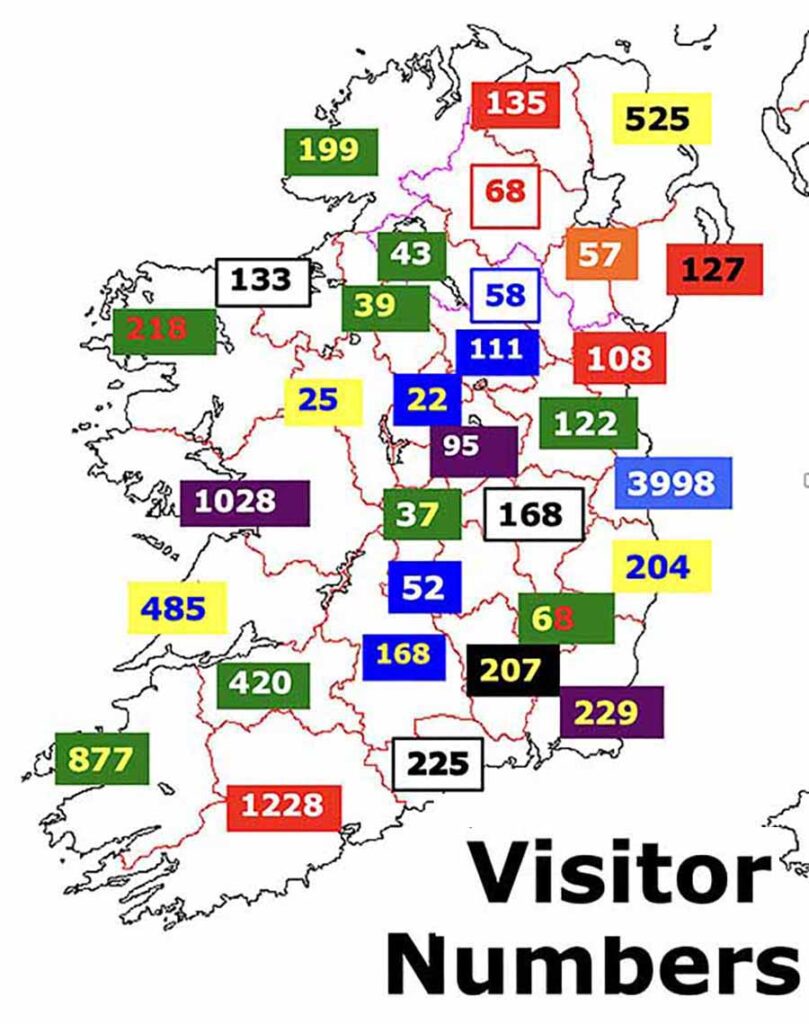
Ireland’s county Limerick combines historic landmarks with riverside charm, with Limerick City’s King John’s Castle offering insights into medieval history along the Shannon. The Hunt Museum showcases an eclectic art collection, while Adare’s thatched cottages and historic manor add picturesque appeal. Other attractions include the nearby Ballyhoura Mountains’ cycling trails. Limerick is Ireland’s tenth largest county by size (2,686 sq km), and ninth largest by population (209,536). Population peaked at 330,029 in 1841 and reached its lowest point, 133,339 in 1971. In terms of hospitality, Limerick is Ireland’s seventh most visited tourist county with around 420,000 international visitors per year.
Introduction – Adventure – Anthem – Archaeology – Attractions – Awards – Birdwatching – Camping – Castles – Churches – Contact list – Cycling – Dining – Equestrian – Festivals – Fishing – Folklore – Gardens – Golf – Graveyards – Happening – Haunted – Highest – Hiking – History – Holy Wells – Hotels – Hotels top 8 – Hunting & shooting – Instagrammable – Itineraries – Largest town – Luxury – MICE – Movies – Music – Name – New – Novelists – Off the beaten track – Poets – Pubs – Quotes – Random Facts – Restaurant Awards – Sacred Places – Saints – Songs – Spas – Sports – Sunsets – Sustainable – Things to do – Towns – Video – Villages – Walking – Wanderlist – Weddings – Wild swimming – Writers – 1837 – 1846 – 1852 – 1909 – 1955 – 1980 –