- Kate O’Brien (1897-1974) Born in Limerick city, O’Brien was a novelist and playwright whose works, such as Without My Cloak (1931), which won the James Tait Black and Hawthornden Prizes, and The Land of Spices (1941), explored Irish middle-class life and women’s experiences. Her novels, often banned in Ireland for their frank themes, reflect her Limerick upbringing and Catholic background.
- Frank McCourt (1930-2009) Born in Brooklyn, New York, but raised in Limerick city, McCourt was a memoirist and teacher whose Pulitzer Prize-winning Angela’s Ashes (1996) vividly depicted his impoverished childhood in Limerick. His sequels, ’Tis (1999) and Teacher Man (2005), continued his story, blending humor and hardship. The Frank McCourt Museum in Limerick honors his legacy.
- Michael Curtin (1942-2016) Born in Limerick city, Curtin was a novelist whose works, like The Plastic Tomato Cutter (1991) and The Replay (1981), offered humorous and poignant portraits of Limerick’s working-class life. His novels, often set in his hometown, captured the social dynamics of 20th-century Ireland.
- Kevin Barry (1969-) Born in Limerick city, Barry is a novelist and short story writer known for City of Bohane (2011), which won the International Dublin Literary Award, and Night Boat to Tangier (2019), longlisted for the Booker Prize. His lyrical, gritty style often draws on Limerick’s urban and cultural ethos.
- Donal Ryan (1976-) Born in Nenagh, Tipperary, but raised in Limerick, Ryan is a novelist whose debut The Spinning Heart (2012) won the Irish Book Award and was longlisted for the Booker Prize. His works, including The Thing About December (2013), explore rural and small-town Irish life, reflecting his Limerick connections.
- Desmond O’Grady (1935-2014) Born in Limerick city, O’Grady was a poet and translator whose collections, like Chords and Orchestrations (1956) and The Dark Edge of Europe (1967), blended Irish and Mediterranean influences. His work as a translator of Arabic poetry and his Limerick roots shaped his cosmopolitan style.
- John Liddy (1954-) Born in Limerick city, Liddy is a poet whose works, such as The Angling Cot (1991) and Gleanings (2010), reflect his Limerick heritage and experiences living in Spain. Co-founder of the Limerick Writers’ Centre, his poetry often explores themes of place and identity.
- Maurice Lenihan (1811-1895) Born in Waterford but raised in Limerick, Lenihan was a historian and journalist who edited the Limerick Reporter and wrote The History of Limerick (1864), a seminal work on the city’s history. His contributions to local history earned him membership in the Royal Irish Academy.
- Michael Hogan (1832-1899) Born in Limerick city, Hogan, known as the “Bard of Thomond,” was a poet whose works, like Lays and Legends of Thomond (1865), celebrated Limerick’s history and folklore. His patriotic verse, often published in newspapers, resonated with local audiences.
- Gerald Griffin (1803-1840) Born in Limerick city, Griffin was a novelist, poet, and playwright best known for The Collegians (1829), which inspired the opera The Lily of Killarney. His works, often set in Munster, explored Irish social issues and Catholic identity, reflecting his Limerick upbringing.
Writers
Antrim – Armagh – Carlow – Cavan – Clare – Cork – Derry – Donegal – Down – Dublin – Fermanagh – Galway – Kerry – Kildare – Kilkenny – Laois – Leitrim – Limerick – Longford – Louth – Mayo – Meath – Monaghan – Offaly – Roscommon – Sligo – Tipperary – Tyrone – Waterford – Westmeath – Wexford – Wicklow
County Limerick:
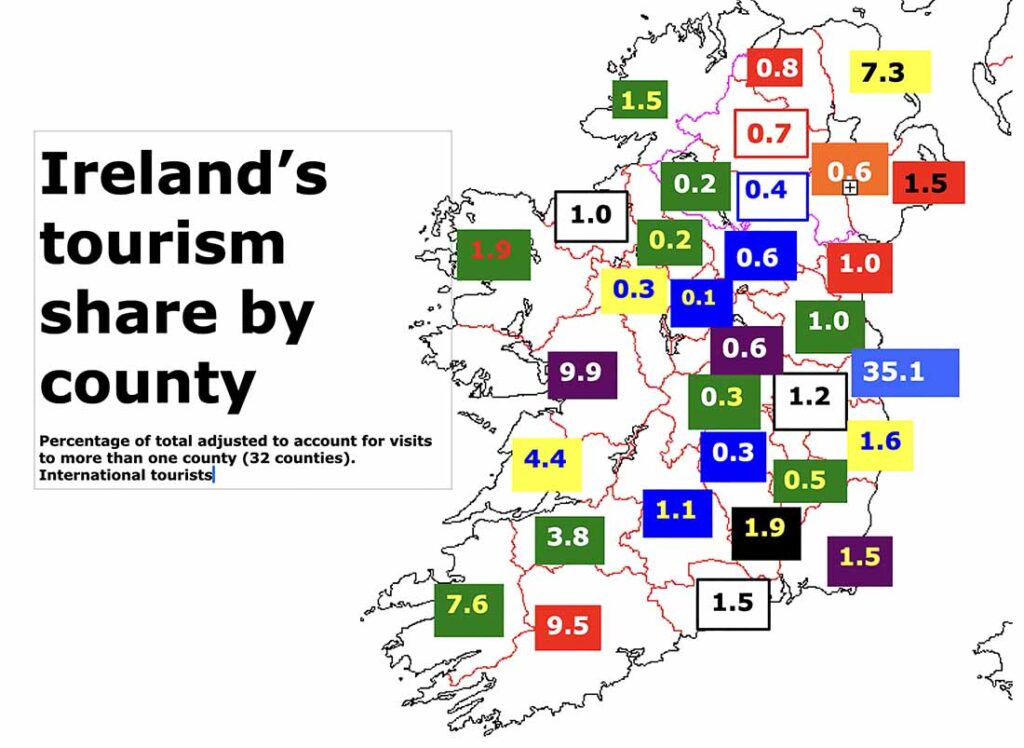
Ireland’s county Limerick combines historic landmarks with riverside charm, with Limerick City’s King John’s Castle offering insights into medieval history along the Shannon. The Hunt Museum showcases an eclectic art collection, while Adare’s thatched cottages and historic manor add picturesque appeal. Other attractions include the nearby Ballyhoura Mountains’ cycling trails. Limerick is Ireland’s tenth largest county by size (2,686 sq km), and ninth largest by population (209,536). Population peaked at 330,029 in 1841 and reached its lowest point, 133,339 in 1971. In terms of hospitality, Limerick is Ireland’s seventh most visited tourist county with around 420,000 international visitors per year.
Introduction – Adventure – Anthem – Archaeology – Attractions – Awards – Birdwatching – Camping – Castles – Churches – Contact list – Cycling – Dining – Equestrian – Festivals – Fishing – Folklore – Gardens – Golf – Graveyards – Happening – Haunted – Highest – Hiking – History – Holy Wells – Hotels – Hotels top 8 – Hunting & shooting – Instagrammable – Itineraries – Largest town – Luxury – MICE – Movies – Music – Name – New – Novelists – Off the beaten track – Poets – Pubs – Quotes – Random Facts – Restaurant Awards – Sacred Places – Saints – Songs – Spas – Sports – Sunsets – Sustainable – Things to do – Towns – Video – Villages – Walking – Wanderlist – Weddings – Wild swimming – Writers – 1837 – 1846 – 1852 – 1909 – 1955 – 1980 –