- King John’s Castle: Built in the early 13th century by order of King John of England, King John’s Castle is a formidable Norman fortress on King’s Island in Limerick City, overlooking the River Shannon. A key defensive structure during the medieval period, it withstood sieges during the 17th-century Confederate and Cromwellian wars. Restored and modernized, it now houses an interactive visitor center showcasing Limerick’s 800-year history. Open daily (9:30 AM–5:30 PM, last entry 4:30 PM, check shannonheritage.com), visitors can explore the castle’s towers, battlements, and exhibitions for €13 adults, €9.50 children, €33 family. Interactive displays, touchscreens, and costumed interpreters bring to life the castle’s history, including siege reenactments and medieval weaponry. Expect a 1.5–2 hour visit, with a cafe, gift shop, parking, and full wheelchair access. The riverside views and proximity to Limerick’s St. Mary’s Cathedral make it a central attraction. Guided tours (included) enhance the experience, and evening events like banquets may be available. A must-visit for its accessibility, engaging exhibits, and central location in Limerick City.
- Desmond Castle (Adare Castle): Located in Adare village, Desmond Castle is a 13th-century Norman fortress on the River Maigue, built by the Fitzgerald family, Earls of Desmond. Also known as Adare Castle, it features a square keep, curtain walls, and a moat, reflecting its defensive role during the Desmond Rebellions. Partially ruined but restored for tourism, it’s a picturesque site in one of Ireland’s prettiest villages. Open June–September (daily, 10 AM–5 PM, check adareheritagecentre.ie), visitors can access the castle via guided bus tours from the Adare Heritage Centre (€7 adults, €5 children, €20 family). Tours (45 minutes) explore the keep, walls, and history of the Desmonds, with scenic views of the Maigue. Expect a 1-hour visit, with a gift shop, cafe, and toilets at the Heritage Centre. Parking is available in Adare village. The castle is closed outside summer, but exterior views are possible year-round. Combine with Adare’s thatched cottages and Augustinian Abbey for a full day. Ideal for history buffs and those visiting Adare’s charming village.
- Castle Matrix: Built in the 15th century by the Fitzgeralds near Rathkeale, Castle Matrix is a tower house named for its supposed connection to the mythical goddess Mátres. Restored in the 20th century by American owner Sean O’Driscoll, it houses a unique collection of historical artifacts, including Irish manuscripts and Jacobite relics. It’s a lesser-known but well-preserved castle with a quirky history. Open by appointment (May–September, contact castle-matrix.com, €10–€15), visitors can take guided tours (45–60 minutes) of the tower’s interiors, including a library, chapel, and artifact displays. Expect a 1-hour visit in a rural setting, with owner-led tours offering personal insights. Amenities include parking but no cafe or toilets. The castle’s remote location (10 km from Rathkeale) suits those seeking an off-the-beaten-path experience. Booking is essential due to private ownership. A hidden gem for those interested in unique collections and intimate tours.
- Askeaton Castle: Built in the 12th century by the Fitzgeralds on the River Deel in Askeaton, this Norman castle was a key Desmond stronghold. Featuring a 15th-century banqueting hall and tower, it was damaged during the Desmond Rebellions (1580) and later conflicts. Now a National Monument, its ruins are maintained by the Office of Public Works, offering a glimpse into medieval Limerick. Open June–September (Wednesday–Sunday, 10 AM–5 PM, free guided tours, check heritageireland.ie), visitors can explore the ruins, including the hall and riverside walls, via 30–45 minute guided tours detailing its turbulent history. Expect a 45-minute visit with scenic Deel views. No facilities on-site, but parking and toilets are available in Askeaton town. The castle’s atmospheric ruins suit history enthusiasts and those exploring west Limerick’s heritage trail. A compact, free site for those seeking medieval ruins in a quiet setting.
- Carrigogunnell Castle: Located near Clarina on a volcanic rock overlooking the Shannon Estuary, Carrigogunnell Castle is a 13th-century fortress, possibly built by the O’Briens or Fitzgeralds. Expanded in the 15th century, it was destroyed in 1691 during the Williamite War. The ruins, including a tower and bawn, are on private land but visible from public paths, offering a dramatic, rugged silhouette. Open year-round (free, no formal hours), visitors can view the ruins from nearby paths, as access to the castle itself is restricted due to private ownership and safety concerns. Expect a 15–30 minute stop to admire the imposing structure and estuary views. No facilities or guided tours are available, but parking is possible along local roads. The site suits adventurers and photographers, especially at sunset. Combine with nearby Curraghchase Forest Park for a fuller outing. Best for those comfortable with minimal access and a remote, evocative ruin.
Limerick has minor castle ruins like Castleconnell Castle (15th-century, on the Shannon, private and heavily ruined), Kilmallock Castle (Dominican Priory gatehouse, often mislisted as a castle, free but minimal), and Glin Castle (18th-century mansion, now a luxury hotel, limited public access). These are less prominent due to their state or restricted access. Bunratty Castle, often associated with Limerick, is in County Clare.
Limerick’s castles offer diverse experiences, from King John’s urban fortress to rural ruins like Carrigogunnell. King John’s and Desmond are the most visitor-friendly, while others cater to niche interests.
Castles
Antrim – Armagh – Carlow – Cavan – Clare – Cork – Derry – Donegal – Down – Dublin – Fermanagh – Galway – Kerry – Kildare – Kilkenny – Laois – Leitrim – Limerick – Longford – Louth – Mayo – Meath – Monaghan – Offaly – Roscommon – Sligo – Tipperary – Tyrone – Waterford – Westmeath – Wexford – Wicklow
County Limerick:
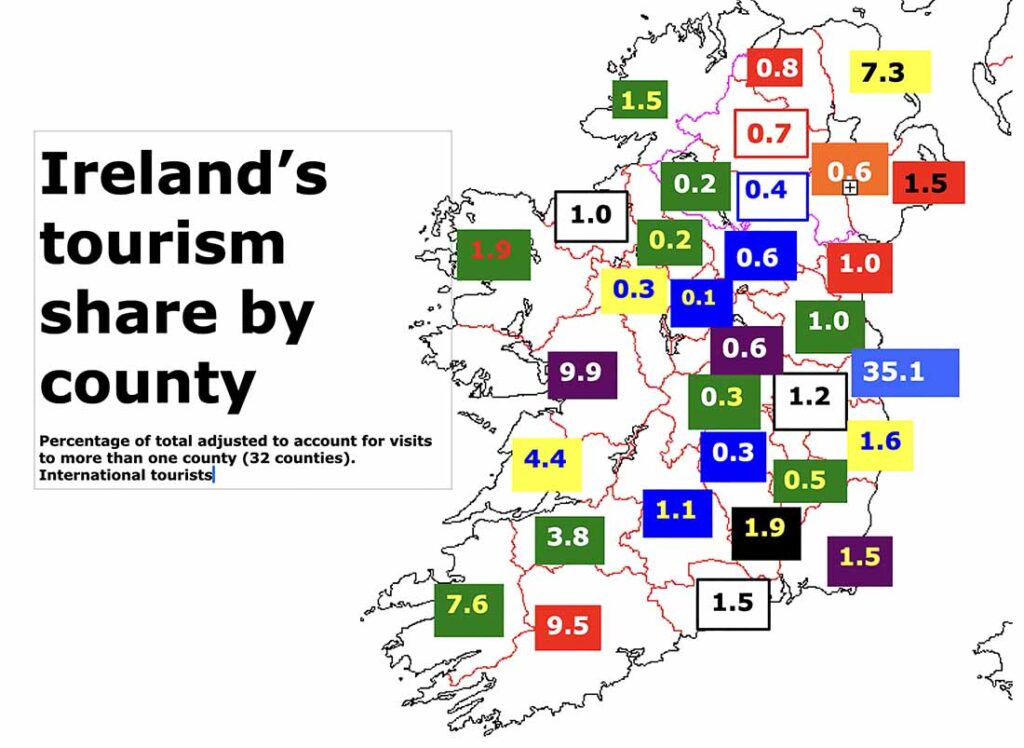
Ireland’s county Limerick combines historic landmarks with riverside charm, with Limerick City’s King John’s Castle offering insights into medieval history along the Shannon. The Hunt Museum showcases an eclectic art collection, while Adare’s thatched cottages and historic manor add picturesque appeal. Other attractions include the nearby Ballyhoura Mountains’ cycling trails. Limerick is Ireland’s tenth largest county by size (2,686 sq km), and ninth largest by population (209,536). Population peaked at 330,029 in 1841 and reached its lowest point, 133,339 in 1971. In terms of hospitality, Limerick is Ireland’s seventh most visited tourist county with around 420,000 international visitors per year.
Introduction – Adventure – Anthem – Archaeology – Attractions – Awards – Birdwatching – Camping – Castles – Churches – Contact list – Cycling – Dining – Equestrian – Festivals – Fishing – Folklore – Gardens – Golf – Graveyards – Happening – Haunted – Highest – Hiking – History – Holy Wells – Hotels – Hotels top 8 – Hunting & shooting – Instagrammable – Itineraries – Largest town – Luxury – MICE – Movies – Music – Name – New – Novelists – Off the beaten track – Poets – Pubs – Quotes – Random Facts – Restaurant Awards – Sacred Places – Saints – Songs – Spas – Sports – Sunsets – Sustainable – Things to do – Towns – Video – Villages – Walking – Wanderlist – Weddings – Wild swimming – Writers – 1837 – 1846 – 1852 – 1909 – 1955 – 1980 –