- Saint Patrick’s Well, Singland, Limerick City: Pattern day: March 17 (Saint Patrick’s Day), historically significant but now rare. On the outskirts of Limerick City, this well is dedicated to Saint Patrick, who reportedly baptized a pagan chief here. Housed in an elaborate 1904 shrine with a stone cross and a worn statue of Saint Patrick, it’s known for curing sore eyes and other ailments. Pilgrims left clooties, medals, and coins on a nearby tree (removed pre-1904). An 1881 court case noted its curative fame. Now in a housing estate, it remains a heritage site. Singland, near Limerick City, Co. Limerick.
- Saint Patrick’s Well, Patrickswell: Pattern day: March 17 (Saint Patrick’s Day), with historical patterns. In Patrickswell town, this well is famed for curing sores, toothaches, and cattle ailments, with water sprinkled on crops and churns. A great elm tree once held medals and rags, but the well’s prominence has faded. Pilgrims performed rounds, and its water was revered for both human and agricultural blessings, according to historian Caoimhín Ó Danachair. Now less visited, it retains local significance. Patrickswell, Co. Limerick.
- Saint Dominic’s Well, Kilmallock: Pattern day: August 4 (Saint Dominic’s Day), though patterns are minimal. Near Kilmallock, this well is dedicated to Saint Dominic. A folklore tale recounts a man mockingly washing his blind horse’s eyes here, only to lose his own sight while the horse was cured, highlighting the well’s sacred power. Used for general healing, pilgrims performed rounds and left clooties. Its rural setting preserves its mystique, though it’s now obscure. Near Kilmallock, Co. Limerick.
- Saint Fintan’s Well, Kilmoylan Lower: Pattern day: January 3 (Saint Fintan’s Day), observed until the early 19th century. In Kilmoylan Lower, this well, described by John O’Donovan in 1840 as a 2-foot spring in a fir grove, is linked to Saint Fintan’s lost monastery. Used for curing sickness, pilgrims performed three clockwise rounds, reciting prayers and dropping stones. Patterns ceased due to Penal Law bans, but the well’s historical monastic ties endure. Kilmoylan Lower, near Doon, Co. Limerick.
- Tobar na gCeirteach (Rag Well), Kilmoylan Upper: Pattern day: August 15 (Feast of the Assumption), held until 1798. Dedicated to the Blessed Virgin Mary, this well in Kilmoylan Upper was known for healing through rags tied to nearby trees. Pilgrims performed rounds, reciting prayers, until Penal Law suppression in 1798 halted patterns. Its pre-Christian origins and Penal Times significance make it notable, though it’s now neglected. Kilmoylan Upper, near Doon, Co. Limerick.
- Saint Ita’s Well, Killeedy: Pattern day: January 15 (Saint Ita’s Day), with historical devotions. In Killeedy, this well is dedicated to Saint Ita, the “Brigid of Munster,” who founded a convent here. Used for healing, particularly women’s and children’s ailments, pilgrims performed rounds and left offerings like rosaries. Its association with Saint Ita’s school, where Saint Brendan studied, adds historical depth. Now quieter, it remains a local heritage site. Killeedy, Co. Limerick.
- Tobar na Súl, Near Hospital: Pattern day: Unknown, possibly Lughnasa (August 1). Known as the “Eye Well,” this well near Hospital was famed for curing eye ailments. Pilgrims bathed their eyes with the water and tied clooties to nearby bushes, believing ailments would fade as the rags decayed. Its rural setting is now less accessible, reducing its prominence, but it retains folklore significance. Near Hospital, Co. Limerick.
- Tobar na nGealt, Near Croom: Pattern day: Unknown, possibly summer festivals. The “Well of the Insane” near Croom was believed to cure mental illnesses, reflecting pre-Christian Otherworldly beliefs. Pilgrims performed rounds, recited prayers, and left clooties. Its secluded location keeps it obscure, with no modern use but strong ties to ancient healing traditions. Near Croom, Co. Limerick.
- Saint Caireall’s Well, Clouncagh: Pattern day: June 13 (Saint Caireall’s Day), with local visits noted. In Clouncagh, this well sprang up where Saint Caireall beheaded a serpent with a spear, per folklore. Used for healing, pilgrims drank or applied the water to affected parts, leaving clooties. A stone bears Saint Patrick’s knee print from a related legend, adding to its sanctity. It remains a local curiosity. Clouncagh, Co. Limerick.
- Our Lady’s Well, Ballylanders: Pattern day: August 15 (Feast of the Assumption), with active patterns. In Ballylanders, this well is dedicated to the Virgin Mary. Pilgrims perform rounds, recite the Rosary, and leave candles or medals, seeking blessings and healing. Its annual pattern, including Mass, draws crowds, reflecting strong community devotion. The well’s rural setting enhances its spiritual ambiance. Ballylanders, Co. Limerick.
- Saint Bernard’s Well, Near Abbeyfeale: Pattern day: August 20 (Saint Bernard’s Day), though patterns have lapsed. Dedicated to Saint Bernard, this well near Abbeyfeale was used for general healing. Pilgrims performed rounds and left offerings like coins or rags. Its proximity to the River Feale and rural tranquility preserve its charm, but urban sprawl and declining patterns have reduced its prominence. Near Abbeyfeale, Co. Limerick.
- Tobar na Plaighe, Near Bruff: Pattern day: Unknown, possibly linked to plague-related rituals. The “Well of the Plague” near Bruff was visited during disease outbreaks for protection or healing. Pilgrims performed rounds and left clooties, believing the water held curative powers. Its historical role in community survival makes it significant, though it’s now overgrown and rarely visited. Near Bruff, Co. Limerick.
Practical Notes:
- Access and Condition: Many Limerick wells are on private land (e.g., Saint Fintan’s) or near urban areas (e.g., Singland); seek permission where needed (check www.limerick.ie or www.holywellscorkandkerry.com). Saint Patrick’s (Singland) and Our Lady’s are maintained, while others, like Tobar na Plaighe, are neglected or hard to find.
- Visiting Tips: Use a map or GPS (www.ihwcbc.omeka.net) (www.ihwcbc.omeka.net), as signage is often minimal. Wear waterproof boots for rural or boggy sites, and respect offerings like clooties or statues. For Ballylanders, attend the August 15 pattern for a communal experience; for Singland, visit Limerick Museum for historical photos.
- Pattern Days: Where unknown, visits likely peaked in summer (May-August), tied to saints’ feast days or Lughnasa. Patterns declined post-19th century due to church reforms, Penal Laws, and the Famine, but Ballylanders and Singland retain some activity.
- Cultural Context: Limerick’s wells were Mass sites during Penal Times, with sunwise rounds (deiseal), Rosary prayers, and clooties to transfer ailments. Specialized cures (e.g., eyes, mental illness) reflect pre-Christian beliefs, often enhanced by sacred trees or stones, like Saint Caireall’s knee-marked stone.
Holy Wells
Antrim – Armagh – Carlow – Cavan – Clare – Cork – Derry – Donegal – Down – Dublin – Fermanagh – Galway – Kerry – Kildare – Kilkenny – Laois – Leitrim – Limerick – Longford – Louth – Mayo – Meath – Monaghan – Offaly – Roscommon – Sligo – Tipperary – Tyrone – Waterford – Westmeath – Wexford – Wicklow
Sacred Places
Antrim – Armagh – Carlow – Cavan – Clare – Cork – Derry – Donegal – Down – Dublin – Fermanagh – Galway – Kerry – Kildare – Kilkenny – Laois – Leitrim – Limerick – Longford – Louth – Mayo – Meath – Monaghan – Offaly – Roscommon – Sligo – Tipperary – Tyrone – Waterford – Westmeath – Wexford – Wicklow
County Limerick:
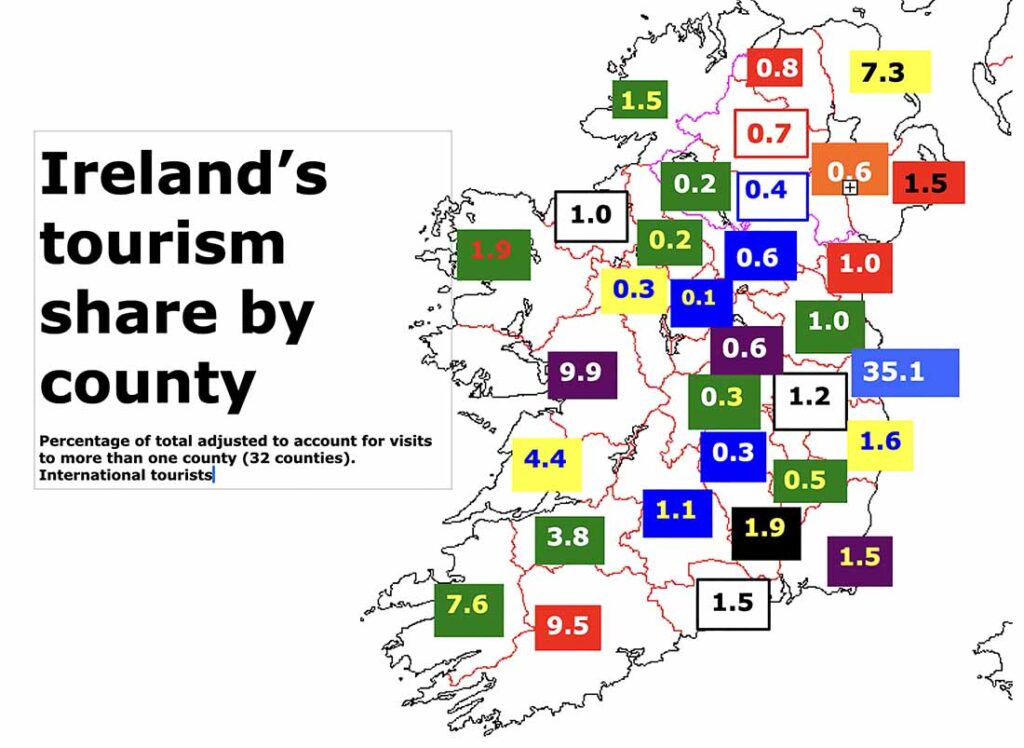
Ireland’s county Limerick combines historic landmarks with riverside charm, with Limerick City’s King John’s Castle offering insights into medieval history along the Shannon. The Hunt Museum showcases an eclectic art collection, while Adare’s thatched cottages and historic manor add picturesque appeal. Other attractions include the nearby Ballyhoura Mountains’ cycling trails. Limerick is Ireland’s tenth largest county by size (2,686 sq km), and ninth largest by population (209,536). Population peaked at 330,029 in 1841 and reached its lowest point, 133,339 in 1971. In terms of hospitality, Limerick is Ireland’s seventh most visited tourist county with around 420,000 international visitors per year.
Introduction – Adventure – Anthem – Archaeology – Attractions – Awards – Birdwatching – Camping – Castles – Churches – Contact list – Cycling – Dining – Equestrian – Festivals – Fishing – Folklore – Gardens – Golf – Graveyards – Happening – Haunted – Highest – Hiking – History – Holy Wells – Hotels – Hotels top 8 – Hunting & shooting – Instagrammable – Itineraries – Largest town – Luxury – MICE – Movies – Music – Name – New – Novelists – Off the beaten track – Poets – Pubs – Quotes – Random Facts – Restaurant Awards – Sacred Places – Saints – Songs – Spas – Sports – Sunsets – Sustainable – Things to do – Towns – Video – Villages – Walking – Wanderlist – Weddings – Wild swimming – Writers – 1837 – 1846 – 1852 – 1909 – 1955 – 1980 –