- Caherelly Cemetery, Herbertstown, Dolores O’Riordan (1971–2018) was the lead vocalist and primary songwriter of the internationally successful Irish rock band The Cranberries. Known for her distinctive yodelling vocal style and hits such as “Linger”, “Zombie”, and “Dreams”, she brought global attention to Irish alternative rock in the 1990s and beyond, blending alternative rock with elements of Irish folk influences.
- Saint Mary’s Cathedral Graveyard, Charles Graves (1812–1899) eminent mathematician, scholar, and Anglican bishop who served as Bishop of Limerick, Ardfert, and Aghadoe from 1866 until his death. A Fellow of the Royal Society and a key figure in Irish academia, he contributed to mathematical research and education while also playing a role in ecclesiastical and political discussions of his era.
- Saint Mary’s Cathedral Graveyard, Samuel Crumpe (1766–1800) a Limerick-born physician and medical writer known for his early work on tuberculosis (then called consumption) and public health. His publications, including An Inquiry into the Nature and Properties of Opium, influenced medical thought in Ireland and Britain during the late 18th century.
- Askeaton, Aubrey Thomas de Vere (1814–1902), Victorian poet, critic, and essayist; part of the Irish literary revival, known for works on Irish themes, Catholicism, and nature; son of poet Aubrey de Vere. Buried in a cemetery attached to the Church of Ireland at Askeaton, Co. Limerick (near Curragh Chase, his family estate).
- St Mary’s Cathedral, Matthew Barrington (1788–1861), 1st Baronet, physician, philanthropist, and founder of Barrington’s Hospital in Limerick; influential in medical and charitable work in the city. Buried in the family vault in St Mary’s Cathedral (Church of Ireland), Limerick city.
- Mahoonagh Graveyard, Michael Joseph McEnery (1869–1940), Antiquarian, historian, and librarian (National Library of Ireland); contributed to Irish historical scholarship and genealogy. Buried in Mahoonagh Graveyard, Castlemahon, Co. Limerick.
- Mount St Lawrence, William Edward Corbett (d. 1904), Local figure (likely merchant or civic leader in Limerick); associated with Ennis Road residence. Buried in Mount St Lawrence cemetery, Limerick.
- St John’s churchyard, William Lane Joynt (1824–1895), Solicitor, politician, and lord mayor of Dublin (1866); notable for civic leadership and philanthropy. Buried in St John’s churchyard, Limerick city.
- St Mary’s Cathedral, Bernard Adams (d. 1626), Church of Ireland bishop of Limerick; key ecclesiastical figure in early 17th-century Ireland during plantation and Reformation transitions. Buried in Limerick cathedral (St Mary’s Cathedral) beneath a commemorative tablet.
- Ballingaddy Cemetery in Kilmallock, Olympic medalist and hammer thrower John Flanagan’s grave is located near the west wall of the graveyard, opposite Saint Mary’s Catholic Church, and is marked by a high, ornate Celtic cross detailing his Olympic achievements, He passed away in 1938,
List of Graveyards in Limerick
Abbeyfeale (St. Mary’s Churchyard), Abington (St. Luke’s Churchyard), Adare (St. Nicholas’ Churchyard), Aghacross Graveyard, Anglesboro Cemetery, Ardpatrick Graveyard, Ardagh (St. John’s Churchyard), Askeaton (St. Mary’s Churchyard), Athea (Holy Cross Cemetery), Athlacca (St. Catherine’s Churchyard), Ballingaddy Graveyard, Ballingarry (St. Mary’s Churchyard), Ballybrood Graveyard, Ballycahane Graveyard, Ballylanders (Our Lady’s Cemetery), Ballynamona Graveyard, Ballyorgan Cemetery, Ballyscaddan Graveyard, Bruff (St. Peter and Paul’s Churchyard), Bruree (St. Munchin’s Churchyard), Bulgaden Graveyard, Caherconlish Cemetery, Cahercorney Churchyard, Caherelly Graveyard, Castletown (St. John’s Churchyard), Castlemungret Cemetery, Castleconnell (St. Joseph’s Churchyard), Clarina (St. Bridget’s Churchyard), Clonagh Graveyard, Croagh (St. John’s Churchyard), Croom (St. Mary’s Churchyard), Doon (St. Fintan’s Churchyard), Doon South Cemetery, Dromcolliher (St. Bartholomew’s Churchyard), Dromin (St. Peter’s Churchyard), Dromkeen Graveyard, Effin Cemetery, Feenagh (St. Ita’s Churchyard), Galbally (St. Laurence’s Churchyard), Glenogra Graveyard, Grange (Knockainey Churchyard), Herbertstown Cemetery, Hospital (St. John’s Churchyard), Kilbehenny Churchyard, Kilfinane (St. Andrew’s Churchyard), Kilflyn (St. Finnian’s Churchyard), Kilkeedy Graveyard, Killeedy (St. Ita’s Churchyard), Killeely Old Graveyard (St. Lelia’s), Killeely (St. Munchin’s Churchyard), Killehenny Graveyard, Kilmallock (St. Peter and Paul’s Churchyard), Kilmeedy Graveyard, Kilmurry (Ardnacrusha Churchyard), Kilteely Graveyard, King’s Island Military Cemetery, Knockaderry (Lisanisky Graveyard), Knockainey (St. John’s Churchyard), Knocklong (St. Joseph’s Churchyard), Limerick City (St. John’s Churchyard), Limerick City (St. Mary’s Cathedral Graveyard), Mahoonagh (Castlemahon Graveyard), Milford Cemetery, Monagea (St. Mary’s Churchyard), Mungret (St. Nessan’s Churchyard), Murroe (St. Mary’s Churchyard), Newcastle West (Churchtown Cemetery), Newcastle West (St. Ita’s Churchyard), Oola (St. Anthony’s Churchyard), Pallasgreen (St. Columba’s Churchyard), Pump Lane Quaker Graveyard, Rathkeale (Holy Trinity Churchyard), Shanagolden (St. Senan’s Churchyard), Tankardstown Graveyard, Templebredon Graveyard, Templeglantine (St. Patrick’s Churchyard)
Graveyards
Antrim – Armagh – Carlow – Cavan – Clare – Cork – Derry – Donegal – Down – Dublin – Fermanagh – Galway – Kerry – Kildare –Kilkenny – Laois – Leitrim – Limerick – Longford – Louth – Mayo – Meath – Monaghan – Offaly – Roscommon – Sligo – Tipperary – Tyrone – Waterford – Westmeath – Wexford – Wicklow
County Limerick:
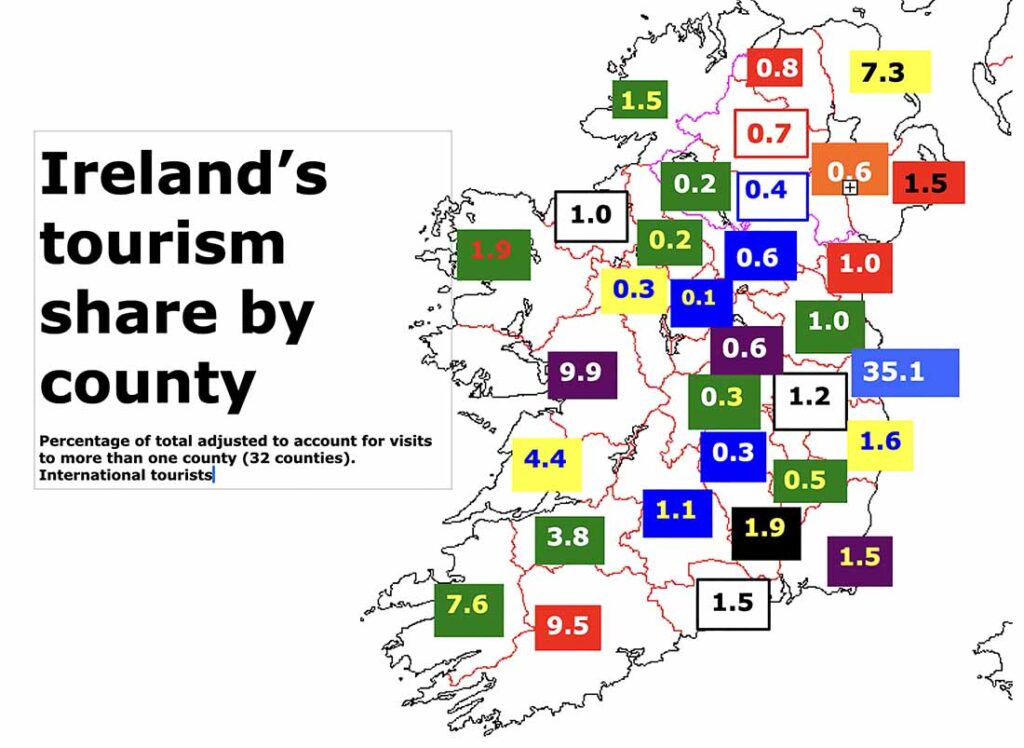
Ireland’s county Limerick combines historic landmarks with riverside charm, with Limerick City’s King John’s Castle offering insights into medieval history along the Shannon. The Hunt Museum showcases an eclectic art collection, while Adare’s thatched cottages and historic manor add picturesque appeal. Other attractions include the nearby Ballyhoura Mountains’ cycling trails. Limerick is Ireland’s tenth largest county by size (2,686 sq km), and ninth largest by population (209,536). Population peaked at 330,029 in 1841 and reached its lowest point, 133,339 in 1971. In terms of hospitality, Limerick is Ireland’s seventh most visited tourist county with around 420,000 international visitors per year.
Introduction – Adventure – Anthem – Archaeology – Attractions – Awards – Birdwatching – Camping – Castles – Churches – Contact list – Cycling – Dining – Equestrian – Festivals – Fishing – Folklore – Gardens – Golf – Graveyards – Happening – Haunted – Highest – Hiking – History – Holy Wells – Hotels – Hotels top 8 – Hunting & shooting – Instagrammable – Itineraries – Largest town – Luxury – MICE – Movies – Music – Name – New – Novelists – Off the beaten track – Poets – Pubs – Quotes – Random Facts – Restaurant Awards – Sacred Places – Saints – Songs – Spas – Sports – Sunsets – Sustainable – Things to do – Towns – Video – Villages – Walking – Wanderlist – Weddings – Wild swimming – Writers – 1837 – 1846 – 1852 – 1909 – 1955 – 1980 –