- Monasterboice Monastic Site: Monasterboice, near Drogheda, County Louth, approximately 8 km north of Drogheda (Coordinates: 53.777°N, 6.418°W).. Founded in the late 5th or early 6th century by St. Buite, Monasterboice is an early Christian monastic settlement renowned for its high crosses and round tower. The site includes two churches, a 10th-century round tower (c. 28 metres high), and three high crosses, notably Muiredach’s Cross (c. 9th–10th century), considered one of Ireland’s finest, with intricate biblical carvings. The West Cross is the tallest high cross in Ireland at over 7 metres. The site was a significant centre of learning and religion until its decline in the 12th century after the founding of nearby Mellifont Abbey. It is linked to the Táin Bó Cúailnge epic due to its location in the Cooley Peninsula region. Managed by the Office of Public Works (OPW) via Heritage Ireland, the site is open year-round with free entry. No formal visitor centre, but interpretive signage is available. Check www.heritageireland.ie for details.
- Mellifont Abbey: Tullyallen, near Drogheda, County Louth, approximately 10 km northwest of Drogheda (Coordinates: 53.742°N, 6.465°W).. Founded in 1142 by St. Malachy, Mellifont was Ireland’s first Cistercian monastery, introducing Continental monastic architecture. Supported by the O’Carroll family, it became a major religious and economic centre, influencing other Cistercian foundations. The abbey features a unique octagonal lavabo (c. 1200), one of the earliest of its kind in Ireland, and remnants of a chapter house and church. It declined after the Dissolution of the Monasteries (1539) and was later used as a fortified house. Archaeological excavations have revealed medieval tiles and artefacts, highlighting its wealth and influence. Managed by Heritage Ireland, the site is open seasonally (typically May–September) with a visitor centre and guided tours. Admission fees apply; check www.heritageireland.ie for hours and tickets.
- Carlingford Priory (Dominican Priory): Carlingford, County Louth, approximately 20 km northeast of Dundalk (Coordinates: 54.040°N, 6.185°W).. Established in 1305 by the Dominican order, Carlingford Priory is a well-preserved medieval monastery in the heart of the historic town. Associated with the de Lacy family, it features a church with a nave and chancel, a tower, and domestic buildings. The priory reflects the prosperity of Carlingford as a medieval port and its strategic importance in the Cooley Peninsula. It was dissolved in the 16th century but remained partially in use. Archaeological surveys highlight its architectural significance, including a crenelated tower added for defence. Managed by the OPW, the priory is accessible year-round with free entry. Limited on-site facilities; check www.heritageireland.ie for access details.
- Proleek Dolmen: Ballymascanlan, near Dundalk, County Louth, approximately 7 km northeast of Dundalk (Coordinates: 54.037°N, 6.348°W).. This Neolithic portal tomb, dating to c. 3000–2500 BC, is one of the finest dolmens in Ireland. It consists of a massive 40-tonne capstone supported by three upright stones, part of the Cooley Peninsula’s prehistoric landscape. Local folklore links it to the giant Fionn MacCumhaill, claiming the capstone was a “pebble” thrown by him. The site is near a wedge tomb and other megalithic structures, indicating a significant prehistoric ritual area. Its accessibility and striking appearance make it a key archaeological attraction. Located on private land within the Ballymascanlan Hotel grounds, the dolmen is publicly accessible via a short walk with no entry fee. Check www.discoverireland.ie for directions.
- Linn Duachaill Viking Settlement: Annagassan, County Louth, approximately 10 km south of Dundalk (Coordinates: 53.883°N, 6.343°W).. Discovered in 2010, Linn Duachaill is one of only two known Viking longphorts (fortified ship bases) in Ireland, founded in 841 AD. It served as a winter base for Viking raids and ship repairs, later becoming a trading hub. Excavations by Dundalk’s County Museum uncovered evidence of shipbuilding, trade, and domestic life, including artefacts like weights and hack-silver. The site’s significance lies in its early date and its role in Viking expansion in Ireland, complementing Dublin’s better-known longphort. Limited physical remains are visible, but the site is accessible with interpretive signage. The County Museum Dundalk offers exhibits on the findings. Check www.louthcoco.ie for museum hours.
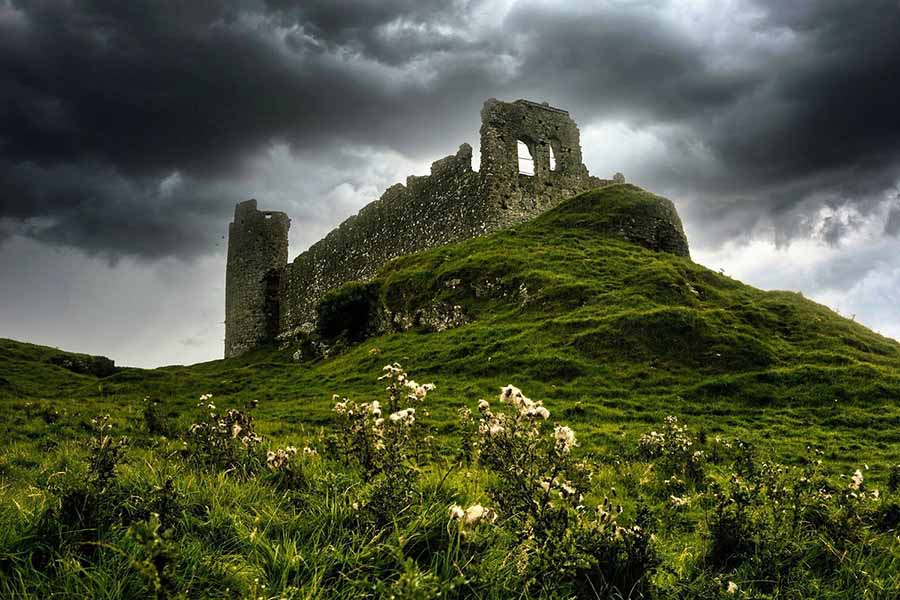
- Ardee Castle: Ardee, County Louth, approximately 20 km southwest of Dundalk (Coordinates: 53.857°N, 6.538°W).. Built in the 13th century by the Anglo-Norman Pipard family, Ardee Castle (also known as St. Leger’s Castle) is a well-preserved tower house, later modified in the 15th century. It served as a defensive and administrative centre in the medieval town, linked to the Táin Bó Cúailnge as the traditional site of Ferdia’s death. Archaeological work has revealed medieval urban features, including remnants of Ardee’s town walls. The castle reflects Norman consolidation in the region and its strategic importance along the Dublin–Ulster route. Managed by the OPW, the castle is open seasonally (typically summer months) with guided tours. Contact www.heritageireland.ie for access details.
- Hill of Faughart: Faughart, near Dundalk, County Louth, approximately 5 km north of Dundalk (Coordinates: 54.051°N, 6.384°W).. The Hill of Faughart is a multi-period site with prehistoric, early Christian, and medieval significance. It features a motte and bailey (12th century), an early Christian church associated with St. Brigid, and a graveyard with medieval grave slabs. The site is linked to the 1318 Battle of Faughart, where Edward Bruce was defeated. Archaeological surveys indicate Bronze Age burials and early medieval ecclesiastical activity, making it a key site in the Cooley Peninsula’s historical landscape. The site is publicly accessible with free entry, but ownership is unclear, and there are no formal facilities. Check www.louthnaturetrust.ie for conservation updates.
Archaeological sites
Antrim – Armagh – Carlow – Cavan – Clare – Cork – Derry – Donegal – Down – Dublin – Fermanagh – Galway – Kerry – Kildare – Kilkenny – Laois – Leitrim – Limerick – Longford – Louth – Mayo – Meath – Monaghan – Offaly – Roscommon – Sligo – Tipperary – Tyrone – Waterford – Westmeath – Wexford – Wicklow
County Louth:
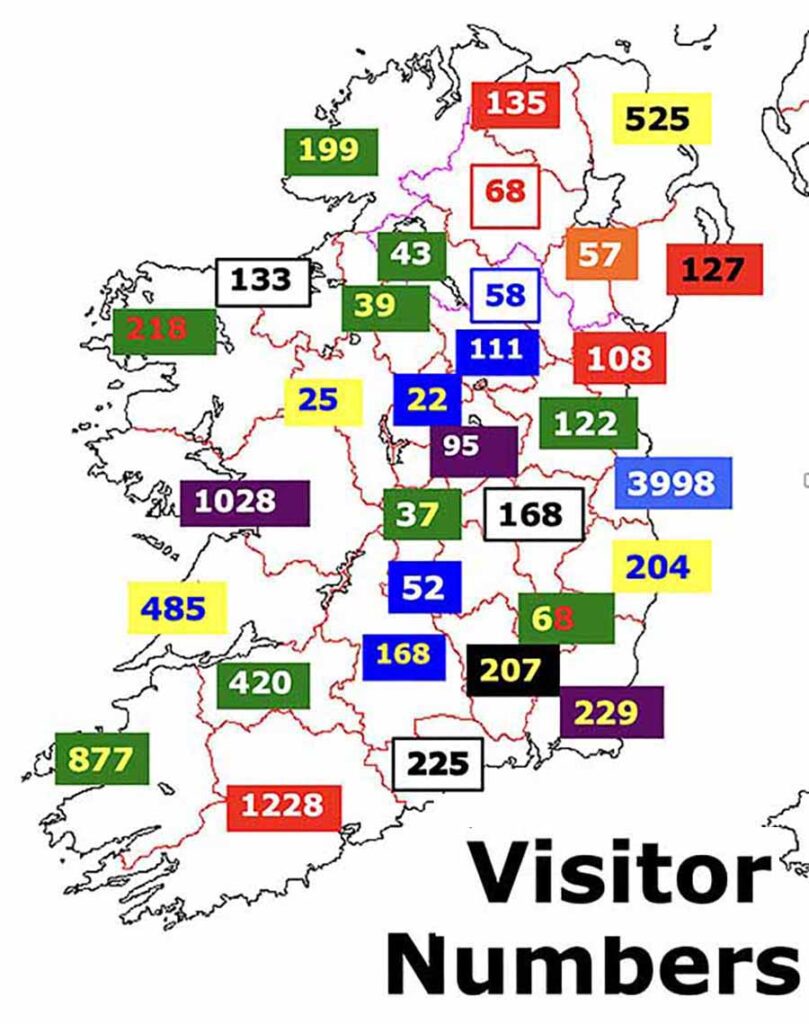
Ireland’s county Louth is a county of historic depth and coastal beauty, with Drogheda’s St Peter’s Church housing a historic shrine and the Boyne Valley offering ancient sites like Newgrange, a UNESCO-listed passage tomb just over the border in county Meath. Carlingford’s medieval streets and castle provide scenic walks, while Dundalk’s coastal paths add natural allure. Other attractions include the Cooley Peninsula’s hiking trails. Louth is Ireland’s smallest county by size (821 sq km) and 17th largest by population (139,703). Population peaked at 128,240 in 1841 and reached its lowest point, 63,665 in 1926. In terms of hospitality, Louth is Ireland’s 21st most visited tourist county with around 108,000 international visitors per year.
Introduction – Adventure – Anthem – Archaeology – Attractions – Awards – Birdwatching – Camping – Castles – Churches – Contact list – Cycling – Dining – Equestrian – Festivals – Fishing – Folklore – Gardens – Golf – Graveyards – Happening – Haunted – Highest – Hiking – History – Holy Wells – Hotels – Hotels top 8 – Hunting & shooting – Instagrammable – Itineraries – Largest town – Luxury – MICE – Movies – Music – Name – New – Novelists – Off the beaten track – Poets – Pubs – Quotes – Random Facts – Restaurant Awards – Sacred Places – Saints – Songs – Spas – Sports – Sunsets – Sustainable – Things to do – Towns – Video – Villages – Walking – Wanderlist – Weddings – Wild swimming – Writers – 1837 – 1846 – 1852 – 1909 – 1955 – 1980 –