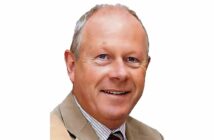
- Edna O’Brien (1930-2024) Born in Tuamgraney, County Clare, O’Brien was a novelist, memoirist, playwright, poet, and short-story writer. Her debut novel, The Country Girls, broke social taboos with its frank depiction of female sexuality, earning both acclaim and controversy. Described by Philip Roth as “the most gifted woman now writing in English,” her works, including House of Splendid Isolation, often explore Irish rural life and women’s experiences, reflecting Clare’s cultural landscape.
- Máiréad Ní Ghráda (1896-1971) Born in Knockadangan, Kilmaley, County Clare, Ní Ghráda was a playwright, author, and broadcaster who wrote primarily in Irish. Her play An Triail is a landmark in Irish-language drama, addressing social issues. She also wrote children’s books and worked for RTÉ, contributing to Clare’s Irish literary tradition.
- Frances Marcella O’Brien (‘Attie’) (1840-1883) Born near Ennis, County Clare, O’Brien was a poet and novelist. Her works, such as the novel Ailey Moore, reflect Irish rural life and the struggles of the peasantry, often infused with Clare’s local color and social dynamics.
- Edward O’Brien (1806-1840) Born in Dromoland, County Clare, O’Brien was a lawyer and writer. As the third son of a prominent baronet, his literary output included essays and historical writings that engaged with Clare’s landed gentry culture and Irish politics.
- Aindrias Mac Cruitín (c. 1670-1738) Born in Moyglass, near Milltown Malbay, County Clare, Mac Cruitín was a poet and scribe from a hereditary learned family. His Irish poetry and work as a seanchaí (chronicler) preserved Clare’s oral and literary traditions, contributing to the region’s cultural heritage.
- Aodh ‘Buí’ Mac Cruitín (MacCurtin, Hugh) (c. 1680-1755) Born in Kilmacrehy, near Liscannor, County Clare, Mac Cruitín was a poet and antiquary. His works, including A Brief Discourse in Vindication of the Antiquity of Ireland, defended Irish culture and history, reflecting Clare’s role as a center of Irish scholarship.
- Patrick Lynch (1754/1757-1818) Born in Quin, County Clare, Lynch was a schoolmaster and scholar. Educated at a hedge school in Ennistymon, he wrote Irish-language poetry and translated classical texts, contributing to Clare’s Irish literary revival and educational traditions.
- Seoirse Mac Cluain (1894-1949) Born in Capparoe, Scariff, County Clare, Mac Cluain was an Irish-language scholar and writer. His works focused on Irish literature and folklore, preserving Clare’s oral traditions and contributing to the Irish-language movement.
- Brian Merriman (c. 1749-1805) Born in Ennistymon, County Clare, Merriman was a poet and schoolteacher best known for his satirical epic Cúirt an Mheán Oíche (The Midnight Court). Written in Irish, it humorously critiques Irish society, cementing his legacy as a key figure in Clare’s literary history.
- Eugene O’Curry (1794-1862) Born in Doonaha, County Clare, O’Curry was a scholar, antiquarian, and writer. His works, including Lectures on the Manuscript Materials of Ancient Irish History, were instrumental in preserving Ireland’s Irish heritage, with a strong connection to Clare’s scholarly traditions.
Writers
Antrim – Armagh – Carlow – Cavan – Clare – Cork – Derry – Donegal – Down – Dublin – Fermanagh – Galway – Kerry – Kildare – Kilkenny – Laois – Leitrim – Limerick – Longford – Louth – Mayo – Meath – Monaghan – Offaly – Roscommon – Sligo – Tipperary – Tyrone – Waterford – Westmeath – Wexford – Wicklow
County Clare:
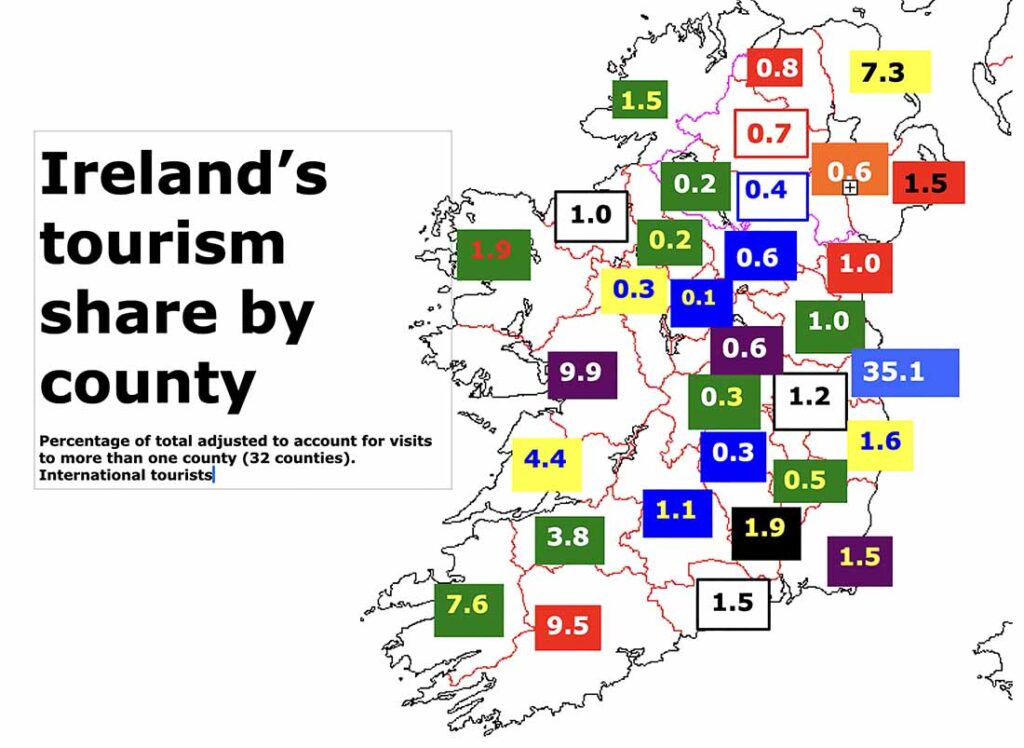
Ireland’s county Clare is renowned for its dramatic cliffs and traditional heritage, with the Cliffs of Moher offering breathtaking views over the Atlantic. The Burren’s unique limestone landscape provides hiking and rare flora, while Bunratty Castle offers medieval history with its restored interiors. Check out the traditional music scene in Doolin and the county’s coastal beaches. Clare is Ireland’s eighth largest county by size (3,188 square km) and 19th largest by population (127,938). Population peaked at 286,394 in 1841 and reached its lowest point, 73,597 in 1966. In terms of hospitality, Clare is Ireland’s sixth most visited tourist county with around 485,000 international visitors per year.
Introduction – Adventure – Anthem – Archaeology – Attractions – Awards – Birdwatching – Camping – Castles – Churches – Contact list – Cycling – Dining – Equestrian – Festivals – Fishing – Folklore – Gardens – Golf – Graveyards – Happening – Haunted – Highest – Hiking – History – Holy Wells – Hotels – Hotels top 8 – Hunting & shooting – Instagrammable – Itineraries – Largest town – Luxury – MICE – Movies – Music – New – Name – Novelists – Off the beaten track – Poets – Pubs – Quotes – Random Facts – Restaurant Awards – Sacred Places – Saints –Songs – Spas – Sports – Sunsets – Sustainable – Things to do – Towns – Video – Villages – Walking – Wanderlist – Weddings – Wild swimming – Writers – 1837– 1846 – 1852 – 1909 – 1955 – 1980 –