- The Fairy Fort at Dalkey: In the area around Dalkey, a prominent ring fort is regarded as a fairy dwelling; local tradition warns that disturbing it, such as by cutting thorns or ploughing the land, invites severe misfortune from the fairies who reside within.
- Lights and Music from Fairy Rings in Tallaght: Near Tallaght, circular fairy rings in fields are sites where mysterious lights and sweet music have been heard at night, believed to emanate from fairies dancing and revelling unseen by mortals.
- The Banshee Following Old Dublin Families: In parts of County Dublin, particularly around older estates, the banshee is said to follow certain ancient families, her combing of long hair and mournful cries heard as an omen of impending death.
- Hidden Treasure in a Rath near Swords: A fairy rath near Swords is reputed to conceal buried treasure from ancient times, guarded by supernatural beings; stories tell of attempted digs halted by eerie sounds or apparitions.
- Saint Patrick’s Miracles at a Dublin Well: Local legends associate Saint Patrick with holy wells in County Dublin, such as those near rural parishes, where he is said to have blessed the waters, granting them curative powers for various ailments that persist in tradition.
Folklore
Antrim – Armagh – Carlow – Cavan – Clare – Cork – Derry – Donegal – Down – Dublin – Fermanagh – Galway – Kerry – Kildare – Kilkenny – Laois – Leitrim – Limerick – Longford – Louth – Mayo – Meath – Monaghan – Offaly – Roscommon – Sligo – Tipperary – Tyrone – Waterford – Westmeath – Wexford – Wicklow
County Dublin:
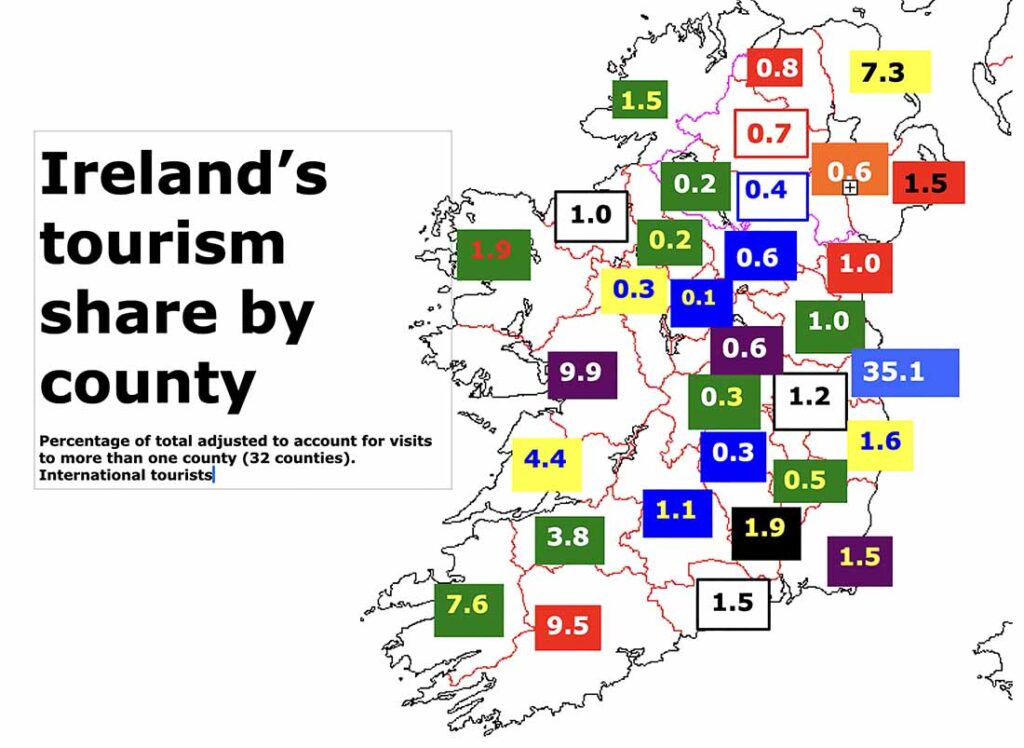
Ireland’s county Dublin combines cultural heritage with urban appeal, with Trinity College’s Book of Kells and Dublin Castle offering historical depth. The Guinness Storehouse provides a journey through Ireland’s iconic stout, while Phoenix Park’s vast green spaces are ideal for cycling. The River Liffey’s scenic walks and Kilmainham Gaol’s historical tours make Dublin a versatile destination for culture and history. Dublin is Ireland’s third smallest county by size (922 square km) and largest by population (1,458,154). Dublin is also Ireland’s most visited tourist county by a margin, with around four million international visitors per year. In terms of hospitality,
Introduction – Adventure – Anthem – Archaeology – Attractions – Awards – Birdwatching – Camping – Castles – Churches – Contact list – Cycling – Dining – Equestrian – Festivals – Fishing – Folklore – Gardens – Golf – Graveyards – Happening – Haunted – Highest – Hiking – History – Holy Wells – Hotels – Hotels top 8 – Hunting & shooting – Instagrammable – Itineraries – Largest town – Luxury – MICE – Movies – Music – New – Name – Novelists – Off the beaten track – Poets – Pubs – Quotes – Random Facts – Restaurant Awards – Sacred Places – Saints – Songs – Spas – Sports – Sunsets – Sustainable – Things to do – Towns – Video – Villages – Walking – Wanderlist – Weddings – Wild swimming – Writers – 1837 – 1846 – 1852 – 1909 – 1955 – 1980 –