The highest point in County Cavan is Cuilcagh Mountain, standing at 665 meters (2,185 feet). Straddling the border with County Fermanagh, it is the highest point in both counties and the 170th highest peak in Ireland. Known for its distinctive tabletop plateau and the famous Cuilcagh Boardwalk Trail (often called the “Stairway to Heaven”), Cuilcagh is part of the Cuilcagh Lakelands UNESCO Global Geopark, the world’s first transnational cross-border geopark. Here’s a detailed guide for visitors and hikers, covering how to approach the mountain and what to expect during a visit.
Description of Cuilcagh Mountain
- Geological and Cultural Significance: Cuilcagh, derived from the Irish Binn Chuilceach (“chalky peak”), is primarily composed of sandstone and shale, not chalk, covered with blanket bog and heather. Its southern slopes are the source of the River Shannon, Ireland’s longest river, emerging at the Shannon Pot. The mountain’s unique geology, featuring gritstone cliffs, limestone sinkholes, and extensive cave systems, makes it a focal point of the geopark. It also holds cultural significance as part of the historic Breifne region, with archaeological sites like prehistoric tombs nearby in the Cavan Burren Park.
- Scenic Beauty: The summit offers panoramic views across the border counties, including Upper and Lower Lough MacNean, Lough Erne, and, on clear days, distant peaks like Slieve League in Donegal or even the Sperrin Mountains. The plateau’s dramatic cliffs and vast boglands create a striking, otherworldly landscape.
Approaching Cuilcagh Mountain
- Primary Access Point: The most popular route is the Cuilcagh Boardwalk Trail, starting at the Legnabrocky Car Park (address: 43 Marlbank Road, Legnabrocky, Florencecourt, County Fermanagh, BT92 1ER). This paid parking area (book online in advance) is near the Marble Arch Caves Visitor Centre, about 15km southwest of Enniskillen. The trailhead is well-marked and accessible from both Cavan and Fermanagh.
Trail Options:
- Cuilcagh Boardwalk Trail (Stairway to Heaven): This 7.4km (4.6-mile) linear trail (out-and-back, ~14.8km total) is the main route, taking 2.5–4 hours round trip. It starts with a gravel track through farmland, transitions to a 1.5km wooden boardwalk to protect the fragile blanket bog, and ends with a steep staircase to the summit plateau. The final 1km across the plateau to the summit cairn is waymarked but can be boggy. This trail is moderately challenging, suitable for those with basic fitness, but the staircase and exposed summit require caution.
- Southern Approach via Benbeg: An alternative route starts from a car park near Aghnacollia Lane (Grid Ref: H11911 24495) in Cavan, ascending via Benbeg (539m, Cavan’s second-highest point) to Cuilcagh’s summit. This 3–4-hour round trip is steeper and less frequented, offering a quieter experience but requiring navigation skills due to fewer markers.
- Gortalughany Viewpoint: Another southern approach begins at the Gortalughany Viewpoint car park (reached via the A32, signposted from Florencecourt). This route follows a track to limestone grasslands at Leggacurragh, joins the Hiker’s Trail, and ascends steeply to the summit. It’s more challenging and requires an OSNI map (Sheet 26) for navigation, especially in low visibility.
- Navigation and Preparation: The boardwalk trail is well-marked, but fog and low cloud can reduce visibility on the summit plateau, where waymarkers may be hard to spot. Hikers should carry a map (OSNI 1:50k, Sheet 26), compass, or GPS, especially for southern routes. Waterproof hiking boots, layered clothing, and rain gear are essential due to frequent rain and boggy terrain. Dogs are allowed but must be leashed to protect livestock and wildlife. Check weather forecasts, as conditions can change rapidly, and book parking for the boardwalk trail in advance.
Hiking Experience:
- The Boardwalk Trail is the highlight, designed to preserve the bog while making the ascent accessible. The boardwalk winds through one of Ireland’s largest blanket bogs, offering a unique ecosystem with heather and mosses. The final staircase is steep but manageable, leading to a viewing platform with stunning views before the short walk to the summit cairn.
- The summit plateau is expansive and rugged, with gritstone cliffs and a large cairn marking the high point. The terrain can be wet and uneven, so caution is needed. Southern routes, like the Benbeg approach, involve tougher moorland and steeper climbs, offering a wilder experience.
- Expect moderate crowds on the boardwalk trail, especially in summer, as its popularity has surged from 3,000 to over 60,000 annual visitors since opening in 2015. Early morning or weekday visits help avoid peak times.
- Views and Photography: On clear days, the summit provides breathtaking vistas of Cavan’s drumlin-dotted countryside, Fermanagh’s lakes, and distant mountains. The boardwalk and staircase offer iconic photo opportunities, especially at sunrise or sunset when the light enhances the dramatic landscape.
- Wildlife and Nature: Cuilcagh is a haven for upland species, including rare water beetles (e.g., Agabus melanarius) and birds like skylarks and hen harriers. The blanket bog supports unique flora, such as sphagnum moss and sundews. Nearby Lough Atona is a key site for biodiversity. Visitors may also spot grazing sheep or cattle, as the area is used for farming.
- Cultural and Historical Context: The mountain lies within the historic Breifne region, once a Gaelic kingdom. Nearby, the Cavan Burren Park features prehistoric tombs, rock art, and a “giant’s grave” (wedge tomb), complementing a Cuilcagh visit. The Shannon Pot, a short drive away, is a cultural landmark as the River Shannon’s source.
- Amenities: The Legnabrocky Car Park has limited facilities, but the nearby Marble Arch Caves Visitor Centre offers a café, restrooms, and information on the geopark. The centre is ideal for post-hike refreshments or combining a hike with a cave tour. Killykeen Forest Park, closer to Cavan town, provides family-friendly trails for those seeking additional walks.
- Seasonal Considerations: Spring and autumn offer vibrant scenery and milder weather, though rain is common year-round (November–March can bring snow). Summer is busiest, while winter hikes require extra caution due to potential ice on the staircase. Average temperatures range from 4°C (39°F) in winter to 15–22°C (59–72°F) in summer, with 1,300–1,500 annual sunshine hours.
Highest point in county
Antrim – Armagh – Carlow – Cavan – Clare – Cork – Derry – Donegal – Down – Dublin – Fermanagh – Galway] – Kerry – Kildare – Kilkenny – Laois – Leitrim – Limerick – Longford – Louth – Mayo – Meath – Monaghan – Offaly – Roscommon – Sligo – Tipperary – Tyrone – Waterford – Westmeath – Wexford – Wicklow
County Cavan:
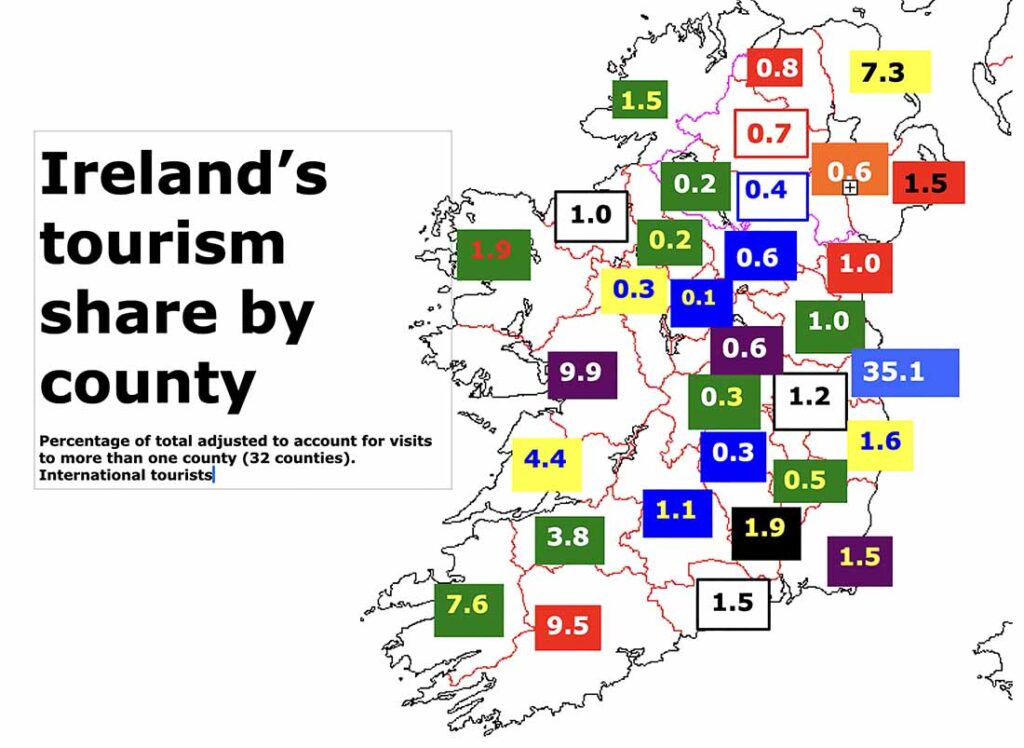
Ireland’s county Cavan is a haven of lakes and rolling hills, with the Shannon-Erne Waterway offering tranquil boating and fishing opportunities. The Cavan County Museum in Ballyjamesduff explores local history, while the Marble Arch Caves, part of a UNESCO Geopark, showcase stunning underground formations. Other attractions include the Killykeen Forest Park’s walking trails. Cavan is Ireland’s 19th largest county by size (1,891 sq km) and eighth smallest by population (81,704). Population peaked at 243,158 in 1841 and reached its lowest point, 52,618 in 1971. In terms of hospitality, Cavan is Ireland’s 20th most visited tourist county with around 111,000 international visitors per year.
IIntroduction – Adventure – Anthem – Archaeology – Attractions – Awards – Birdwatching – Camping – Castles – Churches – Contact list – Cycling – Dining – Equestrian – Festivals – Fishing – Folklore – Gardens – Golf – Graveyards – Happening – Haunted – Highest – Hiking – History – Holy Wells – Hotels – Hotels top 8 – Hunting & shooting – Instagrammable – Itineraries – Largest town – Luxury – MICE – Movies – Music – New – Name – Novelists – Off the beaten track – Poets – Pubs – Quotes – Random Facts – Restaurant Awards – Sacred Places – Saints – Songs – Spas – Sports – Sunsets – Sustainable – Things to do – Towns – Video – Villages – Walking – Wanderlist – Weddings – Wild swimming – Writers – 1837– 1846 – 1852 – 1909 – 1955 – 1980 –