The highest point in County Meath is Slieve na Calliagh (also known as Loughcrew or Sliabh na Caillí), standing at 276 meters (906 feet). Located in the Loughcrew Hills near Oldcastle in northwest Meath, this modest hill is renowned for its ancient megalithic passage tombs, part of the Loughcrew Cairns, a significant archaeological site dating to 3,500–3,000 BC.
- Geological and Cultural Significance: Slieve na Calliagh, meaning “Hill of the Witch” or “Hag’s Mountain,” is part of a low range of limestone hills formed during the Carboniferous period. The hill’s summit hosts a cluster of Neolithic passage tombs, known as the Loughcrew Cairns, which rival Newgrange in historical importance. These tombs, especially Cairn T, feature intricate rock art and align with equinox sunrises, earning the site the nickname “Hills of the Equinox.” The name ties to local folklore about a witch dropping stones from her apron, creating the cairns. The site is a focal point of Meath’s rich heritage, part of the Brú na Bóinne UNESCO World Heritage region’s broader cultural landscape.
- Scenic Beauty: Despite its low elevation, Slieve na Calliagh offers panoramic views over Meath’s rolling green plains, with the Boyne Valley, distant Mourne Mountains, and, on clear days, the Wicklow Mountains visible. The hill’s open, grassy slopes and ancient cairns create a unique blend of natural and historical beauty.
Approaching Slieve na Calliagh
- Access Points: The primary access point is the Loughcrew Cairns car park (Grid Ref: N 586 774), off the R195 near Oldcastle, about 3km from the town. This car park, managed by the Office of Public Works (OPW), is the starting point for the main trail to the summit. An alternative approach is from Patrickstown Hill, a nearby ridge, accessible via minor roads off the R154. Public transport is limited, with the nearest bus routes (e.g., Bus Éireann to Oldcastle) requiring a short drive or taxi to the trailhead. A car is recommended for access.
Trail Options:
- Loughcrew Cairns Route: The most popular route is a 2–3km round-trip hike (1–1.5 hours) starting at the Loughcrew car park. A well-marked path ascends gently through grassy slopes and farmland to the summit, where Cairn T and other tombs are located. The trail is short and easy, suitable for beginners and families, though it can be muddy or slippery after rain. The OPW provides free access to the site, with a key available at the car park’s coffee shop for entering Cairn T (seasonal, typically March–October).
- Patrickstown Hill Route: A slightly longer 4–5km round-trip hike (1.5–2 hours) starts from a lay-by near Patrickstown (Grid Ref: N 573 766), following a less-defined path or field boundaries to the summit. This route crosses private land, so permission from landowners may be needed. It offers a quieter approach but requires basic navigation.
- Extended Routes: Hikers can explore other cairns in the Loughcrew complex (e.g., Cairn L or Cairn S) or nearby hills like Carnbane East or Carnbane West, creating a 5–7km loop. These routes are less formal and may involve boggy terrain or fences, requiring care and navigation skills.
- Navigation and Preparation: The Loughcrew Cairns route is well-marked with OPW signage, making navigation straightforward. The Patrickstown route and extended walks lack clear paths, so hikers should carry a map (Ordnance Survey Ireland, Discovery Series Sheet 42), compass, or GPS. Waterproof boots and rain gear are advisable due to Meath’s damp climate and grassy, muddy slopes. Bring water and snacks, as facilities are limited outside the car park’s coffee shop (seasonal). Dogs are allowed but must be leashed to protect livestock and the archaeological site. Check weather forecasts, as fog or rain can reduce visibility, and confirm Cairn T access with the OPW if planning to enter the tomb.
Hiking Experience:
- The Loughcrew Cairns route is a short, gentle hike, ideal for all ages and fitness levels. The path ascends gradually through open fields, with the cairns visible from a distance. The summit area is compact, with Cairn T as the focal point, offering a tangible connection to Ireland’s Neolithic past.
- The Patrickstown route is slightly more challenging due to less-defined paths and potential boggy patches but remains accessible for most hikers. It provides a quieter experience, avoiding the main tourist trail.
- The summit is a grassy ridge dotted with cairns, with Cairn T being the largest and most accessible. The site’s historical significance and open views make it feel grander than its modest height suggests. The area sees moderate visitors, especially during equinox events, but is quieter than Brú na Bóinne sites like Newgrange.
- Views and Photography: On clear days, the summit offers sweeping views over Meath’s lush countryside, with the Boyne Valley’s patchwork fields and distant hills like the Mournes or Wicklows. The cairns, with their ancient stonework and rock art, are photogenic, especially during equinox sunrises (March/September) when sunlight illuminates Cairn T’s chamber. The rolling hills and open sky create a serene backdrop for photography.
- Wildlife and Nature: The Loughcrew Hills feature grassy slopes and some boggy patches, supporting wildflowers like primroses and orchids in spring. Wildlife includes hares, foxes, and birds like skylarks and kestrels. Grazing sheep are common, reflecting the area’s pastoral use. The site’s open, windswept nature adds to its wild charm.
- Cultural and Historical Context: Slieve na Calliagh is a cornerstone of Meath’s “Royal County” heritage, tied to its ancient kings and druids. The Loughcrew Cairns, part of Ireland’s megalithic tradition, feature intricate carvings of spirals and sun motifs, rivaling Newgrange. The equinox alignments draw visitors for their spiritual and astronomical significance. Nearby, Oldcastle hosts traditional music and festivals, while the Hill of Tara (30km away) complements the site’s ancient legacy.
- Amenities: The Loughcrew car park has a seasonal coffee shop (Loughcrew Coffee Shop, typically March–October) with basic snacks and toilets, plus an OPW information board. For Cairn T access, collect the key from the coffee shop (free, with a deposit). Outside these hours, the hill is accessible, but the tomb may be locked. Oldcastle (3km) offers pubs (e.g., The Oldcastle House Hotel), shops, and accommodation. Kells (20km) or Navan (30km) provide more dining and lodging options.
- Seasonal Considerations: Spring (April–May) and autumn (September–October) offer mild weather (8–15°C / 46–59°F) and vibrant scenery, with equinox events drawing crowds. Summer (June–August) is warmest (15–20°C / 59–68°F) but wetter, with muddier paths. Winter (November–March) brings damp, muddy conditions and occasional frost, with limited facilities. Meath’s 1,200–1,400 annual sunshine hours allow for clear views, but rain is frequent, so waterproof gear is essential.
- Guided Tours: The OPW offers free guided tours of the Loughcrew Cairns (seasonal, typically summer), providing insights into the tombs’ history and astronomy. Local operators via visitmeath.ie may include Slieve na Calliagh in heritage tours, ideal for exploring the site’s significance. Equinox tours are particularly popular but require booking.
- Safety: The Loughcrew route is low-risk, but muddy slopes can be slippery. The Patrickstown route requires basic navigation across private land, so respect property (close gates, avoid livestock). Inform someone of your plans, especially in poor weather, as fog can obscure views. Mobile signal is generally good, but offline maps are recommended.
- Accessibility: Slieve na Calliagh is one of Ireland’s easiest county high points, suitable for beginners and families due to its short, gentle trail. The summit is not wheelchair-accessible due to grassy, uneven terrain, but the car park’s proximity makes it approachable for most.
Slieve na Calliagh offers a short, accessible hike in County Meath, blending natural beauty with profound historical significance. The Loughcrew Cairns, with their Neolithic tombs and equinox alignments, make it a unique destination, while the hill’s views and quiet setting appeal to hikers and heritage enthusiasts alike. Its proximity to Meath’s other ancient sites, like Tara and Newgrange, enhances a visit, making it a perfect day trip. For more details, visit visitmeath.ie or consult Kieron Gibbons’ Ireland’s County High Points – A Walking Guide
Highest point in county
Antrim – Armagh – Carlow – Cavan – Clare – Cork – Derry – Donegal – Down – Dublin – Fermanagh – Galway] – Kerry – Kildare – Kilkenny – Laois – Leitrim – Limerick – Longford – Louth – Mayo – Meath – Monaghan – Offaly – Roscommon – Sligo – Tipperary – Tyrone – Waterford – Westmeath – Wexford – Wicklow
County Meath:
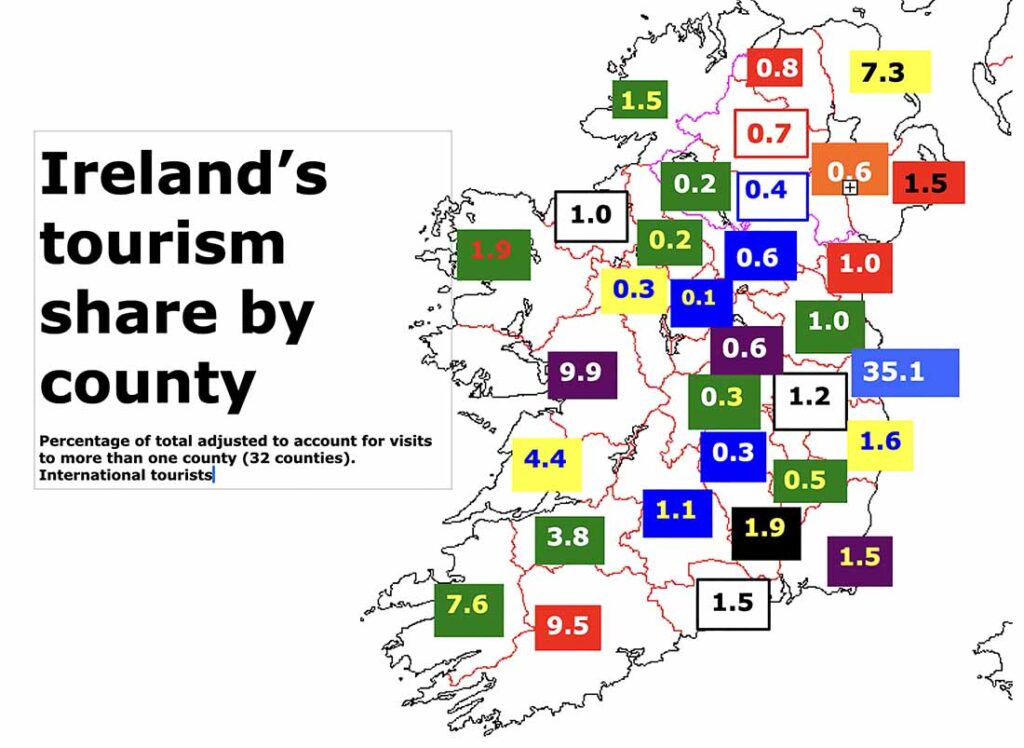
Ireland’s county Meath is steeped in Ireland’s ancient past, with the Hill of Tara offering a glimpse into royal history and panoramic views. The UNESCO-listed Brú na Bóinne complex, including Newgrange and Knowth, showcases intricate Neolithic tombs, while Trim Castle provides medieval grandeur. Other attractions include the Boyne River’s scenic walks and historic Slane Castle. Meath is Ireland’s 14th largest county by size (2,336 square km) and eighth largest by population (220,826). Population previously peaked at 183,828 in 1841 and reached its lowest point, 62,969 in 1926. In terms of hospitality, Meath is Ireland’s 19th most visited tourist county with around 122,000 international visitors per year.
Introduction – Adventure – Anthem – Archaeology – Attractions – Awards – Birdwatching – Camping – Castles – Churches – Contact list – Cycling – Dining – Equestrian – Festivals – Fishing – Folklore – Gardens – Golf – Graveyards – Happening – Haunted – Highest – Hiking – History – Holy Wells – Hotels – Hotels top 8 – Hunting & shooting – Instagrammable – Itineraries – Largest town – Luxury – MICE – Movies – Music – Name – New – Novelists – Off the beaten track – Poets – Pubs – Quotes – Random Facts – Restaurant Awards – Sacred Places – Saints – Songs – Spas – Sports – Sunsets – Sustainable – Things to do – Towns – Video – Villages – Walking – Wanderlist – Weddings – Wild swimming – Writers – 1837 – 1846 – 1852 – 1909 – 1955 – 1980 –