- Dublin City (1,263,219 inhabitants): Dublin City is the capital and largest urban centre in Ireland. Visitors can expect a compact city centre with Georgian architecture, Trinity College featuring the Book of Kells exhibit, Guinness Storehouse with tours on brewing history, St Patrick’s Cathedral and Christ Church Cathedral for ecclesiastical sites, Phoenix Park for open parkland walks, museums such as the National Museum of Ireland, and a range of pubs and eateries. The city provides walking routes along the River Liffey, markets, and serves as a base for exploring urban and nearby coastal areas.
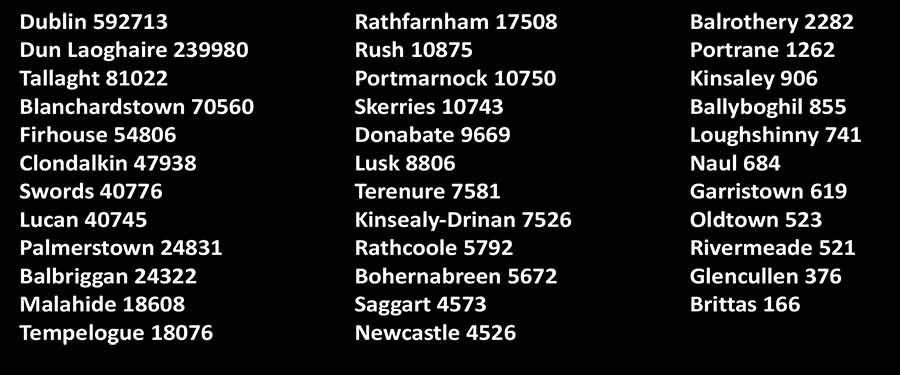
- Dún Laoghaire (239,980 inhabitants): A coastal town south of Dublin with a large harbour. Visitors can expect walks along the piers, a maritime museum, a modern library with bay views, parks with markets on certain days, and access to ferries or water activities.
- Tallaght (81,022 inhabitants): A large suburban area in south Dublin at the edge of the mountains. Visitors can expect shopping centres, parks including those along the Dodder river, sports facilities such as Shamrock Rovers’ stadium, and starting points for mountain walks or trails with city views.
- Blanchardstown (70,560 inhabitants): A suburban area in west Dublin with extensive retail. Visitors might expect a large shopping centre with many stores, leisure facilities, an arts centre, and local eateries in a built-up setting close to motorways.
- Clondalkin (47,938 inhabitants): Clondalkin is a suburban area west of Dublin city centre. Visitors can expect a round tower from early centuries with a visitor centre offering exhibits on local history over more than a thousand years, along with nearby Corkagh Park providing paths through woodland, angling lakes, a pet farm, and open spaces for walks. The area includes shopping facilities at nearby centres and access to the Grand Canal greenway for cycling or strolling.
- Swords (40,776 ijnhabitants): A substantial town north of Dublin and the county town of Fingal. Visitors can expect a restored medieval castle, a round tower, historic sites, parks, and nearby access to other castles or coastal spots.
- Lucan (40,745 inhabitants): A town west of Dublin in the Liffey valley. Visitors might expect a historic village centre with a green, paths along the river in demesne parks, nearby gardens, and connections to longer trails or neighbouring estates.
- Balbriggan (24,322 inhabitants): A coastal town further north with a beach. Visitors might expect sandy shores for walks, a harbour, a Martello tower, and proximity to a castle and gardens on the outskirts.
- Malahide (18,608 inhabitants): A town by the coast with a large demesne. Visitors can expect a castle with gardens and grounds open to the public, a marina, beaches nearby, and a village centre with places to eat.
- Shankill (14,257 inhabitants): Shankill is a coastal suburb southeast of Dublin near the County Wicklow border. Visitors might expect a beach for seaside walks, Shanganagh Park with open grounds and paths, and proximity to historical features such as Puck’s Castle ruins and Ballycorus Lead Mines remnants in the surrounding area. The suburb offers a village-like setting with local shops and access to the DART rail line for trips into Dublin city.
- Rush (10,875 inhabitants): A coastal village north of the city. Visitors might expect beaches, a small harbour, golf courses, and quiet seaside paths in a low-key setting.
- Portmarnock (10,750 inhabitants): A seaside place known for its strand. Visitors can expect a long sandy beach, a famous golf club, coastal walks, and a relaxed residential feel close to the sea.
- Skerries (10,743 inhabitants): A harbour town on the coast. Visitors might expect a working fishing harbour, beaches, an old mill complex, islands offshore reachable by boat, and cliff or seafront paths.
- Donabate (9,669 inhabitants): A growing town near the coast. Visitors can expect access to beaches, a large demesne with a historic house and parkland, golf, and new developments alongside older village elements.
- Lusk (8,806 inhabitants): A village inland from the coast. Visitors might expect a round tower and church ruins, local amenities, and rural surroundings with paths connecting to nearby towns.
- Kinsealy-Drinan (7,526 inhabitants): A small area near the coast. Visitors can expect quiet lanes, farmland, and proximity to larger coastal attractions or Dublin.
- Rathcoole (5,792 inhabitants): A village south-west of the city. Visitors might expect countryside roads, local pubs, and open spaces in a commuter setting.
- Saggart (4,573 inhabitants): A village close to Tallaght. Visitors can expect rural feel, nearby hills or walks, and easy reach to suburban facilities.
- Newcastle (4,526 inhabitants): A small village in the west. Visitors might expect peaceful surroundings, farmland, and local community life away from busier areas.
- Balrothery (2,282 inhabitants): A modest village north of Balbriggan. Visitors can expect quiet rural lanes and proximity to coastal or motorway routes.
- Portrane (1,262 inhabitants): A coastal spot with a small population. Visitors might expect beaches, a martello tower, sea views, and a calm shoreline setting.
Population of towns in county Dublin
Towns
Antrim – Armagh – Carlow – Cavan – Clare – Cork – Derry – Donegal – Down – Dublin – Fermanagh – Galway – Kerry – Kildare – Kilkenny – Laois – Leitrim – Limerick – Longford – Louth – Mayo – Meath – Monaghan – Offaly – Roscommon – Sligo – Tipperary – Tyrone – Waterford – Westmeath – Wexford – Wicklow
Villages
Antrim – Armagh – Carlow – Cavan – Clare – Cork – Derry – Donegal – Down – Dublin – Fermanagh – Galway – Kerry – Kildare – Kilkenny – Laois – Leitrim – Limerick – Longford – Louth – Mayo – Meath – Monaghan – Offaly – Roscommon – Sligo – Tipperary – Tyrone – Waterford – Westmeath – Wexford – Wicklow
Largest town in the county: a walking tour
Antrim – Armagh – Carlow – Cavan – Clare – Cork – Derry – Donegal – Down – Dublin – Fermanagh – Galway – Kerry – Kildare – Kilkenny – Laois – Leitrim – Limerick – Longford – Louth – Mayo – Meath – Monaghan – Offaly – Roscommon – Sligo – Tipperary – Tyrone – Waterford – Westmeath – Wexford – Wicklow
County Dublin:
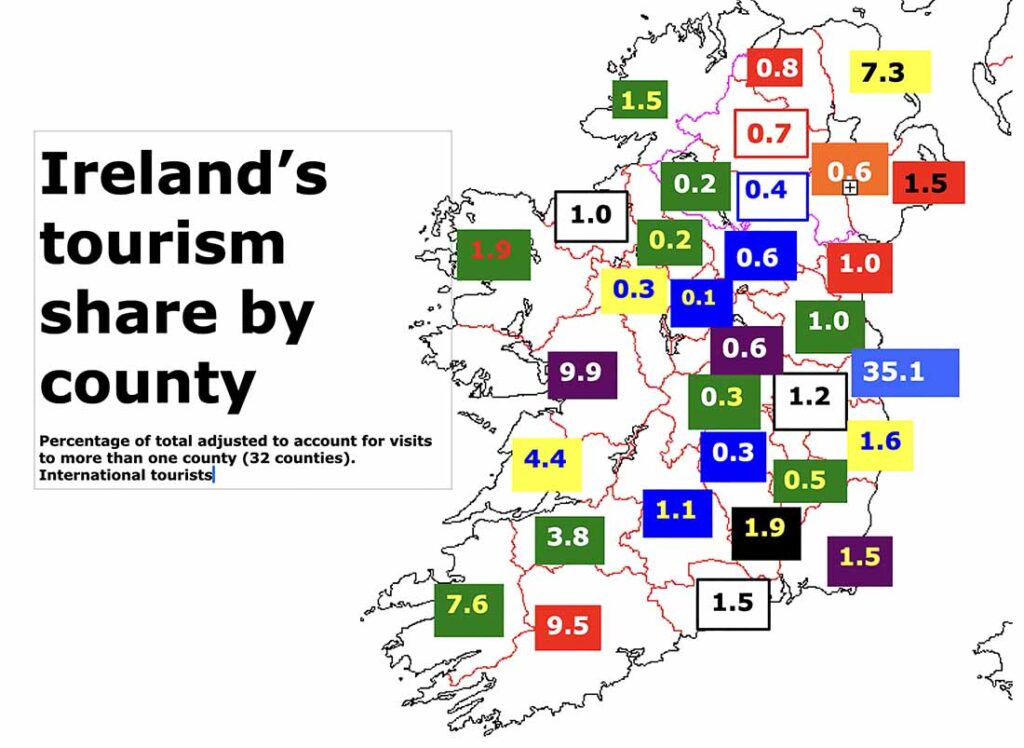
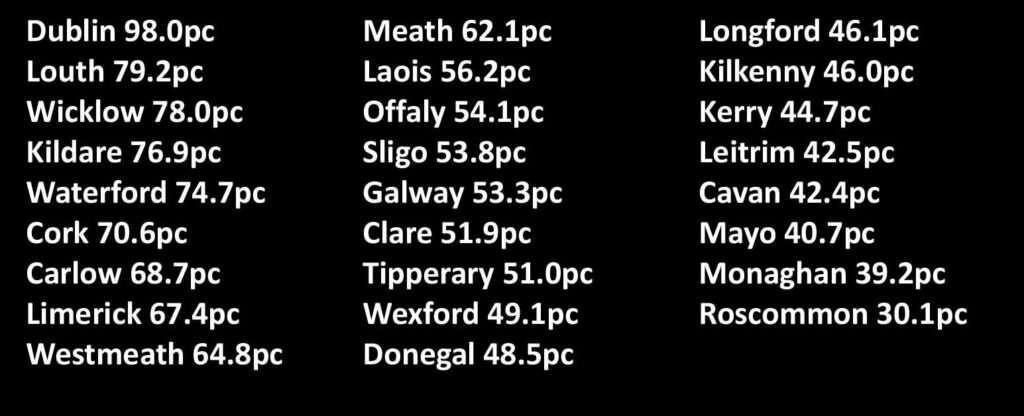
Ireland’s county Dublin combines cultural heritage with urban appeal, with Trinity College’s Book of Kells and Dublin Castle offering historical depth. The Guinness Storehouse provides a journey through Ireland’s iconic stout, while Phoenix Park’s vast green spaces are ideal for cycling. The River Liffey’s scenic walks and Kilmainham Gaol’s historical tours make Dublin a versatile destination for culture and history. Dublin is Ireland’s third smallest county by size (922 square km) and largest by population (1,458,154). Dublin is also Ireland’s most visited tourist county by a margin, with around four million international visitors per year. In terms of hospitality,
Introduction – Adventure – Anthem – Archaeology – Attractions – Awards – Birdwatching – Camping – Castles – Churches – Contact list – Cycling – Dining – Equestrian – Festivals – Fishing – Folklore – Gardens – Golf – Graveyards – Happening – Haunted – Highest – Hiking – History – Holy Wells – Hotels – Hotels top 8 – Hunting & shooting – Instagrammable – Itineraries – Largest town – Luxury – MICE – Movies – Music – New – Name – Novelists – Off the beaten track – Poets – Pubs – Quotes – Random Facts – Restaurant Awards – Sacred Places – Saints – Songs – Spas – Sports – Sunsets – Sustainable – Things to do – Towns – Video – Villages – Walking – Wanderlist – Weddings – Wild swimming – Writers – 1837 – 1846 – 1852 – 1909 – 1955 – 1980 –