- C. S. Lewis (1898-1963) Born in Belfast, County Down, Lewis was a novelist, scholar, and Christian apologist, best known for The Chronicles of Narnia series, which has sold over 100 million copies. His works also include The Screwtape Letters and Mere Christianity. A professor at Oxford and Cambridge, Lewis retained a strong Irish identity, drawing inspiration from The region’s landscapes.
- Samuel Ferguson (1810-1886) Born in Belfast, Ferguson was a poet, antiquarian, and barrister who contributed to the Irish Literary Revival. His epic poem Congal and collection Lays of the Western Gael drew on Irish mythology and history, promoting cultural nationalism. He served as deputy keeper of Irish public records, preserving historical manuscripts.
- William Johnston (1829-1902) Born in Ballykilbeg, Johnston was a journalist, novelist, and politician. Known for his novel Nightshade (1857), he wrote under pseudonyms and edited the Downshire Protestant. His works often reflected his Orange Order affiliations and Irish Protestant identity, blending fiction with political commentary.
- Charlotte Riddell (1832-1906) Born in Carrickfergus, County Down (though some sources claim Antrim), Riddell was a prolific Victorian novelist and editor known for her ghost stories and novels like The Uninhabited House (1875). Her work often explored supernatural themes and economic struggles, reflecting her life in London after moving from Ireland.
- Thomas Mayne Reid (1818-1883) Born in Ballyroney, County Down, Reid was a novelist known for adventure stories like The Scalp Hunters (1851) and The Headless Horseman (1866). His experiences in the Mexican-American War influenced his vivid, action-packed narratives, popular in Britain and America.
- William McComb (1793-1873) Born in Belfast, McComb was a poet and bookseller whose works included The Voice of a Year (1848), reflecting The region’s cultural and religious landscape. His poetry often supported Presbyterian and unionist causes, and he published works by other Irish poets.
- John Hewitt (1907-1987) Born in Belfast, Hewitt was a poet and critic known as the “father of Ulster poetry.” His works, like Collected Poems (1968), explored regional identity and the regional landscape. He was a curator at Belfast’s Ulster Museum and advocated for a distinct Ulster literary tradition.
- Joseph Tomelty (1911-1995) Born in Portaferry, Tomelty was a playwright, novelist, and actor. His play All Souls’ Night (1948) and novel Red is the Port Light (1948) captured The region’s working-class life. He co-founded the Group Theatre in Belfast.
- W. R. Rodgers (1909-1969) Born in Belfast, Rodgers was a poet and broadcaster whose collection Awake! and Other Poems (1941) blended modernist and pastoral themes. A Presbyterian minister turned BBC producer, his work reflected The region’s cultural tensions and natural beauty.
- George Shiels (1881-1949) Born in Ballymoney, County Down (though often associated with Antrim), Shiels was a playwright known for comedies like The Passing Day (1936) and The Rugged Path (1940). His works, staged at Belfast’s Group Theatre, depicted rural Irish life with humor and insight.
- St. John Greer Ervine (1883-1971) Born in Belfast, Ervine was a playwright, novelist, and critic. His plays, such as Mixed Marriage (1911), addressed sectarian tensions. He managed the Abbey Theatre and later wrote biographies, including one of George Bernard Shaw.
Writers
Antrim – Armagh – Carlow – Cavan – Clare – Cork – Derry – Donegal – Down – Dublin – Fermanagh – Galway – Kerry – Kildare – Kilkenny – Laois – Leitrim – Limerick – Longford – Louth – Mayo – Meath – Monaghan – Offaly – Roscommon – Sligo – Tipperary – Tyrone – Waterford – Westmeath – Wexford – Wicklow
County Down:
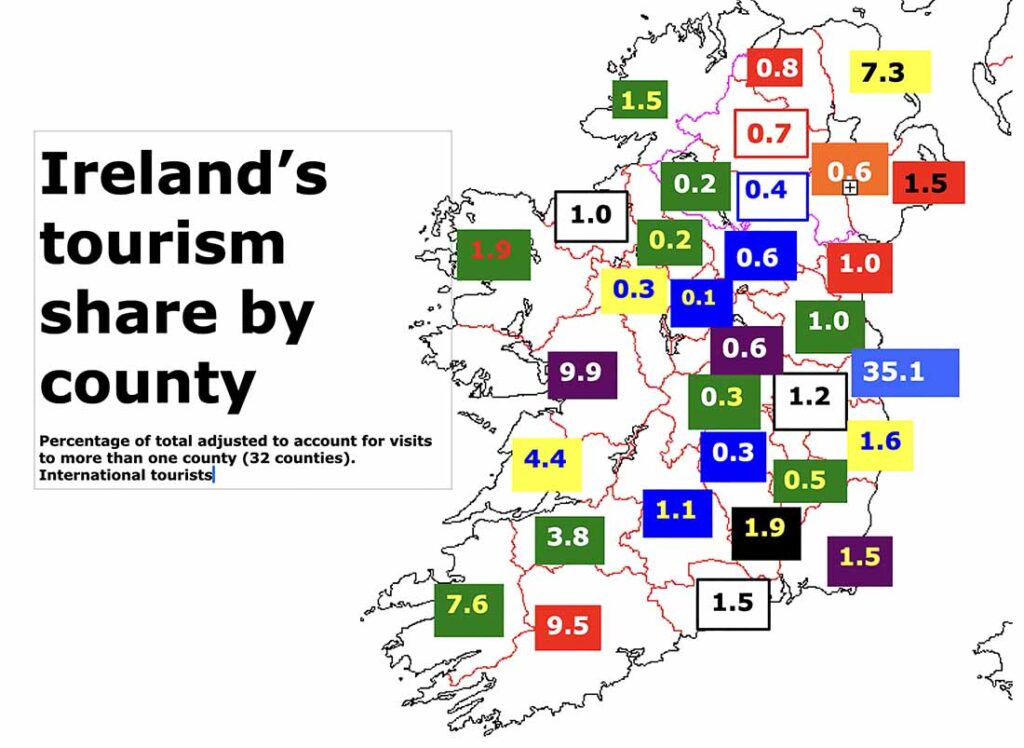
Ireland’s county Down offers a mix of historic sites and scenic landscapes, with Downpatrick’s Saint Patrick Centre and cathedral providing insights into Ireland’s patron saint. The Mourne Mountains offer hiking trails with sweeping views, while Strangford Lough provides kayaking and wildlife spotting. Other attractions include the historic Tollymore Forest Park. Down is Ireland’s 12th largest county by size (2,447 square km) and fourth largest by population (553,261). Population peaked at 361,446 in 1841 and reached its lowest point, 204,303, in 1911. In terms of hospitality, Down is Ireland’s 18th most visited tourist county with around 127,000 international visitors per year.
Introduction – Adventure – Anthem – Archaeology – Attractions – Awards – Birdwatching – Camping – Castles – Churches – Contact list – Cycling – Dining – Equestrian – Festivals – Fishing – Folklore – Gardens – Golf – Graveyards – Happening – Haunted – Highest – Hiking – History – Holy Wells – Hotels – Hotels top 8 – Hunting & shooting – Instagrammable – Itineraries – Largest town – Luxury – MICE – Movies – Music – New – Name – Novelists – Off the beaten track – Poets – Pubs – Quotes – Random Facts – Restaurant Awards – Sacred Places – Saints – Songs – Spas – Sports – Sunsets – Sustainable – Things to do – Towns – Video – Villages – Walking – Wanderlist – Weddings – Wild swimming – Writers – 1837 – 1846 – 1852 – 1909 – 1955 – 1980 –