- Monasterboice: Near Drogheda, this 5th-century monastic site features a round tower and two of Ireland’s finest high crosses, including the 5.5m Muiredach’s Cross with detailed biblical carvings. Visitors can expect a self-guided walk through the atmospheric ruins and graveyard, with interpretive signs. Free entry, open year-round. Perfect for those interested in early Christian heritage and Celtic art.
- Mellifont Abbey: Ireland’s first Cistercian monastery, founded in 1142 near Tullyallen, this ruin includes a rare octagonal lavabo. Visitors can expect a self-guided tour of the abbey’s remains, with a small visitor centre explaining its medieval significance. Managed by the OPW, it’s open May–September with a small entry fee. A peaceful stop for history lovers exploring Louth’s monastic past.
- Carlingford Heritage Centre and Village: In the charming medieval village of Carlingford, this centre, housed in a restored church, showcases local history. Visitors can expect exhibits on Carlingford’s maritime and Viking past, plus guided tours of nearby sites like King John’s Castle and the Mint. The village offers cobbled streets, pubs, and oyster tastings. Centre entry is free; open Monday–Friday. Ideal for culture and history enthusiasts.
- King John’s Castle (Carlingford): A 13th-century Norman castle overlooking Carlingford Lough, built around 1190. Visitors can expect to explore the exterior and limited interior of this imposing ruin, with panoramic views of the lough and Mourne Mountains. Free to visit, with nearby walking trails in the Cooley Peninsula. Perfect for history buffs and those seeking scenic photo opportunities.
- Drogheda’s St. Laurence’s Gate and Town Walls: In Drogheda, this 13th-century barbican gate is a remnant of the town’s medieval fortifications. Visitors can expect to walk through the well-preserved gate, one of Ireland’s finest, and explore parts of the historic town walls. Free to visit, with self-guided trails and nearby attractions like St. Peter’s Church. Ideal for those interested in medieval architecture and urban history.
- Old Mellifont Abbey Visitor Centre: Near Drogheda, this centre complements Mellifont Abbey with exhibits on Cistercian life and medieval architecture. Visitors can expect informative displays, a model of the abbey, and a peaceful setting by the River Mattock. Open seasonally, with a small entry fee. A great addition for those visiting the abbey, offering deeper historical context.
- Cooley Peninsula and Slieve Foye: This scenic peninsula, steeped in the mythology of the Táin Bó Cúailnge, features Slieve Foye, Louth’s highest peak. Visitors can expect hiking trails like the Táin Way, with views of Carlingford Lough and the Mourne Mountains, plus coastal walks and cycling routes. Free to explore; guided tours available. Perfect for outdoor adventurers and mythology enthusiasts.
- Proleek Dolmen: In Ballymascanlan, this Neolithic portal tomb, dating to 3000 BC, features a 40-tonne capstone. Visitors can expect a short walk through a golf course to this impressive megalith, linked to the legend of a giant’s grave. Free to visit, with interpretive signs. A quick, fascinating stop for those interested in prehistoric sites and local folklore.
- Millmount Museum and Martello Tower: In Drogheda, this Norman motte-and-bailey fort, topped by a Martello tower, overlooks the River Boyne. Visitors can expect guided tours of the museum, with exhibits on Drogheda’s history, Viking artifacts, and the 1649 Cromwellian siege, plus panoramic views from the tower. Entry fees apply; open Monday–Saturday. Ideal for history enthusiasts and those exploring Drogheda’s past.
Attractions
Antrim – Armagh – Carlow – Cavan – Clare – Cork – Derry – Donegal – Down – Dublin – Fermanagh – Galway – Kerry – Kildare – Kilkenny – Laois – Leitrim – Limerick – Longford – Louth\ – Mayo – Meath – Monaghan – Offaly – Roscommon – Sligo – Tipperary – Tyrone – Waterford – Westmeath – Wexford – Wicklow
County Louth:
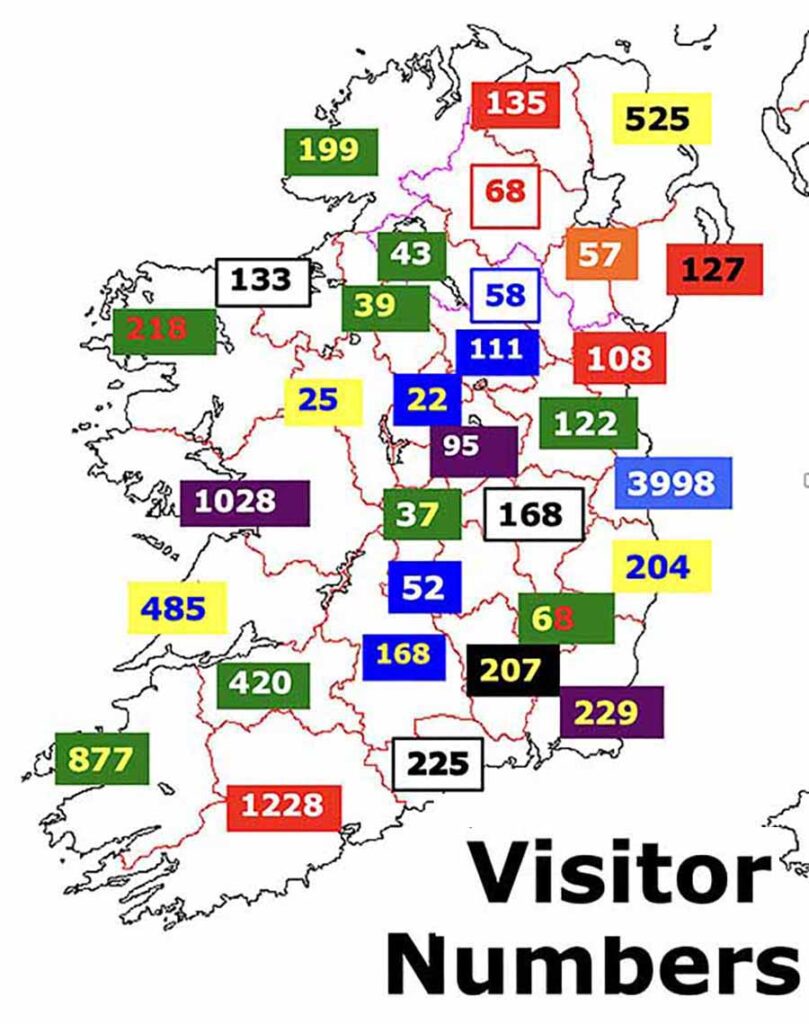
Ireland’s county Louth is a county of historic depth and coastal beauty, with Drogheda’s St Peter’s Church housing a historic shrine and the Boyne Valley offering ancient sites like Newgrange, a UNESCO-listed passage tomb just over the border in county Meath. Carlingford’s medieval streets and castle provide scenic walks, while Dundalk’s coastal paths add natural allure. Other attractions include the Cooley Peninsula’s hiking trails. Louth is Ireland’s smallest county by size (821 sq km) and 17th largest by population (139,703). Population peaked at 128,240 in 1841 and reached its lowest point, 63,665 in 1926. In terms of hospitality, Louth is Ireland’s 21st most visited tourist county with around 108,000 international visitors per year.
Introduction – Adventure – Anthem – Archaeology – Attractions – Awards – Birdwatching – Camping – Castles – Churches – Contact list – Cycling – Dining – Equestrian – Festivals – Fishing – Folklore – Gardens – Golf – Graveyards – Happening – Haunted – Highest – Hiking – History – Holy Wells – Hotels – Hotels top 8 – Hunting & shooting – Instagrammable – Itineraries – Largest town – Luxury – MICE – Movies – Music – Name – New – Novelists – Off the beaten track – Poets – Pubs – Quotes – Random Facts – Restaurant Awards – Sacred Places – Saints – Songs – Spas – Sports – Sunsets – Sustainable – Things to do – Towns – Video – Villages – Walking – Wanderlist – Weddings – Wild swimming – Writers – 1837 – 1846 – 1852 – 1909 – 1955 – 1980 –