- John Banim (1798-1842) Born in Kilkenny city, Banim was a novelist, short story writer, dramatist, and poet, often called the “Scott of Ireland.” His Tales by the O’Hara Family (1825), co-authored with his brother Michael, depicted Irish peasant life with realism, addressing social and political issues. His novel The Boyne Water (1826) explored the Williamite War, cementing his role in early Irish fiction.
- Michael Banim (1796-1874) Born in Kilkenny city, Michael collaborated with his brother John on Tales by the O’Hara Family (1825), contributing stories like Crohoore of the Billhook. A novelist and journalist, he continued writing after John’s death, producing works like The Town of the Cascades (1864), which reflected Kilkenny’s social history and Irish nationalism.
- Richard Lalor Sheil (1791-1851) Born in Drumdowney, Kilkenny, Sheil was a playwright, orator, and politician whose plays, such as Adelaide (1814) and The Apostate (1817), were performed at London’s Covent Garden. His speeches and writings, including political pamphlets, championed Catholic emancipation and Irish rights, blending literary and political influence.
- Katharine A. O’Keeffe O’Mahoney (1852-1918) Born in Kilkenny city, O’Keeffe was an educator, lecturer, and writer known for children’s books like Tales of Old World Heroes (1886) and historical works on Ireland. Her writings, often published in Catholic magazines, aimed to preserve Irish heritage and educate young readers, reflecting her Kilkenny roots.
- James Graves (1815-1886) Born in Kilkenny city, Graves was an antiquarian and writer who co-founded the Kilkenny Archaeological Society (1849) and edited its journal. His historical works, such as The History, Architecture, and Antiquities of the Cathedral Church of St. Canice (1857), preserved Kilkenny’s cultural legacy and Irish history.
- Constantia Grierson (1705-1732) Born in Kilkenny, Grierson was a poet, editor, and classical scholar who published editions of Latin poets like Virgil and Terence. Her poetry, though limited due to her early death, appeared in Dublin literary circles, and her scholarly work earned praise from Jonathan Swift, reflecting her intellectual contributions.
- Thomas Kilroy (1934-2023) Born in Callan, Kilroy was a playwright and novelist whose works, such as The Big Chapel (1971) and Double Cross (1986), explored Irish identity and history. His plays were staged at the Abbey Theatre, and his novel was shortlisted for the Booker Prize, showcasing Kilkenny’s influence on his themes.
- John G. A. Prim (1821-1875) Born in Kilkenny city, Prim was an antiquarian and writer who co-founded the Kilkenny Archaeological Society with James Graves. His contributions to the society’s journal and works like The History and Antiquities of the Diocese of Ossory (1875) documented Kilkenny’s historical and ecclesiastical heritage.
- Hubert Butler (1900-1991) Born in Kilkenny city, Butler was an essayist and historian whose works, including Escape from the Anthill (1985), explored Irish identity, European culture, and humanism. His essays, often published posthumously, critiqued nationalism and championed local history, rooted in his Kilkenny upbringing.
- David M. Kiely (1949-) Born in Dublin but raised in Kilkenny, Kiely is a novelist and short story writer known for works like The Angel Tapes (1995) and The Medjugorje Deception (1999). His crime and mystery novels often incorporate Irish settings, reflecting his Kilkenny childhood and storytelling tradition.
Writers
Antrim – Armagh – Carlow – Cavan – Clare – Cork – Derry – Donegal – Down – Dublin – Fermanagh – Galway – Kerry – Kildare – Kilkenny – Laois – Leitrim – Limerick – Longford – Louth – Mayo – Meath – Monaghan – Offaly – Roscommon – Sligo – Tipperary – Tyrone – Waterford – Westmeath – Wexford – Wicklow
County Kilkenny:
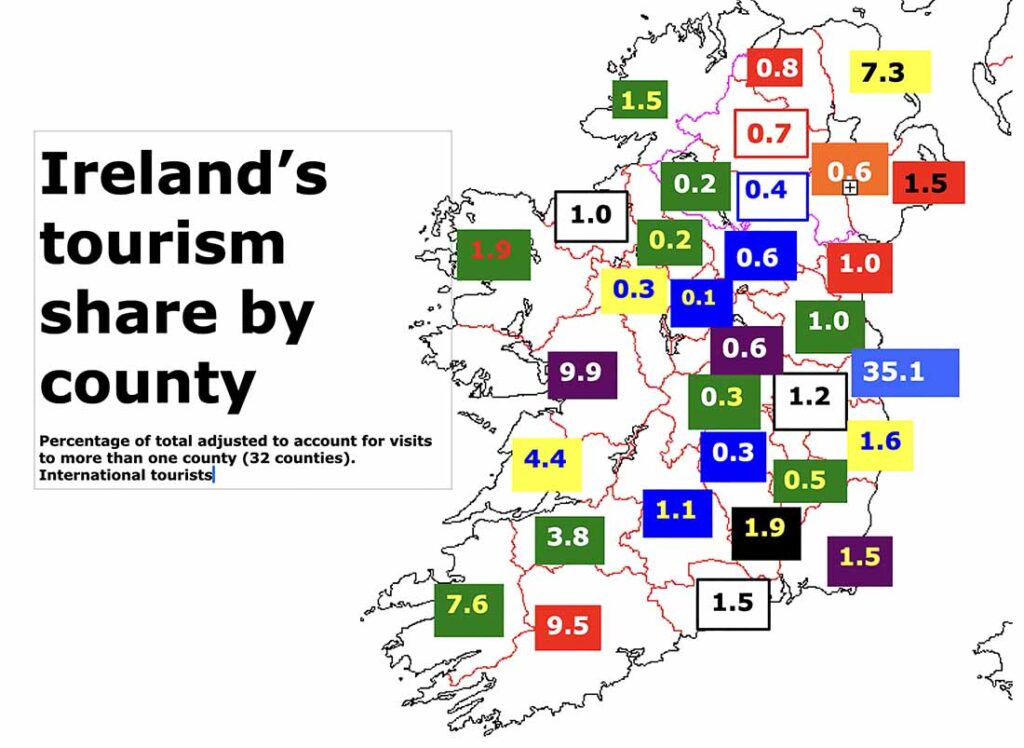
Ireland’s county Kilkenny is a county of medieval charm, with Kilkenny City’s castle and St Canice’s Cathedral showcasing well-preserved architecture and round towers. The Dunmore Cave offers intriguing limestone formations, while the Nore Valley’s walking trails provide scenic beauty. Other attractions include the historic Jerpoint Abbey’s intricate carvings. Kilkenny is Ireland’s 16th largest county by size (2,062 square km) and 21st largest by population (104,160). Population peaked at 202,420 in 1841 and reached its lowest point, 60,463 in 1966. In terms of hospitality, Kilkenny is Ireland’s eleventh most visited tourist county with around 207,000 international visitors per year.
Introduction – Adventure – Anthem – Archaeology – Attractions – Awards – Birdwatching – Camping – Castles – Churches – Contact list – Cycling – Dining – Equestrian – Festivals – Fishing – Folklore – Gardens – Golf – Graveyards – Happening – Haunted – Highest – Hiking – History – Holy Wells – Hotels – Hotels top 8 – Hunting & shooting – Instagrammable – Itineraries – Largest town – Luxury – MICE – Movies – Music – Name – New – Novelists – Off the beaten track – Poets – Pubs – Quotes – Random Facts – Restaurant Awards – Sacred Places – Saints – Songs – Spas – Sports – Sunsets – Sustainable – Things to do – Towns – Video – Villages – Walking – Wanderlist – Weddings – Wild swimming – Writers – 1837 – 1846 – 1852 – 1909 – 1955 – 1980 –