Pre-1000 The Gaelic Nation
County Kilkenny’s pre-1000 history is rooted in its role within the kingdom of Ossory (Osraige), a semi-independent territory between Leinster and Munster. Archaeological evidence, such as the ringforts at Freestone Hill and the ogham stones in south Kilkenny, indicates settlement from the Bronze Age. Ossory was controlled by the Dál Birn dynasty, with the Mac Giolla Phádraig (later Fitzpatrick) dynasty emerging as key players. Christianity arrived by the 5th century, with Saint Ciarán founding a monastery at Saighir (Seir Kieran) and Saint Canice establishing a church at Kilkenny (Cill Chainnigh, meaning “church of Canice”) around 550 CE. The Annals of Ulster (record monastic activities, but Viking raids on the River Nore, a trade route, are noted from the 9th century. Ecclesiastical sources dominate, potentially exaggerating Christian influence while marginalising pre-Christian Gaelic culture.
1000–1100: Gaelic Ossory and Viking Influence
In the 11th century, Kilkenny remained under Dál Birn control, with figures like Gilla Pátraic mac Donnchada (d. 1055) leading Ossory. The Annals of Inisfallen mention Ossory’s conflicts with Leinster and Munster,. The monastery at Kilkenny, centred on St. Canice’s Church, grew as a religious hub, while the Nore facilitated trade with Viking ports like Waterford. The Battle of Clontarf (1014) weakened Viking influence, but Kilkenny’s riverine position maintained minor Norse trade links.. Ecclesiastical and Viking sources dominate, potentially overshadowing Gaelic secular life.
1100–1200: Norman Conquest and Urban Development
The Norman invasion (1169–1171) transformed Kilkenny. In 1170, Strongbow (Richard de Clare) captured nearby Waterford, and by 1172, Kilkenny fell under Norman control. William Marshal, granted Ossory through marriage, established Kilkenny as a key stronghold, building Kilkenny Castle (c. 1192). The city received a charter in 1207, becoming a walled urban centre. The establishment of St. Canice’s Cathedral and Black Abbey (Dominican, c. 1225) enhanced ecclesiastical status. The “Song of Dermot and the Earl” (details Norman conquests, while the Annals of the Four Masters (record Gaelic resistance under the Mac Giolla Phádraigs. Norman sources dominate, often marginalising Gaelic perspectives.
1200–1300: Anglo-Norman Consolidation and Gaelic Resistance
In the 13th century, Kilkenny was formally shired, with boundaries close to modern definitions. The Butlers, granted lands by the Normans, emerged as a powerful Anglo-Norman family, with their seat at Kilkenny Castle. The Mac Giolla Phádraigs resisted in rural areas, particularly in north Kilkenny. The Annals of Loch Cé (mention Butler conflicts with Gaelic lords. The city’s trade along the Nore grew, with markets and guilds thriving. The “Kildare Poems” (reflect Anglo-Norman culture in the region. Norman records overemphasise their control, requiring balance with Gaelic sources.
1300–1400: Butler Dominance and Statute of Kilkenny
The 14th century saw Kilkenny under Butler control, with figures like James Butler, 1st Earl of Ormond (d. 1338), consolidating power. The Gaelic Mac Giolla Phádraigs maintained influence in rural areas. The Black Death (1348–1350) impacted Kilkenny, reducing population but strengthening the Butlers’ hold. The Statute of Kilkenny (1366), enacted in the city, aimed to curb Gaelicisation among Anglo-Normans, reflecting Kilkenny’s role as an English administrative hub. The Annals of the Four Masters record Gaelic resistance. English sources portray Gaelic lords as threats, necessitating critical interpretation. Kilkenny city’s walls and cathedral reinforced its prominence.
1400–1500: Butler Ascendancy and Anglo-Irish Autonomy
In the 15th century, Kilkenny was dominated by the Butlers of Ormond, with figures like James Butler, 4th Earl (d. 1452), acting as virtual rulers of Ireland’s English colony. The Wars of the Roses (1460–1485) distracted English authorities, allowing Anglo-Irish autonomy. Kilkenny served as a seat of the Irish Parliament, with St. Canice’s Cathedral a major pilgrimage site. The Mac Giolla Phádraigs adopted the surname Fitzpatrick, aligning with English titles via surrender and regrant. Gaelic sources are limited, and English records tend to downplay local agency outside Kilkenny city.
1500–1600: Tudor Reconquest and Butler Loyalty
The 16th century saw Kilkenny as a Tudor stronghold. The Butlers, under Piers Butler, 8th Earl of Ormond (d. 1539), remained loyal to the crown, suppressing the Fitzgerald rebellion (1534). The Reformation had limited impact, as Kilkenny remained Catholic, with St. Canice’s resisting the reforms of England’s king Henry VIII. Early plantations targeted Gaelic lands in north Kilkenny. The annals document minor Fitzpatrick resistance, while English records portray the Butlers as loyalists, requiring balance. Kilkenny city’s trade and cultural life flourished, with the Kilkenny College founded in 1538.
1600–1700: Confederate Kilkenny and Cromwellian Conquest
The 17th century saw Kilkenny as a Confederate stronghold during the 1641 Rebellion, hosting the Catholic Confederation’s assembly (1642–1649). Figures like James Butler, 1st Duke of Ormond, initially supported the Confederates but later aligned with the crown. The Cromwellian conquest (1649–1653) captured Kilkenny in 1650, leading to land confiscations from Catholics, though the Butlers retained influence. The Williamite War (1689–1691) saw Kilkenny loyal to William III. The Annals of the Four Masters document Confederate activities, while English sources vilify Catholic rebels, necessitating critical interpretation. Kilkenny city remained a cultural and administrative centre.
1700–1800: Protestant Ascendancy and Economic Growth
The 18th century saw Kilkenny under the Colonial/Protestant Ascendancy, with the Butlers dominating. The Penal Laws marginalized Catholics, who formed the majority in rural Kilkenny. Kilkenny city thrived as a market centre, with brewing and textiles growing. The 1798 Rebellion saw limited activity in Kilkenny, with local United Irishmen suppressed. The Act of Union (1800) strengthened English control. English and colonial narratives tend to downplay native Irish or Catholic grievances.
1800–1900: Famine, Reform, and Nationalism
The 19th century brought hardship to Kilkenny. The Great Famine (1845–1849) reduced the county’s population from 202,000 in 1841 to 158,000 in 1851, though its fertile lands mitigated some impacts. Railways and Kilkenny city’s markets aided recovery. The Gaelic Revival saw the Gaelic League promote Irish culture, with limited traction in urban Kilkenny. The GAA, founded in 1884, established strong hurling teams, with Kilkenny winning All-Ireland titles from 1904. The Land League and Home Rule movement gained Catholic support, led locally by figures like James Stephens, a Fenian leader. English famine records tend to understate suffering.
1900–2025: Independence, Hurling Dominance, and Tourism
The 20th and 21st centuries saw Kilkenny navigate Ireland’s independence. The War of Independence (1919–1921) saw IRA activity, particularly in rural Kilkenny, with figures like Ernie O’Malley active. The Civil War (1922–1923) saw fighting in Kilkenny city. Post-independence, Kilkenny’s economy relied on agriculture and brewing (e.g., Smithwick’s). The county became a GAA powerhouse, winning numerous All-Ireland hurling titles (e.g., 1904, 1911, and multiple post-1960 wins). Tourism grew around Kilkenny Castle, St. Canice’s Cathedral, and Jerpoint Abbey. Kilkenny’s cultural scene flourished with festivals like the Kilkenny Arts Festival. Official narratives tend to overemphasise progress, overlooking rural challenges Kilkenny is one of 24 Irish counties that still has a smaller population than it did in 1841.
History
Antrim – Armagh – Carlow – Cavan – Clare – Cork – Derry – Donegal – Down – Dublin – Fermanagh – Galway – Kerry – Kildare – Kilkenny – Laois – Leitrim – Limerick – Longford – Louth – Mayo – Meath – Monaghan – Offaly – Roscommon – Sligo – Tipperary – Tyrone – Waterford – Westmeath – Wexford – Wicklow
County Kilkenny:
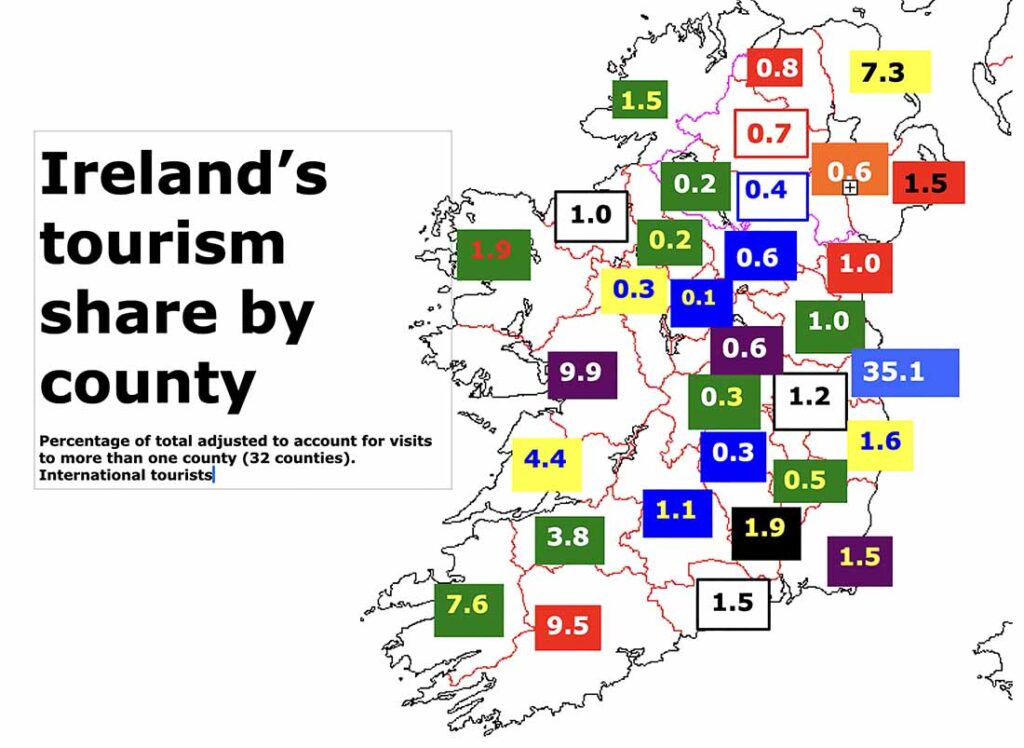
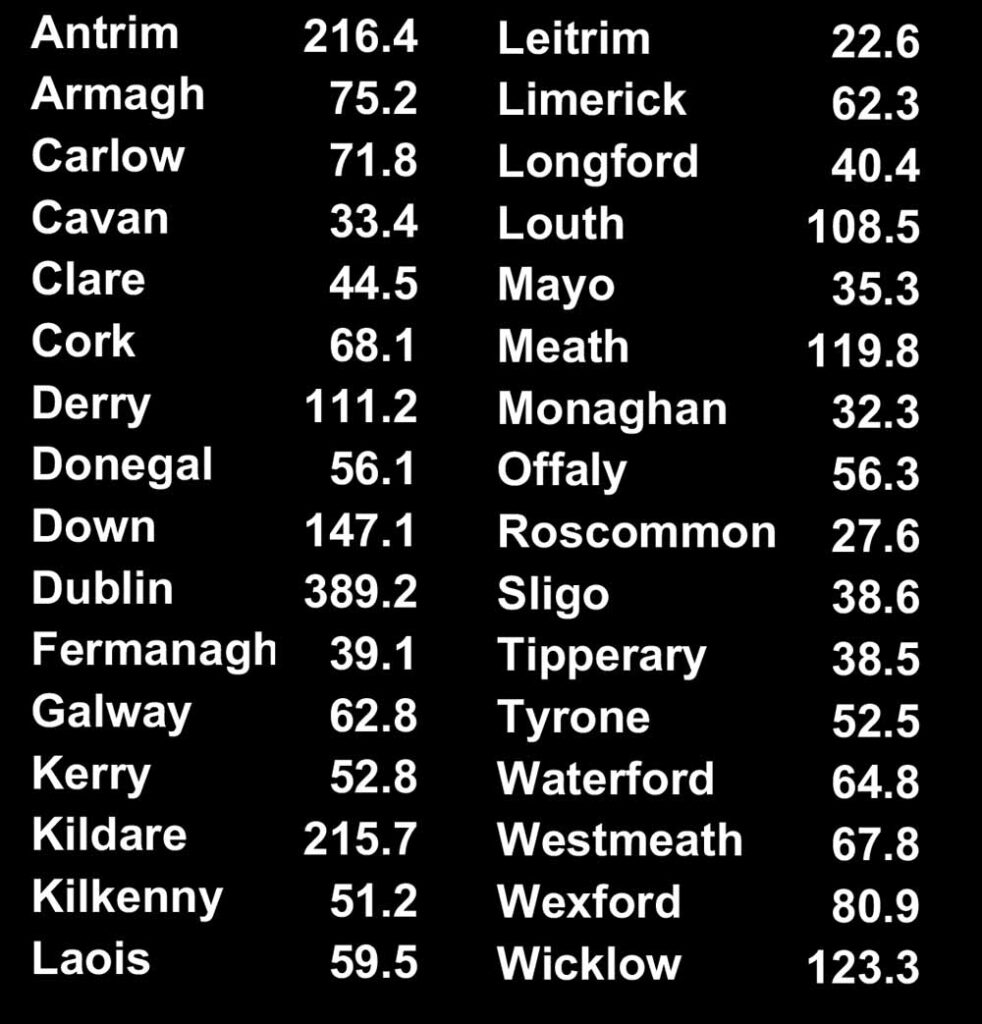
Ireland’s county Kilkenny is a county of medieval charm, with Kilkenny City’s castle and St Canice’s Cathedral showcasing well-preserved architecture and round towers. The Dunmore Cave offers intriguing limestone formations, while the Nore Valley’s walking trails provide scenic beauty. Other attractions include the historic Jerpoint Abbey’s intricate carvings. Kilkenny is Ireland’s 16th largest county by size (2,062 square km) and 21st largest by population (104,160). Population peaked at 202,420 in 1841 and reached its lowest point, 60,463 in 1966. In terms of hospitality, Kilkenny is Ireland’s eleventh most visited tourist county with around 207,000 international visitors per year.
Introduction – Adventure – Anthem – Archaeology – Attractions – Awards – Birdwatching – Camping – Castles – Churches – Contact list – Cycling – Dining – Equestrian – Festivals – Fishing – Folklore – Gardens – Golf – Graveyards – Happening – Haunted – Highest – Hiking – History – Holy Wells – Hotels – Hotels top 8 – Hunting & shooting – Instagrammable – Itineraries – Largest town – Luxury – MICE – Movies – Music – Name – New – Novelists – Off the beaten track – Poets – Pubs – Quotes – Random Facts – Restaurant Awards – Sacred Places – Saints – Songs – Spas – Sports – Sunsets – Sustainable – Things to do – Towns – Video – Villages – Walking – Wanderlist – Weddings – Wild swimming – Writers – 1837 – 1846 – 1852 – 1909 – 1955 – 1980 –