The highest point in County Tyrone is Sawel Mountain (Irish: Samhail Phite Méabha, possibly meaning “likeness of Méabh’s heifer”), standing at 678 meters (2,224 feet). Located in the Sperrin Mountains on the border with County Derry, Sawel is the highest peak in the Sperrins and a prominent destination for hikers seeking a rugged yet accessible mountain experience.
- Geological and Cultural Significance: Sawel is part of the Sperrin Mountains, a range of metamorphic schist and quartzite hills formed over 600 million years ago, shaped by glaciation into rounded peaks and deep glens. Its name may tie to local folklore involving Queen Maeve, though its exact origin is debated. The mountain’s remote location and blanket bog terrain contribute to its wild character. The Sperrins are rich in history, with nearby Neolithic and Bronze Age sites, including stone circles and tombs, reflecting Tyrone’s ancient heritage. Sawel’s prominence makes it a focal point for outdoor enthusiasts.
- Scenic Beauty: The summit offers sweeping views over the Sperrin range, Tyrone’s rolling farmlands, and Derry’s landscapes, with Lough Foyle, Benbulben in Sligo, and, on clear days, the Antrim Hills or Donegal peaks visible. The mountain’s open, windswept plateau and surrounding glens create a dramatic, untamed atmosphere.
Approaching Sawel Mountain
- Access Points: Sawel is typically approached from the Sperrin village area in Tyrone, with the primary starting point at a small car park or lay-by near Sperrin village (Grid Ref: H 617 973), off the B47 road between Plumbridge and Draperstown. An alternative approach is from the Moneyneany side in County Derry, via the B40 road. Both trailheads are remote, with no public transport, so a car is essential. The nearest bus routes (e.g., Translink to Draperstown) require a drive or taxi to the trailhead.
Trail Options:
- Sperrin Village Route: The most popular route is an 8–10km round-trip hike (3–4 hours) starting near Sperrin village. Hikers follow a rough track or path along the Mullaghclogha ridge, ascending steadily through boggy moorland to Sawel’s summit, marked by a trig pillar. The route is moderately strenuous due to the boggy terrain and 400m elevation gain, suitable for intermediate hikers. The path is faint in places but generally follows the ridge, with the summit clearly visible.
- Moneyneany Route: A slightly longer 10–12km round-trip hike (4–5 hours) starts from a lay-by near Moneyneany, following the Glenelly Valley and ascending via the northern slopes. This route crosses open bog and heather, joining the ridge to the summit. It’s less frequented but equally challenging, requiring good navigation due to indistinct paths.
- Extended Routes: Experienced hikers can combine Sawel with nearby peaks like Mullaghclogha (635m) or Dart Mountain (619m), creating a 12–15km loop along the Sperrin ridge. These routes offer a full day’s hike but demand strong navigation, especially in fog, as the terrain lacks clear markers.
- Navigation and Preparation: Sawel’s routes are not well-marked, and the summit plateau can be disorienting in fog or low visibility. Hikers should carry a map (OSNI 1:50k, Sheet 13), compass, or GPS. Waterproof hiking boots, gaiters, and rain gear are essential due to the wet, boggy terrain and Tyrone’s frequent rain. Bring water, snacks, and a first-aid kit, as there are no facilities. Dogs are allowed but must be leashed to protect livestock, common in the area. Check weather forecasts, as the summit is exposed to strong winds and sudden changes, and avoid hiking in poor conditions.
Hiking Experience:
- The Sperrin Village route offers a straightforward but rugged ascent, starting with a track through farmland before climbing open moorland. The boggy terrain and steady incline make it moderately challenging, with the trig pillar marking the summit as a rewarding goal.
- The Moneyneany route is wilder, with a longer approach through the Glenelly Valley and open bog, offering solitude but requiring navigation skills. Both routes are less crowded than Ireland’s more famous peaks, providing a sense of wilderness.
- The summit is a broad, boggy plateau with a trig pillar, surrounded by heather and sweeping views. Its isolation and exposure create a dramatic, windswept atmosphere, appealing to those seeking a raw mountain experience.
- Views and Photography: On clear days, the summit provides stunning 360-degree views over the Sperrins, Tyrone’s green valleys, and Derry’s landscapes. Distant sights like Lough Foyle, Benbulben, or Donegal’s hills add to the spectacle. The open moorland and rugged ridges are photogenic, especially at sunrise or sunset when the light enhances the heather’s colors.
- Wildlife and Nature: The Sperrins’ blanket bogs support heather, sphagnum moss, and cotton grass, with flora like bilberries in summer. Wildlife includes mountain hares, red grouse, and birds like skylarks, ravens, and occasionally golden eagles or hen harriers. Grazing sheep reflect the area’s pastoral use, adding to the rural charm.
- Safety: Sawel’s boggy terrain and exposure pose risks in poor weather, with fog or wind disorienting hikers. The Sperrin Village route is clearer, but the Moneyneany and extended routes require strong navigation skills due to faint paths. Inform someone of your plans, avoid hiking alone in bad conditions, and check for trail updates, as heavy rain can make bogs impassable. Mobile signal is patchy in the Sperrins, so offline maps are recommended.
- Accessibility: Sawel is moderately strenuous, suitable for intermediate hikers due to its elevation gain and boggy terrain. The Sperrin Village route is the most accessible, but the summit is not wheelchair-accessible due to uneven, wet ground.
- Sawel Mountain offers a rugged, rewarding hike in County Tyrone, showcasing the Sperrin Mountains’ wild beauty and expansive views. Its challenging terrain, rich biodiversity, and historical context make it a standout destination for hikers seeking solitude. Nearby attractions like Beaghmore Stone Circles and the Glenelly Valley enhance a visit, making Sawel a memorable part of Tyrone’s outdoor heritage. For more details, visit discovernorthernireland.com or consult Kieron Gibbons’ Ireland’s County High Points – A Walking Guide.
Highest point in county
Antrim – Armagh – Carlow – Cavan – Clare – Cork – Derry – Donegal – Down – Dublin – Fermanagh – Galway] – Kerry – Kildare – Kilkenny – Laois – Leitrim – Limerick – Longford – Louth – Mayo – Meath – Monaghan – Offaly – Roscommon – Sligo – Tipperary – Tyrone – Waterford – Westmeath – Wexford – Wicklow
County Tyrone:
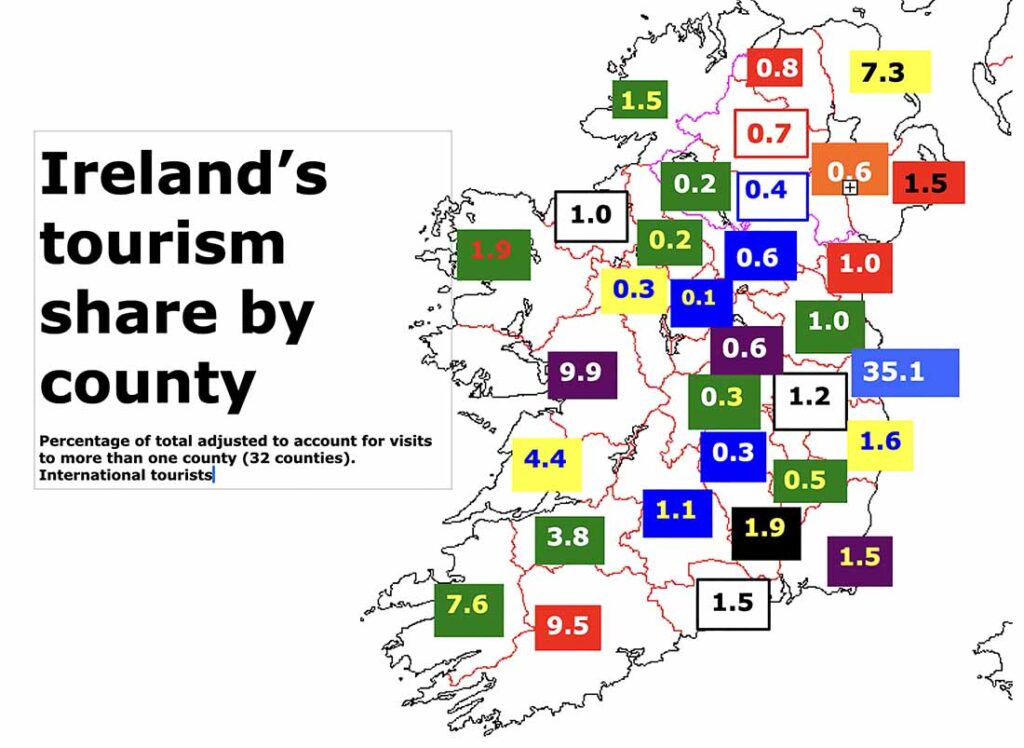
Ireland’s county Tyrone is a county of rolling landscapes and historic sites, with the Ulster American Folk Park in Omagh offering a fascinating look at emigration history through recreated villages. The Sperrin Mountains provide hiking trails with panoramic views, while the Beaghmore Stone Circles add ancient intrigue. Other attractions include the historic town of Dungannon and its castle ruins. Tyrone is Ireland’s seventh largest county by size (3,263 square km) and 11th largest by population (188,383). Population peaked at 312,956 in 1841 and reached its lowest point, 127,586 in 1936. In terms of hospitality, Tyrone is Ireland’s 24th most visited tourist county with around 68,000 international visitors per year.
Introduction – Adventure – Anthem – Archaeology – Attractions – Awards – Birdwatching – Camping – Castles – Churches – Contact list – Cycling – Dining – Equestrian – Festivals – Fishing – Folklore – Gardens – Golf – Graveyards – Happening – Haunted – Highest – Hiking – History – Holy Wells – Hotels – Hotels top 8 – Hunting & shooting – Instagrammable – Itineraries – Largest town – Luxury – MICE – Movies – Music – Name – New – Novelists – Off the beaten track – Poets – Pubs – Quotes – Random Facts – Restaurant Awards – Sacred Places – Saints – Songs – Spas – Sports – Sunsets – Sustainable – Things to do – Towns – Video – Villages – Walking – Wanderlist – Weddings – Wild swimming – Writers – 1837 – 1846– 1852 – 1909 – 1955 – 1980 –