- Saint Patrick’s Well (Magherakeel, Aghyaran, near Killeter): Pattern day: March 17 (Saint Patrick’s feast day). Located two miles from Killeter in the parish of Aghyaran (Termonamongan), this is Tyrone’s most famous holy well, blessed by Saint Patrick during his Lenten journey from Lough Derg, according to legend. Known for general healing and holy water for the sick, it attracts large crowds on March 17 for a rosary at 3 p.m., preceded by band parades. Pilgrims perform rounds and leave offerings like clooties or medals on nearby trees. The well remains a key pilgrimage site in the parish calendar.
- Saint Dymphna’s Well (Clogher): Pattern day: May 15 (Saint Dymphna’s feast day, though not actively observed). Dedicated to Saint Dymphna, patron saint of mental health, this well in Clogher is associated with curing mental illness and emotional distress. Pilgrims historically performed rounds, reciting prayers and leaving tokens like rags or rosaries. The well is part of Clogher’s early Christian heritage, near the cathedral site, but active devotion has declined. Its significance persists in folklore for those seeking solace.
- Saint Davog’s Well (Croighdenis, Aghyaran): Pattern day: Not specifically recorded, possibly January 1 (Saint Davog’s feast day). One of three holy wells in Aghyaran parish, this well is dedicated to Saint Davog (or Dabheog), a lesser-known saint. Located in Croighdenis, it’s associated with general healing, with pilgrims performing rounds and leaving offerings like coins or clooties. Less popular than Saint Patrick’s Well in Magherakeel, it remains significant in local tradition, though specific folklore is sparse.
- Fr. McLoughlin’s Well (Meenard, Slievedoo, Aghyaran): Pattern day: Not specifically recorded, likely tied to a local commemoration. Named after a local priest, this well in Slievedoo is one of Aghyaran’s three holy wells. It’s less documented but associated with general healing, with pilgrims leaving offerings like rags or medals after rounds. Its obscurity reflects the decline of some Tyrone wells, but it remains part of the parish’s spiritual landscape.
- Saint Brigid’s Well (near Dungannon): Pattern day: February 1 (Saint Brigid’s feast day, though not actively observed). Dedicated to Saint Brigid, this well near Dungannon is linked to general healing and blessings, particularly for skin ailments. Pilgrims performed rounds and left clooties on a nearby hawthorn tree, following tradition. Its rural setting and association with Brigid’s widespread veneration make it notable, though active pilgrimage has waned.
- Saint Colmcille’s Well (Ardstraw): Pattern day: June 9 (Saint Colmcille’s feast day, though not actively observed). Located near Ardstraw, this well is tied to Saint Colmcille (Columba), who founded monasteries in the region. Known for curing eye ailments and general health issues, pilgrims historically performed rounds, leaving offerings like coins or rosaries. Its proximity to early Christian sites suggests ancient origins, but it’s less visited today.
- Tobar na Súl (Eye Well, near Omagh): Pattern day: Not specifically recorded, possibly August 1 (Lughnasa). Named for its reputed ability to cure eye ailments, this well near Omagh reflects Tyrone’s tradition of specialized healing wells. Pilgrims performed rounds and left rags or coins, believing the water alleviated vision problems. Its exact location is less documented, but it remains part of local folklore, tied to pre-Christian water veneration.
- Saint Patrick’s Well (near Strabane): Pattern day: March 17 (Saint Patrick’s feast day, though not actively observed). Another well attributed to Saint Patrick, located near Strabane, it’s associated with baptisms and general healing. Pilgrims left offerings like clooties or pebbles after rounds, seeking cures for sore limbs or chronic ailments. Its significance ties to Patrick’s missionary legacy, but active devotion has diminished.
- Saint Ciaran’s Well (near Castlederg): Pattern day: September 9 (Saint Ciaran’s feast day, though not actively observed). Dedicated to Saint Ciaran, this well near Castlederg is linked to general healing, particularly for stomach ailments. Pilgrims performed rounds and left offerings like medals or rags on nearby trees. Its rural setting and early Christian associations suggest pre-Christian origins, though it’s less frequented today.
- Saint Mary’s Well (near Cookstown): Pattern day: August 15 (Feast of the Assumption, though not actively observed). Dedicated to the Blessed Virgin, this well near Cookstown was historically visited for general blessings and healing, especially for women’s health issues. Pilgrims performed rounds and left rosaries or coins. Its location near ecclesiastical sites indicates early Christian use, but active pilgrimage has largely ceased.
- Saint Finbar’s Well (near Fintona): Pattern day: September 25 (Saint Finbar’s feast day, though not actively observed). Linked to Saint Finbar, this well near Fintona is associated with cures for headaches and general ailments. Pilgrims performed rounds, leaving tokens like rags or coins on a nearby tree. Its significance is tied to local devotion, but it’s now less prominent due to declining traditions.
- Tobar na nGealt (Well of the Insane, near Coalisland): Pattern day: Not specifically recorded, possibly August 1 (Lughnasa). Named for its association with curing mental illness, this well near Coalisland was visited by pilgrims seeking mental clarity or relief from psychological ailments. They performed rounds and applied water, leaving clooties or medals. Its pre-Christian origins are likely, but it’s now largely forgotten in active practice.
Tyrone’s holy wells, like those across Ireland, often predate Christianity, with pagan water worship adapted by early saints for baptisms, lending them sacred status. Many are near churches or monastic sites, reflecting early Christian use.
Holy Wells
Antrim – Armagh – Carlow – Cavan – Clare – Cork – Derry – Donegal – Down – Dublin – Fermanagh – Galway – Kerry – Kildare – Kilkenny – Laois – Leitrim – Limerick – Longford – Louth – Mayo – Meath – Monaghan – Offaly – Roscommon – Sligo – Tipperary – Tyrone – Waterford – Westmeath – Wexford – Wicklow
Sacred Places
Antrim – Armagh – Carlow – Cavan – Clare – Cork – Derry – Donegal – Down – Dublin – Fermanagh – Galway – Kerry – Kildare – Kilkenny – Laois – Leitrim – Limerick – Longford – Louth – Mayo – Meath – Monaghan – Offaly – Roscommon – Sligo – Tipperary – Tyrone – Waterford – Westmeath – Wexford – Wicklow
County Tyrone:
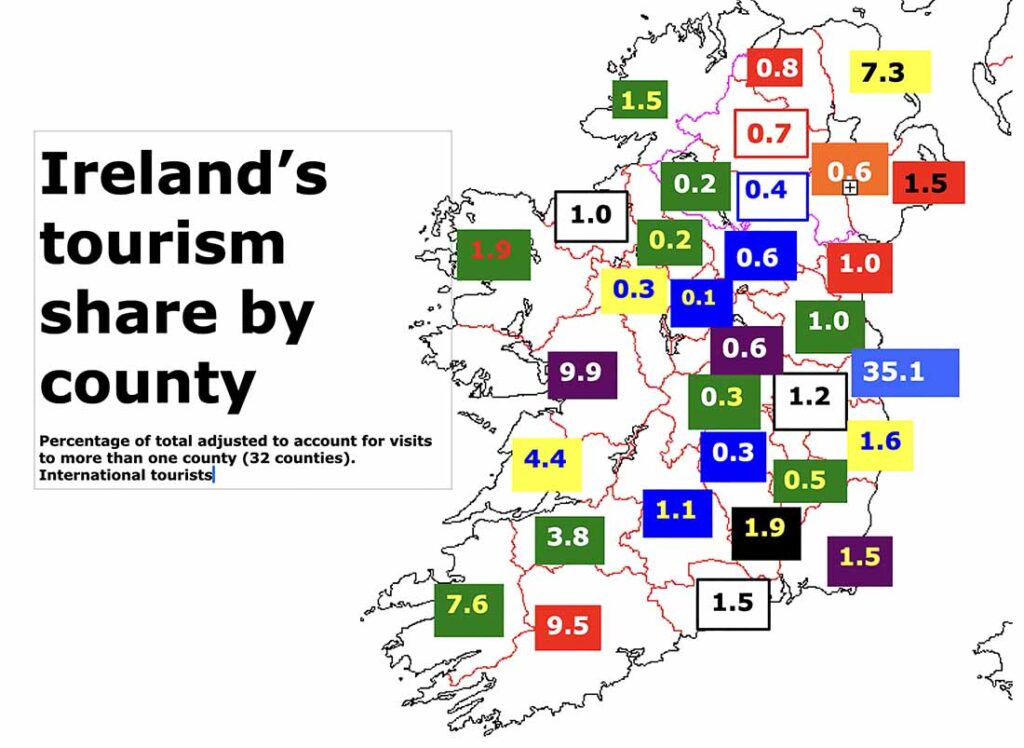
Ireland’s county Tyrone is a county of rolling landscapes and historic sites, with the Ulster American Folk Park in Omagh offering a fascinating look at emigration history through recreated villages. The Sperrin Mountains provide hiking trails with panoramic views, while the Beaghmore Stone Circles add ancient intrigue. Other attractions include the historic town of Dungannon and its castle ruins. Tyrone is Ireland’s seventh largest county by size (3,263 square km) and 11th largest by population (188,383). Population peaked at 312,956 in 1841 and reached its lowest point, 127,586 in 1936. In terms of hospitality, Tyrone is Ireland’s 24th most visited tourist county with around 68,000 international visitors per year.
Introduction – Adventure – Anthem – Archaeology – Attractions – Awards – Birdwatching – Camping – Castles – Churches – Contact list – Cycling – Dining – Equestrian – Festivals – Fishing – Folklore – Gardens – Golf – Graveyards – Happening – Haunted – Highest – Hiking – History – Holy Wells – Hotels – Hotels top 8 – Hunting & shooting – Instagrammable – Itineraries – Largest town – Luxury – MICE – Movies – Music – Name – New – Novelists – Off the beaten track – Poets – Pubs – Quotes – Random Facts – Restaurant Awards – Sacred Places – Saints – Songs – Spas – Sports – Sunsets – Sustainable – Things to do – Towns – Video – Villages – Walking – Wanderlist – Weddings – Wild swimming – Writers – 1837 – 1846– 1852 – 1909 – 1955 – 1980 –