- Patrick Kavanagh (1904-1967) Born in Inniskeen, Kavanagh was a poet and novelist, one of Ireland’s most beloved literary figures. His works, including The Great Hunger (1942), Tarry Flynn (1948), and poems like “On Raglan Road,” depict rural Irish life with stark realism and lyricism. His Monaghan upbringing shaped his focus on the struggles of small farmers, influencing poets like Seamus Heaney. The Patrick Kavanagh Centre in Inniskeen celebrates his legacy.
- Charles Gavan Duffy (1816-1903) Born in Monaghan town, Duffy was a journalist, poet, and nationalist who co-founded the Nation newspaper. His poetry collections, like The Ballad Poetry of Ireland (1845), promoted Irish cultural identity. As a Young Irelander, his writings inspired nationalism, and he later became a politician in Australia, reflecting his Monaghan roots.
- Patrick McCabe (1955-) Born in Clones, McCabe is a novelist and playwright known for The Butcher Boy (1992), shortlisted for the Booker Prize and adapted into a film. His dark, satirical works, like Breakfast on Pluto (1998), explore Irish small-town life and psychological complexity, often drawing on his Monaghan childhood. He is a prominent contemporary Irish writer.
- Mary Anne Madden Sadlier (1820-1903) Born in Cootehill, Sadlier was a novelist and Catholic writer who emigrated to Canada and the U.S. Her works, like The Blakes and Flanagans (1855), promoted Irish Catholic values for immigrants. Her stories, often set in rural Ireland, reflected her Monaghan upbringing and resonated with the Irish diaspora.
- Thomas McNally (1830-1901) Born in Ardagh, McNally was a poet and journalist whose works, published in local Monaghan papers, celebrated The region’s rural life and folklore. His poetry, though less known today, contributed to preserving Monaghan’s cultural heritage during the 19th century.
- John Robert Gregg (1867-1948) Born in Rockcorry, Gregg was a writer and educator best known for creating the Gregg Shorthand system, detailed in his book Light-Line Phonography (1888). His manuals and educational writings revolutionized stenography, reflecting his Monaghan roots in disciplined scholarship.
- James MacKnight (1801-1876) Born in Glaslough, MacKnight was a journalist and writer who edited the Banner of Ulster. His historical and political writings, including essays on Irish land reform, reflected Monaghan’s agrarian struggles and supported Presbyterian interests in Ireland.
- William Carleton (1794-1869) Born in Prillisk, near Clogher, Carleton was a novelist and short story writer whose Traits and Stories of the Irish Peasantry (1830-33) vividly depicted rural Irish life. His works, blending humor and tragedy, offered early realistic portrayals of Monaghan’s social conditions, influencing later writers like Kavanagh.
- Eugene McCabe (1930-2020) Born in Glaslough, McCabe was a playwright, novelist, and short story writer known for Death and Nightingales (1992) and the play King of the Castle (1964). His works explore the complexities of life along the Monaghan border during the Troubles, drawing on his local experience.
- Shane Leslie (1885-1971) Born in Glaslough, Leslie was a writer, biographer, and essayist whose works, like The End of a Chapter (1916) and Ghost Book (1955), blended Irish history, Catholicism, and supernatural themes. His Anglo-Irish Monaghan background informed his writings on Ireland’s cultural and political landscape.
Writers
Antrim – Armagh – Carlow – Cavan – Clare – Cork – Derry – Donegal – Down – Dublin – Fermanagh – Galway – Kerry – Kildare – Kilkenny – Laois – Leitrim – Limerick – Longford – Louth – Mayo – Meath – Monaghan – Offaly – Roscommon – Sligo – Tipperary – Tyrone – Waterford – Westmeath – Wexford – Wicklow
County Monaghan:
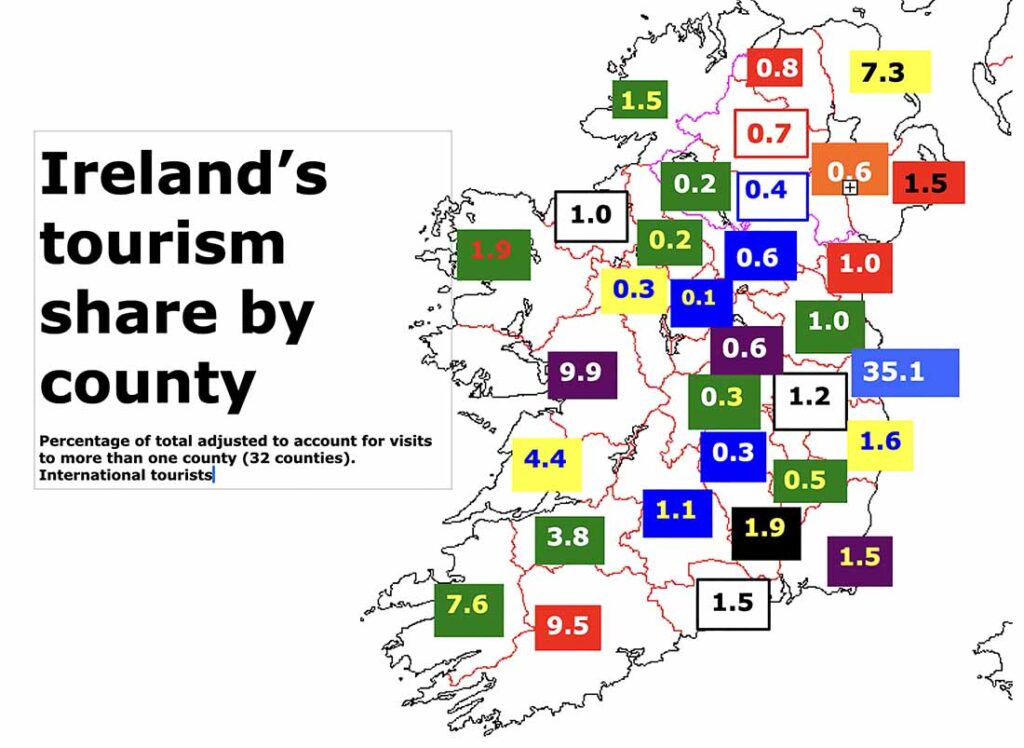
Ireland’s county Monaghan offers a serene blend of rolling hills and cultural heritage, with the Monaghan County Museum showcasing local history through artefacts and exhibits. The scenic Rossmore Forest Park provides walking trails amidst lakes and woodlands, while Castle Leslie’s historic estate offers a glimpse into aristocratic life. Other attractions include the county’s traditional lace-making heritage and quiet countryside. Monaghan is Ireland’s sixth smallest county by size (1,291 square km) and fifth smallest by population (65,288). Population peaked at 200,442 in 1841 and reached its lowest point, 45,732 in 1966. In terms of hospitality, Monaghan is Ireland’s 25th most visited tourist county with around 58,000 international visitors per year.
Introduction – Adventure – Anthem – Archaeology – Attractions – Awards – Birdwatching – Camping – Castles – Churches – Contact list – Cycling – Dining – Equestrian – Festivals – Fishing – Folklore – Gardens – Golf – Graveyards – Happening – Haunted – Highest – Hiking – History – Holy Wells – Hotels – Hotels top 8 – Hunting & shooting – Instagrammable – Itineraries – Largest town – Luxury – MICE – Movies – Music – Name – New – Novelists – Off the beaten track – Poets – Pubs – Quotes – Random Facts – Restaurant Awards – Sacred Places – Saints – Songs – Spas – Sports – Sunsets – Sustainable – Things to do – Towns – Video – Villages – Walking – Wanderlist – Weddings – Wild swimming – Writers – 1837 – 1846 – 1852 – 1909 – 1955 – 1980 –