- Saint Dymphna’s Well: Pattern day: May 15 Located in a pasture in Tedavnet (Caldavnet), this well is enclosed by a stone structure topped with a decorative sign featuring shamrocks, a Celtic cross, and a Saint Brigid’s cross. Dedicated to Saint Dymphna, patron of mental health, it is reputed to cure nervous disorders and provide peace for those suffering from abuse or trauma. Pilgrims pray specific prayers to Dymphna, and a stone altar nearby hosts outdoor Masses. The well remains a focal point for devotion, especially on its pattern day.
- Saint John’s Well (Tobbernanny): Pattern day: June 23 (Saint John’s Eve) Found in Annaghkilly, near the bridge of Annalore, Clones parish, this well is now a wet patch in a field, largely disused. Associated with Saint Tiernach, Saint Laobhain, and Saint Croonan, it was known for curing skin complaints, toothaches, and headaches. A bush once stood nearby where pilgrims left rags as offerings. A stone in the field bears the imprint of a saint’s hand. No formal rounds are recorded; visitors simply prayed and blessed themselves.
- Saint Patrick’s Well (Drumcru): Pattern day: None specified (visited as needed) Situated in Drumcru, near Stone Bridge, Clones parish, this large spring is surrounded by whitethorn, hazel, alder, and rowan trees. Linked to Saint Patrick, who reportedly rested here while fleeing Slemish and later baptized locals, it is believed to cure jaundice and skin conditions. Rituals involve saying three Aves, Paters, and Glorias while washing the afflicted area. For jaundice, a unique tradition required washing a shirt in the water and drinking until vomiting, with a cure expected in nine days.
- Saint Molua’s Well: Pattern day: August 4 Located near Clones, this well is dedicated to Saint Molua, a 6th-century saint known for his monastic foundations. Reputed to cure eye ailments, it features a simple stone surround and is visited by locals seeking healing. The well’s waters are said to have been blessed by Molua during baptisms. Though less active today, it retains significance on its pattern day, with prayers and offerings like coins left at the site.
- Saint Brigid’s Well (Lisdrumturk): Pattern day: February 1 Found in Lisdrumturk, near Monaghan town, this well is dedicated to Saint Brigid, one of Ireland’s patron saints. Known for curing headaches and general ailments, it is adorned with small statues and rosary beads. Pilgrims perform rounds, reciting the Rosary, and leave votive offerings like ribbons on nearby bushes. The well’s proximity to an ancient church site underscores its early Christian origins, and it remains a local pilgrimage spot.
- Saint Tiernach’s Well: Pattern day: April 4 Situated in Clones, near the monastic site founded by Saint Tiernach, this well is linked to the 6th-century bishop. It is believed to cure skin diseases and fevers. The well is surrounded by a low stone wall, with a hawthorn tree nearby where pilgrims tie clooties (rags) for healing. Rounds involve circumambulating the well while praying. Its pattern day aligns with Tiernach’s feast, though visits occur year-round.
- Saint Macartan’s Well: Pattern day: August 15 (Assumption of Mary, traditionally linked) Located near Augher, in the parish of Clogher, this well is dedicated to Saint Macartan, Monaghan’s diocesan patron and a 5th-century disciple of Saint Patrick. Known for curing joint pain, it features a stone enclosure and a small shrine. Pilgrims drink the water or apply it to affected areas, often leaving medals or coins. The well’s significance is tied to Macartan’s missionary work in the region.
- Lady’s Well (Monaghan Town): Pattern day: September 8 (Nativity of Mary) Positioned near Monaghan town, this well is dedicated to the Blessed Virgin Mary. It is reputed to cure eye complaints and is marked by a stone surround with a Marian statue. Pilgrims perform three rounds, reciting the Rosary, and leave offerings like flowers or candles. The well’s serene setting, shaded by trees, reflects its role as a peaceful devotional site, especially on its pattern day.
- Saint Anne’s Well: Pattern day: July 26 Located in Annaghkilly, near Saint John’s Well, this well is associated with Saint Anne, mother of the Virgin Mary. It is said to cure infertility and women’s ailments. Now largely disused, it was once a site for rounds and prayers, with offerings left on a nearby bush. Its historical connection to a pre-Reformation church adds to its significance, though it lacks a formal structure today.
- Saint Davnet’s Well: Pattern day: June 13 Found in Tydavnet, this well is dedicated to Saint Davnet (Dympna), Monaghan’s secondary patron, known for aiding those with mental afflictions. The well, near an old church site, is believed to promote peace and healing. Pilgrims leave votive offerings like rosaries and pray specific prayers to Davnet. Its stone enclosure and rural setting make it a quiet pilgrimage spot, especially on its pattern day.
- Saint Ultan’s Well: Pattern day: September 4 Located in Donagh, near Glaslough, this well is dedicated to Saint Ultan, a 7th-century saint known for caring for orphans. Reputed to cure sore eyes, it features a simple spring with a stone marker. Pilgrims perform rounds, reciting prayers, and leave small offerings like coins. The well’s association with Ultan’s charity underscores its spiritual significance, though it is less visited today.
- Saint Colman’s Well: Pattern day: October 27 Situated in Killeevan, this well is linked to Saint Colman, an obscure 6th-century saint. Known for curing rheumatism, it is a small spring surrounded by whitethorn trees. Pilgrims apply the water to joints and leave clooties on branches. The well’s quiet location near a ruined church reflects Monaghan’s tradition of small, local devotional sites, with visits peaking on its pattern day.
Holy Wells
Antrim – Armagh – Carlow – Cavan – Clare – Cork – Derry – Donegal – Down – Dublin – Fermanagh – Galway – Kerry – Kildare – Kilkenny – Laois – Leitrim – Limerick – Longford – Louth – Mayo – Meath – Monaghan – Offaly – Roscommon – Sligo – Tipperary – Tyrone – Waterford – Westmeath – Wexford – Wicklow
Sacred Places
Antrim – Armagh – Carlow – Cavan – Clare – Cork – Derry – Donegal – Down – Dublin – Fermanagh – Galway – Kerry – Kildare – Kilkenny – Laois – Leitrim – Limerick – Longford – Louth – Mayo – Meath – Monaghan – Offaly – Roscommon – Sligo – Tipperary – Tyrone – Waterford – Westmeath – Wexford – Wicklow
County Monaghan:
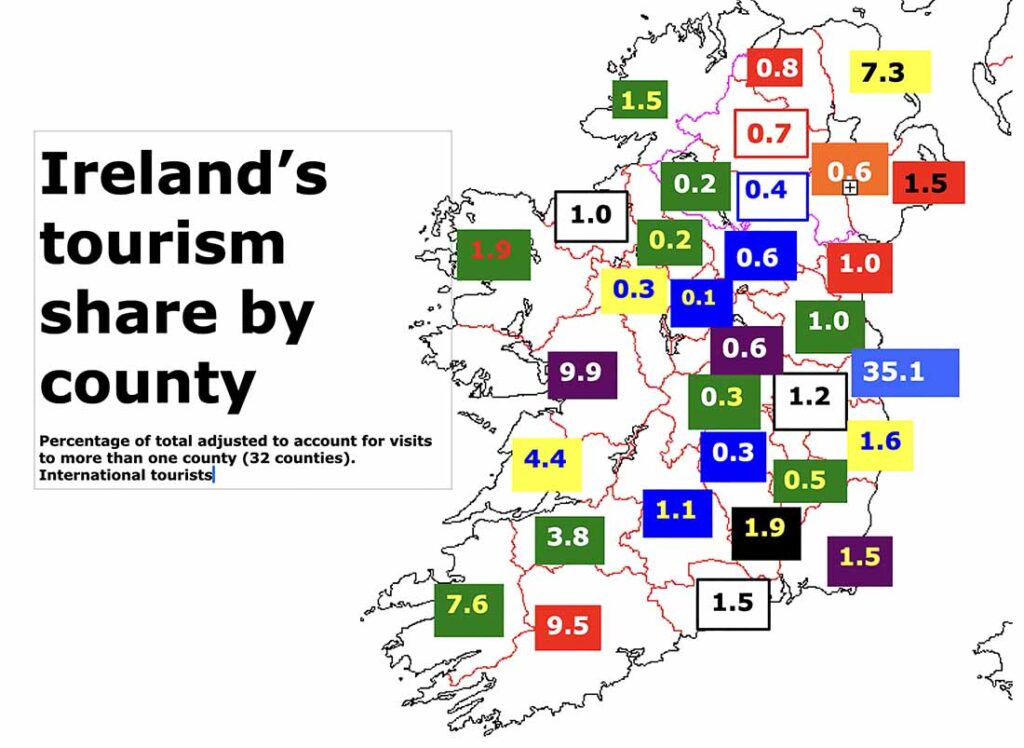
Ireland’s county Monaghan offers a serene blend of rolling hills and cultural heritage, with the Monaghan County Museum showcasing local history through artefacts and exhibits. The scenic Rossmore Forest Park provides walking trails amidst lakes and woodlands, while Castle Leslie’s historic estate offers a glimpse into aristocratic life. Other attractions include the county’s traditional lace-making heritage and quiet countryside. Monaghan is Ireland’s sixth smallest county by size (1,291 square km) and fifth smallest by population (65,288). Population peaked at 200,442 in 1841 and reached its lowest point, 45,732 in 1966. In terms of hospitality, Monaghan is Ireland’s 25th most visited tourist county with around 58,000 international visitors per year.
Introduction – Adventure – Anthem – Archaeology – Attractions – Awards – Birdwatching – Camping – Castles – Churches – Contact list – Cycling – Dining – Equestrian – Festivals – Fishing – Folklore – Gardens – Golf – Graveyards – Happening – Haunted – Highest – Hiking – History – Holy Wells – Hotels – Hotels top 8 – Hunting & shooting – Instagrammable – Itineraries – Largest town – Luxury – MICE – Movies – Music – Name – New – Novelists – Off the beaten track – Poets – Pubs – Quotes – Random Facts – Restaurant Awards – Sacred Places – Saints – Songs – Spas – Sports – Sunsets – Sustainable – Things to do – Towns – Video – Villages – Walking – Wanderlist – Weddings – Wild swimming – Writers – 1837 – 1846 – 1852 – 1909 – 1955 – 1980 –