Pre-1000 The Gaelic Nation
County Derry’s pre-1000 history is rooted in its role within the Northern branch of the house of Niall, the kingdom of Cenél nEógain, part of the broader Ulster region. The area was home to significant archaeological sites, such as the Grianán of Aileach, a hillfort near Burt, traditionally associated with the House of Niall dynasty. Derry city, originally known as Daire Calgaich (oak grove of Calgach), was a sacred site, possibly linked to pre-Christian rituals. Christianity arrived by the 5th century, with Saint Columba (Colmcille) founding a monastery in Derry around 546 CE, making it a key ecclesiastical centre. The Annals of Ulster (record monastic activities, including Viking raids on Derry’s monastery in the 9th century due to its strategic position on the Foyle. The region’s Gaelic clans, particularly the Cenél nEógain, maintained control, but Viking incursions disrupted coastal areas. Ecclesiastical sources dominate, potentially exaggerating Christian influence while marginalising pre-Christian Gaelic culture.
1000–1100: Gaelic Power and Viking Decline
In the 11th century, Derry remained under Cenél nEógain control, with the house of Niall dynasty asserting dominance in Ulster. The monastery at Derry continued as a centre of learning, producing manuscripts and fostering ties with Iona, Columba’s foundation in Scotland. Viking influence waned after the Battle of Clontarf (1014), though Derry’s position on the Foyle kept it relevant for trade. The lack of urban development and limited secular records reflect Derry’s peripheral status, with sources focusing on ecclesiastical or major political events elsewhere, requiring cautious interpretation to reconstruct local history.
1100–1200: Norman Incursions and Ecclesiastical Reform
The Norman invasion (1169–1171) had minimal direct impact on Derry due to its northern location. The Cenél nEógain, under leaders like Muirchertach Mac Lochlainn (d. 1166), resisted Norman expansion, maintaining Gaelic control. The Synod of Cashel (1172) strengthened Derry’s ecclesiastical role, with its monastery aligned with Roman reforms. The Annals of the Four Masters (mention Mac Lochlainn’s campaigns, but Derry is rarely highlighted. The Normans, under John de Courcy, conquered nearby Down, but Derry remained a Gaelic stronghold. Norman sources, such as the “Song of Dermot and the Earl”, focus on eastern conquests, offering little on Derry. Gaelic sources provide a more local perspective but are limited.
1200–1300: Gaelic Resilience and O’Neill Ascendancy
In the 13th century, Derry was part of the expanding O’Neill (house of Niall) power base in Ulster. The O’Neills, emerging as dominant successors to the Cenél nEógain, used the Grianán of Aileach as a symbolic centre. Derry’s monastery remained active, but no major urban or political developments are recorded. The county’s boundaries were not yet formalised, with Derry part of the broader Tír Eoghain region. The region’s isolation preserved Gaelic culture, with bards and brehons (lawyers) active. Norman records marginalise Gaelic achievements, and ecclesiastical sources overemphasise monastic contributions, requiring critical reading.
1300–1400: O’Neill Dominance and Gaelic Continuity
The 14th century saw Derry under firm O’Neill control, with leaders like Domhnall O’Neill (d. 1325) resisting English influence. The Black Death (1348–1350) had a lesser impact in rural Derry, and the Statute of Kilkenny (1366) was irrelevant due to minimal Norman presence. The O’Neills strengthened ties with Scottish clans, particularly the MacDonnells, enhancing Derry’s Gaelic character. English sources portray Gaelic lords as fractious, necessitating careful interpretation to highlight local agency.
1400–1500: O’Neill Autonomy and Ecclesiastical Significance
The 15th century saw Derry remain a Gaelic stronghold under the O’Neills, with figures like Eoghan O’Neill (d. 1456) asserting regional power. The Wars of the Roses (1460–1485) distracted English authorities, allowing Gaelic autonomy. Derry’s monastery continued as a religious centre, with bishops mediating between Gaelic lords and English officials. The Grianán of Aileach remained a symbolic stronghold, though its military use declined. Derry’s isolation preserved its Gaelic culture, but the lack of secular records limits insights into daily life, and ecclesiastical sources dominate, focusing on church activities.
1500–1600: Tudor Reconquest and O’Neill Resistance
The 16th century brought Tudor efforts to subdue Ulster, impacting Derry. The O’Neills, under Hugh O’Neill (d. 1616), resisted, using Derry as a strategic base during the Nine Years’ War (1594–1603). The English established a military presence at Derry, with Sir Henry Docwra fortifying the town in 1600. The Flight of the Earls (1607), including Hugh O’Neill, led to the Ulster Plantation (1609), with Derry’s lands confiscated for English and Scottish settlers. The city was renamed Londonderry by the London Guilds, who rebuilt it as a planned settlement. The annals document Gaelic resistance, while English records portray the O’Neills as rebels, requiring balance.
1600–1700: Plantation and Siege of Derry
The 17th century transformed Derry through the Ulster Plantation. The London Guilds developed Derry city, building walls and a cathedral (St. Columb’s, 1633). Gaelic O’Neills and O’Dohertys lost lands, with settlers colonising rural Derry. The 1641 Rebellion saw native Irish forces, including Sir Phelim O’Neill, attack Colonial settlements, though Derry city held firm. The Siege of Derry (1689) during the Williamite War was a defining event, with Colonial defenders resisting James II’s forces, cementing Derry’s unionist identity. English sources vilify Catholic rebels, necessitating critical interpretation.
1700–1800: Protestant Ascendancy and Economic Growth
The 18th century saw Derry under the Colonial/Protestant Ascendancy, with Anglo-Irish and Scottish landlords dominating. The Penal Laws marginalised Catholics, who formed the majority in rural Derry. Derry city grew as a port, exporting linen and agricultural goods. The 1798 Rebellion saw limited United Irishmen activity in Derry, with figures like John Glendy, a Presbyterian radical, active. The Act of Union (1800) strengthened English control. The county’s economy benefited from the Foyle’s trade routes. English and colonial narratives tend to downplay native Irish or Catholic grievances.
1800–1900: Famine, Industry, and Nationalist Stirrings
The 19th century brought hardship to Derry. The Great Famine (1845–1849) reduced the county’s population from 222,000 in 1841 to 192,000 in 1851, with rural areas hit hardest. Derry city’s port and shirt-making industry mitigated some economic impacts. The railway (1845) enhanced connectivity. The Gaelic Revival saw limited traction in Colonial/protestan-dominated Derry city, but Catholic nationalism grew in rural areas. The Home Rule movement divided the county, with unionism strong in Derry city. English famine records tend to understate suffering.
1900–2025: Partition, The Troubles, and Modernisation
The 20th and 21st centuries saw Derry at the heart of Ireland’s political upheavals. The War of Independence (1919–1921) saw IRA activity in rural Derry, but the city remained unionist. Partition (1921) placed Derry in The six counties, despite its Catholic majority, fueling tensions. The Troubles (1968–1998) were intense in Derry, with events like Bloody Sunday (1972), where 14 civil rights marchers were massacred by the British army, galvanising the resistance movement. The Good Friday Agreement (1998) brought peace, though divisions persist. Derry’s economy diversified, with tourism around the city walls and Guildhall growing. The GAA and cultural festivals, like the Foyle Film Festival, strengthened local identity. Unionist and colonial narratives often dominate, requiring balance with resistance perspectives. Derry is one of just EIGHT Irish counties that has a larger population than it did in 1841.
History
Antrim – Armagh – Carlow – Cavan – Clare – Cork – Derry – Donegal – Down – Dublin – Fermanagh – Galway – Kerry – Kildare – Kilkenny – Laois – Leitrim – Limerick – Longford – Louth – Mayo – Meath – Monaghan – Offaly – Roscommon – Sligo – Tipperary – Tyrone – Waterford – Westmeath – Wexford – Wicklow
County Derry:
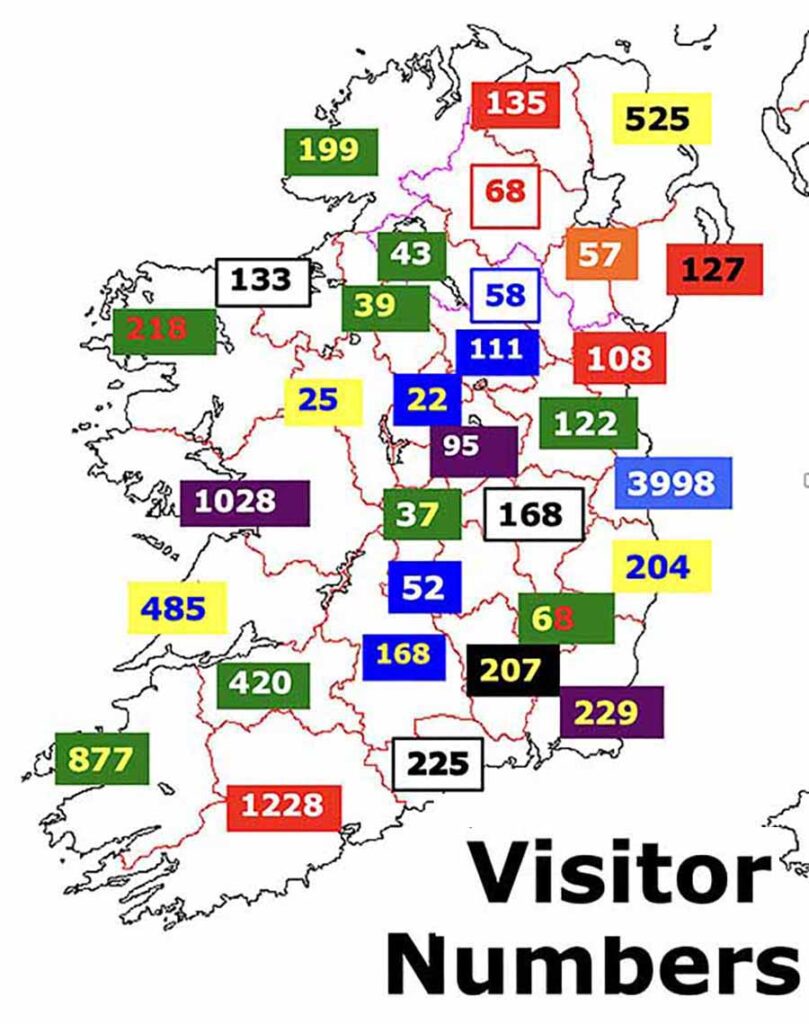
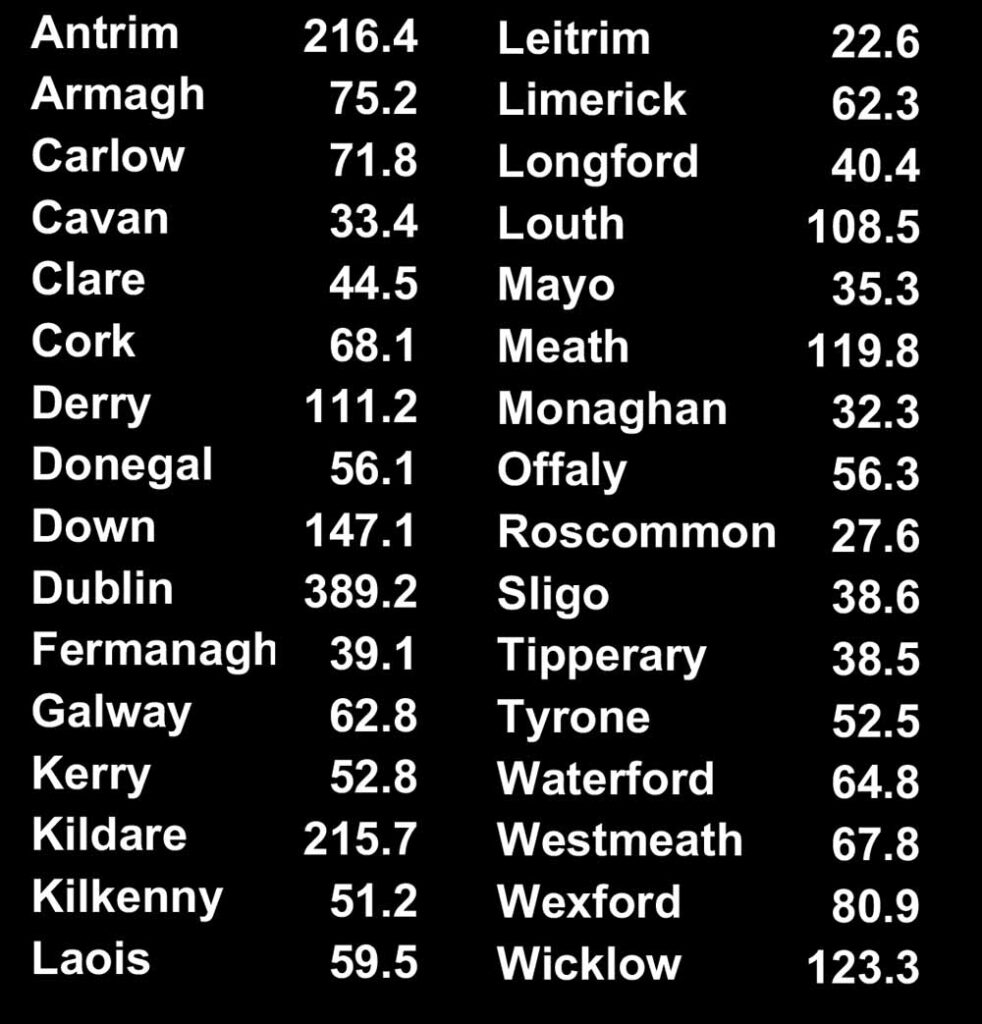
Ireland’s county Derry offers a rich historical tapestry, with the city’s 17th-century walls providing a walkable journey through its past. The Guildhall and Tower Museum explore Derry’s maritime and political history, while the Peace Bridge offers scenic views over the River Foyle. Derry is Ireland’s 15th largest county by size (2,067 square km) and sixth largest by population (252,231). Population previously peaked at 222,174 in 1841 and reached its lowest point, 139,693 in 1926. In terms of hospitality, Derry is Ireland’s 16th most visited tourist county with around 135,000 international visitors per year.
Introduction – Adventure – Anthem – Archaeology – Attractions – Awards – Birdwatching – Camping – Castles – Churches – Contact list – Cycling – Dining – Equestrian – Festivals – Fishing – Folklore – Gardens – Golf – Graveyards – Happening – Haunted – Highest – Hiking – History – Holy Wells – Hotels – Hotels top 8 – Hunting & shooting – Instagrammable – Itineraries – Largest town – Luxury – MICE – Movies – Music – New – Name – Novelists – Off the beaten track – Poets – Pubs – Quotes – Random Facts – Restaurant Awards– Sacred Places – Saints – Songs – Spas – Sports – Sunsets – Sustainable – Things to do – Towns – Video – Villages – Walking – Wanderlist – Weddings – Wild swimming – Writers – 1837 – 1846 – 1852 – 1909 – 1955 – 1980 –