Pre-1000 The Gaelic Nation
County Laois’s pre-1000 history is rooted in its role within the kingdom of Leinster, particularly the Loígis dynasty, from which the county derives its name. Archaeological evidence, such as the Rock of Dunamase (a later fort but with Iron Age origins) and ringforts at Clonkeen, indicates settlement from the Bronze Age. The Loígis, a minor dynasty, were vassals of the house of Dúnlaing kings of Leinster. Christianity arrived by the 6th century, with monasteries founded at Aghaboe by Saint Canice (c. 525–599) and at Clonenagh by Saint Fintan. The Annals of Ulster (record monastic activities, but Viking raids, primarily along the River Barrow, had minimal impact on inland Laois. Ecclesiastical sources dominate, potentially exaggerating Christian influence while marginalising pre-Christian Gaelic culture, and secular records are scarce.
1000–1100: Gaelic Loígis and Regional Conflicts
In the 11th century, Laois remained under the Loígis dynasty, with the O’Mores (Ó Mórdha) emerging as prominent local rulers. The Annals of Inisfallen (mention Leinster conflicts, particularly between the house of Dúnlaing and the rising Dál gCais under Brian Boru. The monastery at Aghaboe grew as a religious centre, producing manuscripts and fostering learning. Laois’s inland location limited Viking influence, preserving Gaelic autonomy. The Battle of Clontarf (1014) had indirect effects, weakening external pressures. Ecclesiastical sources dominate, potentially overshadowing Gaelic secular life.
1100–1200: Norman Invasion and Gaelic Resistance
The Norman invasion (1169–1171) significantly impacted Laois. By the 1170s, the Normans, under Strongbow (Richard de Clare), encroached on Leinster, reaching Laois’s eastern borders. The O’Mores resisted, leveraging the Rock of Dunamase as a stronghold. The “Song of Dermot and the Earl” (details Norman conquests in Leinster. The Normans established minor settlements, with figures like Robert de Berkeley granted lands. The Synod of Cashel (1172) aligned Aghaboe with Roman ecclesiastical reforms. The Annals of the Four Masters (record O’More resistance, but Norman sources dominate, often marginalising Gaelic perspectives.
1200–1300: Anglo-Norman Settlement and O’More Resilience
In the 13th century, Laois was partially shired as part of Leinster, though its boundaries were fluid. The Normans, under families like the Marshals, fortified the Rock of Dunamase, but their control was limited to eastern Laois. The O’Mores maintained power in central and western areas, resisting feudalisation. The Annals of Loch Cé (mention O’More conflicts with Normans. Aghaboe remained a key ecclesiastical centre, with Cistercian monasteries like Baltinglass (in nearby Wicklow) influencing the region. Laois’s fertile plains supported agriculture, but Norman records overemphasise their control, requiring balance with Gaelic sources.
1300–1400: Gaelic Revival and O’More Ascendancy
The 14th century saw a Gaelic revival in Laois, as Anglo-Norman power weakened post-Black Death (1348–1350). The O’Mores, under leaders like Lysagh O’More (d. c. 1360), regained control, particularly around Dunamase. The Statute of Kilkenny (1366), enacted nearby, had little impact in Laois, where Gaelic law prevailed. The Fitzgeralds of Kildare, Anglo-Irish lords, exerted influence in eastern Laois, creating tensions with the O’Mores. The Annals of the Four Masters (record O’More campaigns. English sources portray Gaelic lords as fractious, necessitating critical interpretation to highlight local agency.
1400–1500: O’More Dominance and Anglo-Irish Influence
The 15th century saw Laois under O’More control, with figures like Gilla-Pátraic O’More (d. c. 1480) resisting English influence. The Wars of the Roses (1460–1485) distracted English authorities, allowing Gaelic autonomy in rural Laois. The Fitzgeralds of Kildare maintained a foothold in the east, with Portlaoise (then Maryborough) emerging as a contested site. Aghaboe’s ecclesiastical influence waned, but it remained a pilgrimage centre. Laois’s isolation preserved its Gaelic culture, but the lack of secular records limits insights, with ecclesiastical sources dominating.
1500–1600: Tudor Reconquest and Laois Plantation
The 16th century brought Tudor efforts to subdue Laois. The O’Mores, under Rory O’More (d. 1578), resisted fiercely, with Dunamase as a stronghold. The Laois-Offaly Plantation (1556), under Queen Mary, was the first systematic plantation in Ireland, renaming Laois as Queen’s County and establishing Fort Protector (later Portlaoise). English settlers displaced O’Mores, though resistance continued. The Reformation had limited impact, as Laois remained Catholic. The annals document O’More resistance, while English records portray them as rebels, requiring balance. The plantation marked a turning point, reducing Gaelic power.
1600–1700: Plantation Expansion and Confederate Wars
The 17th century saw Laois transformed by plantation. The Laois-Offaly Plantation expanded, with English settlers dominating Portlaoise and east Laois. The O’Mores, under Owney O’More (d. 1600), resisted until their final defeat. The 1641 Rebellion saw Catholic forces, including O’More remnants, briefly recapture Dunamase, but the Cromwellian conquest (1649–1653) crushed resistance, confiscating remaining Catholic lands. The Williamite War (1689–1691) saw Laois loyal to William III, with no major battles. The English sources vilify rebels, necessitating critical interpretation.
1700–1800: Protestant Ascendancy and Agrarian Unrest
The 18th century saw Laois under the Colonial/Protestant Ascendancy, with Anglo-Irish landlords like the Parnells dominating. The Penal Laws marginalized Catholics, who formed the majority in rural Laois. Portlaoise grew as a market town, with agriculture driving the economy. The 1798 Rebellion saw limited United Irishmen activity in Laois, with local unrest suppressed. The Act of Union (1800) strengthened English control. Agrarian groups like the Whiteboys protested landlord abuses. English and colonial narratives tend to downplay native Irish or Catholic grievances.
1800–1900: Famine, Reform, and Nationalism
The 19th century brought hardship to Laois. The Great Famine (1845–1849) reduced the population from 153,000 in 1841 to 111,000 in 1851, though Laois’s fertile lands mitigated some impacts compared to western counties. Railways and Portlaoise’s markets aided recovery. The Gaelic Revival had limited traction, but the Gaelic League promoted Irish culture in rural areas. The GAA, founded in 1884, established hurling and football clubs, with Laois winning early titles. The Land League and Home Rule movement gained Catholic support, with figures like Charles Stewart Parnell, born in nearby Wicklow but linked to Laois, prominent. English famine records tend to understate suffering.
1900–2025: Independence, Rural Development, and Tourism
The 20th and 21st centuries saw Laois navigate Ireland’s independence. The War of Independence (1919–1921) saw IRA activity in Laois, with ambushes targeting English forces in Portlaoise. The Civil War (1922–1923) saw fighting in rural areas. Post-independence, Laois remained agricultural, with Portlaoise as a regional hub. The county’s GAA tradition grew, with Laois competing in hurling and football. Tourism developed around the Rock of Dunamase, Emo Court, and the Slieve Bloom Mountains. Laois’s economy diversified with small industries and proximity to Dublin. Official narratives tend to overemphasise progress, overlooking rural challenges. Laois is one of 24 Irish counties that still has a smaller population than it did in 1841.
History
Antrim – Armagh – Carlow – Cavan – Clare – Cork – Derry – Donegal – Down – Dublin – Fermanagh – Galway – Kerry – Kildare – Kilkenny – Laois – Leitrim – Limerick – Longford – Louth – Mayo – Meath – Monaghan – Offaly – Roscommon – Sligo – Tipperary – Tyrone – Waterford – Westmeath – Wexford – Wicklow
County Laois:
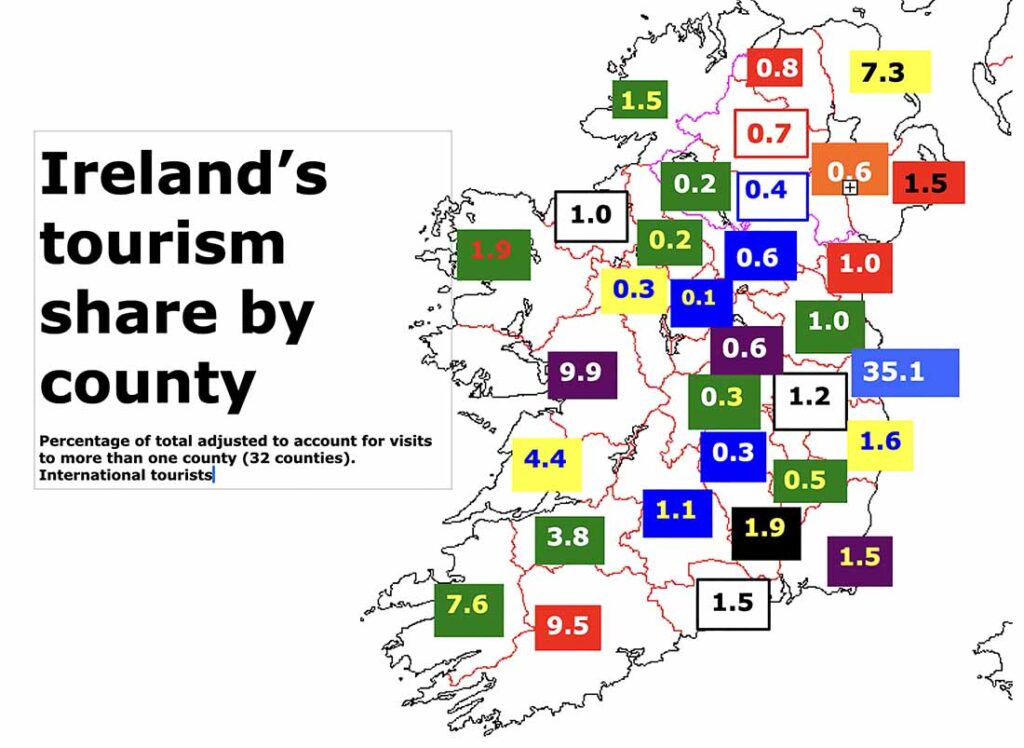
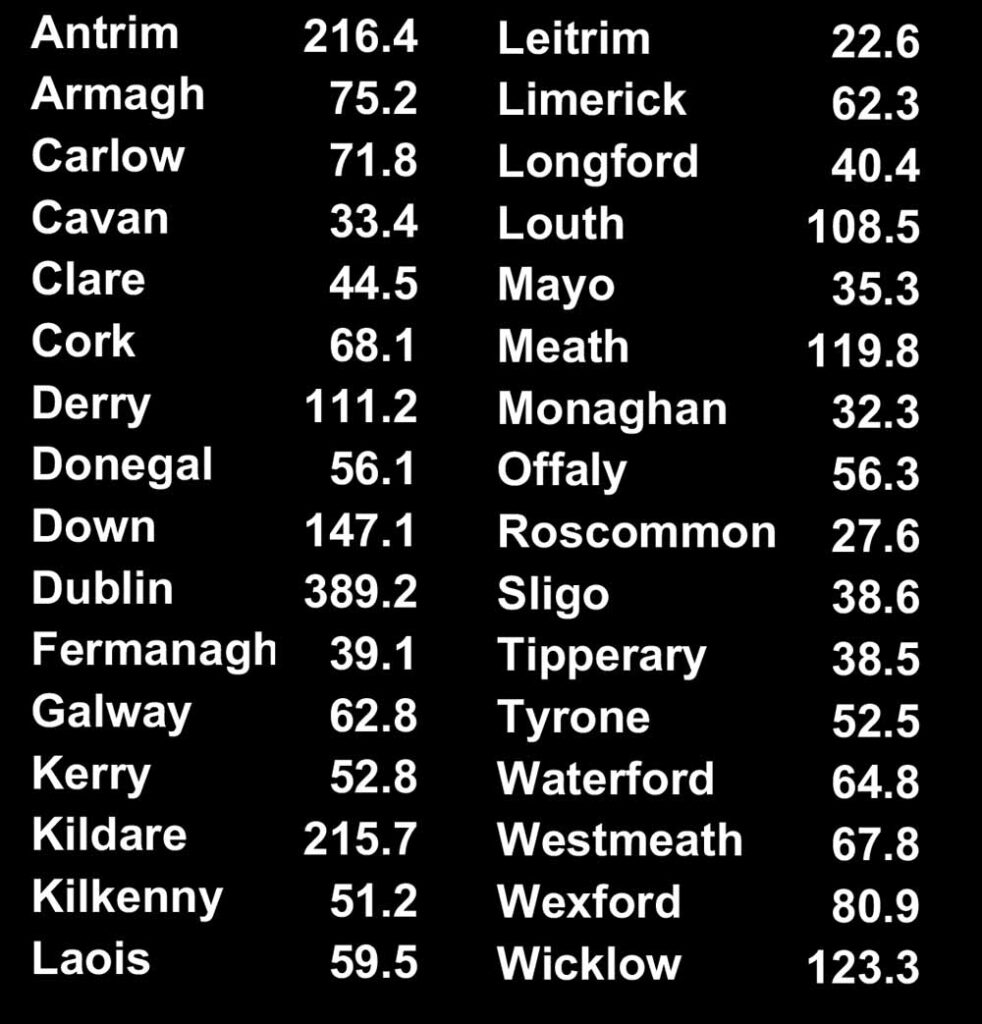
Ireland’s county Laois offers a serene blend of historic sites and natural landscapes, with the Rock of Dunamase providing panoramic views from its ancient castle ruins. Emo Court’s elegant Georgian mansion and gardens offer a peaceful retreat, while the Slieve Bloom Mountains provide hiking trails through rolling hills. Laois is Ireland’s ninth smallest county by size (1,719 square km) and tenth smallest by population (91,877). Population peaked at 153,930 in 1841 and reached its lowest point, 44,595 in 1966. In terms of hospitality, Laois is Ireland’s 27th most visited tourist county with around 52,000 international visitors per year.
Introduction – Adventure – Anthem – Archaeology – Attractions – Awards – Birdwatching – Camping – Castles – Churches – Contact list – Cycling – Dining – Equestrian – Festivals – Fishing – Folklore – Gardens – Golf – Graveyards – Happening – Haunted – Highest – Hiking – History – Holy Wells – Hotels – Hotels top 8 – Hunting & shooting – Instagrammable – Itineraries – Largest town – Luxury – MICE – Movies – Music – Name – New – Novelists – Off the beaten track – Poets – Pubs – Quotes – Random Facts – Restaurant Awards – Sacred Places – Saints – Songs – Spas – Sports – Sunsets – Sustainable – Things to do – Towns – Video – Villages – Walking – Wanderlist – Weddings – Wild swimming – Writers – 1837 – 1846 – 1852 – 1909 – 1955 – 1980 –