The highest point in County Laois is Arderin (Irish: Ard Éireann, meaning “Ireland’s Height”), standing at 527 meters (1,729 feet). Located in the Slieve Bloom Mountains, which straddle the Laois-Offaly border, Arderin is a modest but scenic peak offering a rewarding hike in a tranquil, underrated range.
- Geological and Cultural Significance: Arderin is part of the Slieve Bloom Mountains, an ancient range of sandstone and shale hills formed over 400 million years ago. The mountains are one of Ireland’s oldest, predating the Alps, and are characterized by blanket bogs, heather-covered slopes, and deep glens. The name Ard Éireann reflects its status as a central high point, historically significant as the highest in Laois and Offaly. The Slieve Blooms are rich in folklore, with tales of Fionn MacCumhaill, and feature archaeological sites like ring forts and megalithic tombs scattered across the range.
- Scenic Beauty: The summit offers panoramic views over the Laois and Offaly plains, with rolling green fields, the Bog of Allen to the north, and, on clear days, distant peaks like the Wicklow Mountains or Galtee Mountains. The Slieve Blooms’ lush glens, waterfalls, and forested valleys add to the area’s charm, making Arderin a peaceful retreat from Ireland’s busier hiking destinations.
Approaching Arderin
- Access Points: Arderin is typically approached from the Glenbarrow area in the Slieve Bloom Mountains, near Rosenallis in northern Laois. The primary starting point is the Glenbarrow Car Park (Grid Ref: N 356 081), accessible via the R422 and minor roads from Mountmellick or Clonaslee. Another option is from The Cut, a high pass on the R440 near Mountrath, offering a shorter but steeper ascent. Public transport is limited, with the nearest bus routes (e.g., Local Link to Portlaoise) requiring a drive or taxi to the trailhead. A car is recommended.
Trail Options:
- Glenbarrow Route: The most popular route is a 8–10km round-trip hike (2.5–4 hours) starting at Glenbarrow Car Park. Hikers follow the Slieve Bloom Way, a 70km looped trail, or shorter forest tracks toward the Ridge of Capard, then ascend Arderin’s open moorland slopes. The trail passes scenic spots like the Glenbarrow Waterfalls and crosses boggy terrain to the summit, marked by a small cairn. This route is moderately challenging due to wet bog and some steep sections but is well-marked and suitable for intermediate hikers.
- The Cut Route: A shorter 5–7km round-trip hike (2–3 hours) starts at The Cut, following a gravel track and faint paths up the southern slopes. This route is steeper and less defined, requiring navigation across heather and bog. It’s ideal for those seeking a quicker ascent but demands more experience due to the lack of clear waymarking.
- Extended Routes: Experienced hikers may combine Arderin with nearby peaks like Wolftrap Mountain (487m) or Baunreaghcong (509m) along the Slieve Bloom Way, creating a 12–15km loop. These routes offer a full day’s exploration of the range but require good navigation skills, especially in fog.
- Navigation and Preparation: The Glenbarrow route is waymarked as part of the Slieve Bloom Way, but the summit approach can be boggy and indistinct, especially in poor weather. Hikers should carry a map (Ordnance Survey Ireland, Discovery Series Sheet 54), compass, or GPS. Waterproof hiking boots, gaiters, and rain gear are essential due to the wet bog and frequent rain in the Slieve Blooms. Bring water and snacks, as there are no facilities on the trail. Dogs are allowed but must be leashed to protect livestock and wildlife. Check weather forecasts, as the summit is exposed to wind and fog, and respect private land where trails cross.
Hiking Experience:
- The Glenbarrow route offers a scenic, varied hike, starting with forest trails and waterfalls before transitioning to open moorland. The ascent is gradual but includes boggy sections that can slow progress. The Slieve Bloom Way’s signage helps navigation, and the summit cairn is a clear marker.
- The Cut route is shorter but steeper, with open, heather-covered slopes offering a wilder feel. Both routes are quieter than Ireland’s busier ranges, providing solitude and immersion in nature.
- The summit is a broad, boggy plateau with a small cairn, offering a sense of achievement despite its modest height. The Slieve Blooms’ remoteness makes Arderin feel more isolated than its elevation suggests.
- Views and Photography: On clear days, the summit provides sweeping views over Laois and Offaly’s patchwork fields, with the flat Bog of Allen contrasting the Slieve Blooms’ rolling hills. Distant mountains, like the Wicklows or Galtees, may be visible, making it a great spot for photography, especially at sunrise or sunset when the light softens the landscape. The Glenbarrow Waterfalls en route add scenic photo opportunities.
- Wildlife and Nature: The Slieve Blooms are a biodiversity hotspot, with blanket bogs supporting heather, sphagnum moss, and sundews. Wildlife includes red deer, foxes, and birds like skylarks, hen harriers, and buzzards. The nearby Glenbarrow Waterfalls and forested glens host ferns and mosses, creating a lush environment. Grazing sheep are common, reflecting the area’s pastoral use.
- Cultural and Historical Context: The Slieve Blooms are steeped in mythology, linked to Fionn MacCumhaill and the Fianna. Nearby, the Rock of Dunamase, a 12th-century castle ruin, and Emo Court, a Georgian estate, offer historical excursions. The mountains’ quiet villages, like Clonaslee, preserve Laois’s rural heritage, with traditional music in local pubs.
- Amenities: Glenbarrow Car Park has basic facilities (parking, information boards), but no toilets or food services, so hikers must be self-sufficient. The Cut has no facilities. Nearby towns like Mountmellick (10km) or Portlaoise (20km) offer cafés, pubs (e.g., The Deadman’s Inn in Ballyfin), and shops. Portlaoise or Birr (Offaly) provide accommodation options.
- Seasonal Considerations: Spring (April–May) and autumn (September–October) offer vibrant heather and mild weather (8–15°C / 46–59°F), ideal for hiking. Summer (June–August) is warmest (15–20°C / 59–68°F) but wetter, with boggy trails. Winter (November–March) brings mud and occasional frost, requiring caution. Laois’s 1,200–1,400 annual sunshine hours allow for clear views, but rain is frequent, so waterproof gear is essential.
- Guided Tours: The Slieve Bloom Walking Club or operators listed on visitlaois.ie offer guided hikes, providing insights into the mountains’ ecology and folklore. These are ideal for navigating less-defined routes or learning about the area’s heritage.
- Safety: The Glenbarrow route is low-risk, but boggy terrain and fog can disorient hikers, especially on The Cut route. Inform someone of your plans, avoid hiking alone in poor weather, and check for trail updates, as heavy rain can make paths impassable. Mobile signal is patchy, so offline maps are recommended.
- Accessibility: Arderin’s Glenbarrow route is suitable for intermediate hikers due to its moderate length and terrain. The Cut route requires more experience. The summit is not wheelchair-accessible due to boggy, uneven ground.
- Arderin offers a serene, accessible hike in County Laois, showcasing the Slieve Bloom Mountains’ quiet beauty. Its gentle trails, expansive views, and rich biodiversity make it ideal for hikers seeking an off-the-beaten-path experience. The nearby Glenbarrow Waterfalls and historical sites like the Rock of Dunamase enhance a visit, making Arderin a perfect introduction to Laois’s rural charm. For more details, visit visitlaois.ie or consult Kieron Gibbons’ Ireland’s County High Points – A Walking Guide.
Highest point in county
Antrim – Armagh – Carlow – Cavan – Clare – Cork – Derry – Donegal – Down – Dublin – Fermanagh – Galway] – Kerry – Kildare – Kilkenny – Laois – Leitrim – Limerick – Longford – Louth – Mayo – Meath – Monaghan – Offaly – Roscommon – Sligo – Tipperary – Tyrone – Waterford – Westmeath – Wexford – Wicklow
County Laois:
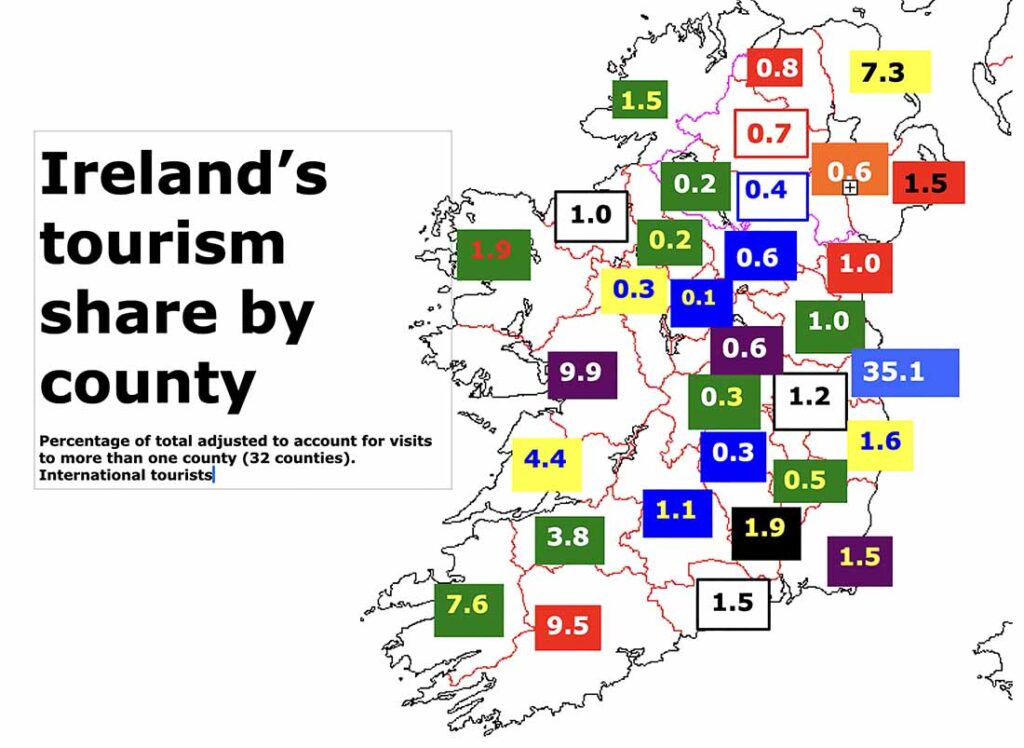
Ireland’s county Laois offers a serene blend of historic sites and natural landscapes, with the Rock of Dunamase providing panoramic views from its ancient castle ruins. Emo Court’s elegant Georgian mansion and gardens offer a peaceful retreat, while the Slieve Bloom Mountains provide hiking trails through rolling hills. Laois is Ireland’s ninth smallest county by size (1,719 square km) and tenth smallest by population (91,877). Population peaked at 153,930 in 1841 and reached its lowest point, 44,595 in 1966. In terms of hospitality, Laois is Ireland’s 27th most visited tourist county with around 52,000 international visitors per year.
Introduction – Adventure – Anthem – Archaeology – Attractions – Awards – Birdwatching – Camping – Castles – Churches – Contact list – Cycling – Dining – Equestrian – Festivals – Fishing – Folklore – Gardens – Golf – Graveyards – Happening – Haunted – Highest – Hiking – History – Holy Wells – Hotels – Hotels top 8 – Hunting & shooting – Instagrammable – Itineraries – Largest town – Luxury – MICE – Movies – Music – Name – New – Novelists – Off the beaten track – Poets – Pubs – Quotes – Random Facts – Restaurant Awards – Sacred Places – Saints – Songs – Spas – Sports – Sunsets – Sustainable – Things to do – Towns – Video – Villages – Walking – Wanderlist – Weddings – Wild swimming – Writers – 1837 – 1846 – 1852 – 1909 – 1955 – 1980 –