Pre-1000 The Gaelic Nation
County Cavan’s pre-1000 history is tied to its role within the kingdom of Breifne, which encompassed modern Cavan and Leitrim. Archaeological evidence, such as the crannógs (lake dwellings) on Lough Oughter and the Kilmore ringfort, indicates early settlement from the Bronze and Iron Ages. The region was controlled by the Breifne branch of the house of Briún, a minor Gaelic dynasty. Christianity arrived by the 6th century, with Saint Felim (or Phelim) traditionally founding a monastery at Kilmore, though evidence is sparse. The house of Niall, overlords of Ulster. Cavan’s inland location limited Viking raids, but its proximity to Lough Erne made it a trade route. Ecclesiastical sources dominate, potentially exaggerating Christian influence, while pre-Christian Gaelic culture is underrepresented due to scarce secular records.
1000–1100: Gaelic Breifne and Limited External Influence
In the 11th century, Cavan remained part of the kingdom of Breifne, under the house of Briún, with the O’Rourke (Ó Ruairc) dynasty emerging as regional leaders. The monastery at Kilmore grew in significance, serving as a local religious centre, though it lacked the prominence of Armagh or Clonmacnoise. Cavan’s inland, boggy terrain isolated it from Viking and external influences, preserving Gaelic customs. The lack of urban development and limited documentation in this period reflects Cavan’s peripheral status, with sources focusing on major political or ecclesiastical centres, requiring cautious interpretation to reconstruct local history.
1100–1200: Norman Incursions and Ecclesiastical Development
The Norman invasion (1169–1171) had minimal direct impact on Cavan due to its inland location and rugged terrain. Breifne remained under O’Rourke control, with figures like Tigernán O’Rourke (d. 1172) resisting Norman expansion. Tigernán’s conflict with Dermot MacMurrough and his assassination, destabilised Breifne. The Normans briefly held parts of eastern Cavan, but their influence was limited. The establishment of a Cistercian abbey at Trinity Island (Lough Oughter) in 1237, though slightly later, reflects growing European monastic influence. Norman and ecclesiastical sources dominate, often marginalising Gaelic perspectives.
1200–1300: Gaelic Resilience and O’Rourke Dominance
In the 13th century, Cavan remained under Gaelic control, with the O’Rourkes consolidating power in Breifne. The county’s boundaries were not yet formalised, but Cavan formed the eastern part of Breifne. The O’Rourkes resisted Norman encroachment, maintaining autonomy through alliances with other Gaelic lords. The Cistercian abbey at Trinity Island became a local religious hub, supporting manuscript production and learning. The “Song of Dermot and the Earl” focuses on Norman activities in Leinster, offering little on Cavan, while the Annals of Connacht (note O’Rourke conflicts with neighbouring powers. The lack of secular records limits insights into daily life, and ecclesiastical sources tend to overemphasise monastic contributions.
1300–1400: O’Rourke-O’Reilly Divide and Gaelic Strength
The 14th century saw the division of Breifne into West Breifne (Leitrim, under O’Rourke) and East Breifne (Cavan, under O’Reilly, or Ó Raghallaigh). The O’Reillys emerged as a powerful dynasty, with their seat at Lough Oughter’s crannóg-castle. The Black Death (1348–1350) weakened Norman settlements, bolstering Gaelic autonomy. The Statute of Kilkenny (1366) had little impact in Cavan, where Gaelic law and language prevailed. The O’Reillys built strongholds like Tullymongan, and their patronage supported local churches, such as Kilmore Cathedral. English sources often portray Gaelic lords as fractious.
1400–1500: O’Reilly Ascendancy and Gaelic Autonomy
The 15th century was a period of O’Reilly dominance in Cavan, with figures like John O’Reilly (d. 1459) strengthening East Breifne’s independence. The O’Reillys resisted English influence, leveraging Cavan’s isolation and defensive terrain. The Wars of the Roses (1460–1485) distracted English authorities, allowing Gaelic lords greater autonomy. Kilmore remained a key ecclesiastical centre, with bishops mediating between Gaelic and English interests. The annals offer context for Gaelic politics, but Cavan’s role is often secondary to broader Ulster events. The lack of secular records and reliance on ecclesiastical sources limits insights into social and economic life.
1500–1600: Tudor Reconquest and O’Reilly Resistance
The 16th century brought Tudor efforts to subdue Ulster, impacting Cavan. The O’Reillys, under leaders like Hugh O’Reilly, resisted through alliances with the O’Neills. The surrender and regrant policy saw some O’Reillys accept English titles, but resistance persisted. The Nine Years’ War (1594–1603) saw Cavan as a battleground, with O’Reilly forces supporting Hugh O’Neill. The war’s end and O’Neill’s defeat in 1603 weakened Gaelic power. The Ulster Plantation (1609) began confiscating Cavan lands, targeting O’Reilly estates. English records portray Gaelic lords as rebels, requiring balance with Gaelic sources.
1600–1700: Ulster Plantation and Confederate Wars
The 17th century transformed Cavan through the Ulster Plantation. Large swathes of O’Reilly lands were confiscated and granted to English and Scottish settlers, particularly in eastern Cavan around Belturbet and Cavan town. The 1641 Rebellion saw Catholic Gaelic and Old English forces, led by figures like Philip O’Reilly (d. 1655), attempt to reclaim land, with Cavan a key Confederate stronghold. The Cromwellian conquest (1649–1653) led to further confiscations, marginalising Catholic landowners. The Williamite War (1689–1691) reinforced Colonial/protestan control. English sources often vilify Catholic rebels, necessitating critical interpretation.
1700–1800: Protestant Ascendancy and Economic Growth
The 18th century saw Cavan under the Colonial/Protestant Ascendancy, with Anglo-Irish landlords dominating land ownership. The Penal Laws excluded Catholics, who formed the majority, from power, fostering resentment. The linen industry grew, particularly in Cootehill and Belturbet, boosting the economy. Cavan’s bogs and lakes limited large-scale urbanisation, but market towns developed. The 1798 Rebellion had limited impact in Cavan, with minor United Irishmen activity. The Act of Union (1800) strengthened English control. English narratives tend to downplay Catholic grievances, requiring balance with local accounts.
1800–1900: Famine and Nationalist Stirrings
The 19th century brought hardship to Cavan. The Great Famine (1845–1849) devastated the county, reducing its population from 243,000 in 1841 to 174,000 in 1851 due to starvation, disease, and emigration. Cavan’s reliance on smallholdings exacerbated the crisis. The linen industry declined, but railways (e.g., Dublin-Sligo line, 1862) improved connectivity. The Gaelic Revival saw the Gaelic League establish branches in Cavan, promoting Irish language and culture. The GAA, founded in 1884, grew strong, with Cavan teams competing nationally. The Home Rule movement gained Catholic support, though Colonial/protestan unionism persisted in eastern Cavan. English famine records tend to understate local suffering.
1900–2025: Independence, Conflict, and Modernisation
The 20th and 21st centuries saw Cavan shaped by Ireland’s independence and border dynamics. The War of Independence (1919–1921) saw IRA activity in Cavan, targeting English forces. The Anglo-Irish Treaty (1921) placed Cavan in the Irish Free State, with its border with The six counties creating economic and social divides. The Civil War (1922–1923) saw clashes in Cavan, with anti-treaty forces active. Cavan’s GAA tradition flourished, with All-Ireland football titles in 1933, 1935, 1947, 1948, and 1952. The county remained rural, with agriculture and small industries dominating. Recent decades saw infrastructure improvements and tourism growth around sites like Lough Oughter and the Marble Arch Caves. Official narratives tend to overemphasise progress, overlooking rural challenges. Cavan is one of 24 Irish counties that still has a smaller population than it did in 1841.
History
Antrim – Armagh – Carlow – Cavan – Clare – Cork – Derry – Donegal – Down – Dublin – Fermanagh – Galway – Kerry – Kildare – Kilkenny – Laois – Leitrim – Limerick – Longford – Louth – Mayo – Meath – Monaghan – Offaly – Roscommon – Sligo – Tipperary – Tyrone – Waterford – Westmeath – Wexford – Wicklow
County Cavan:
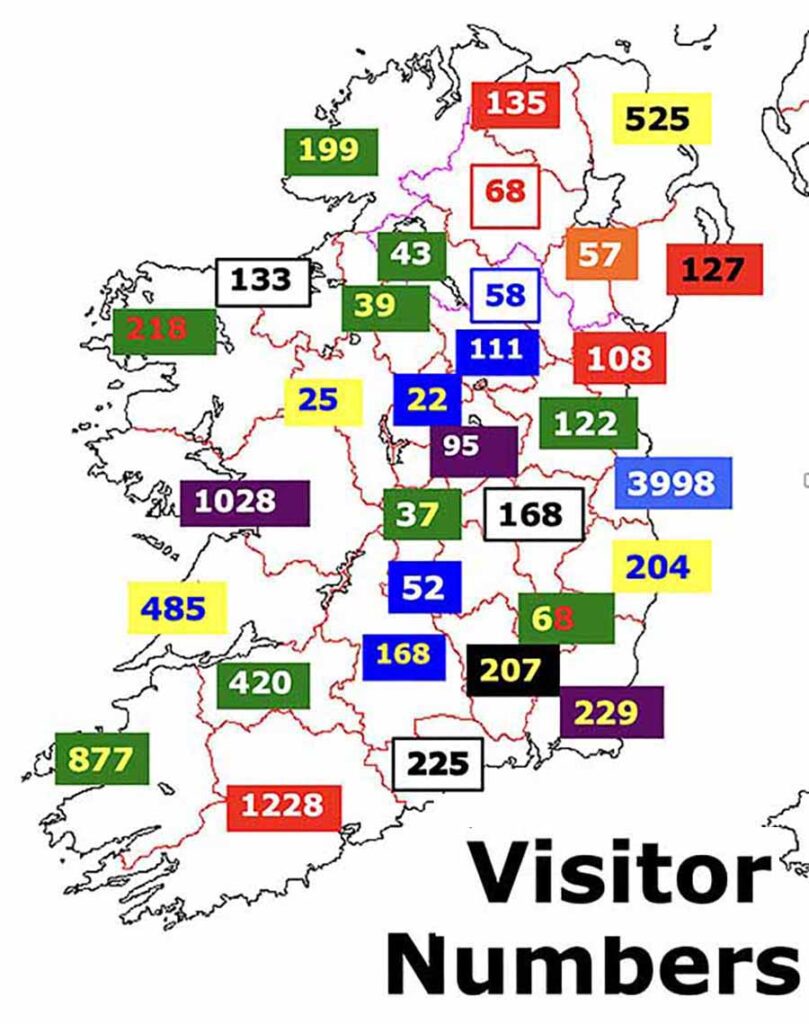
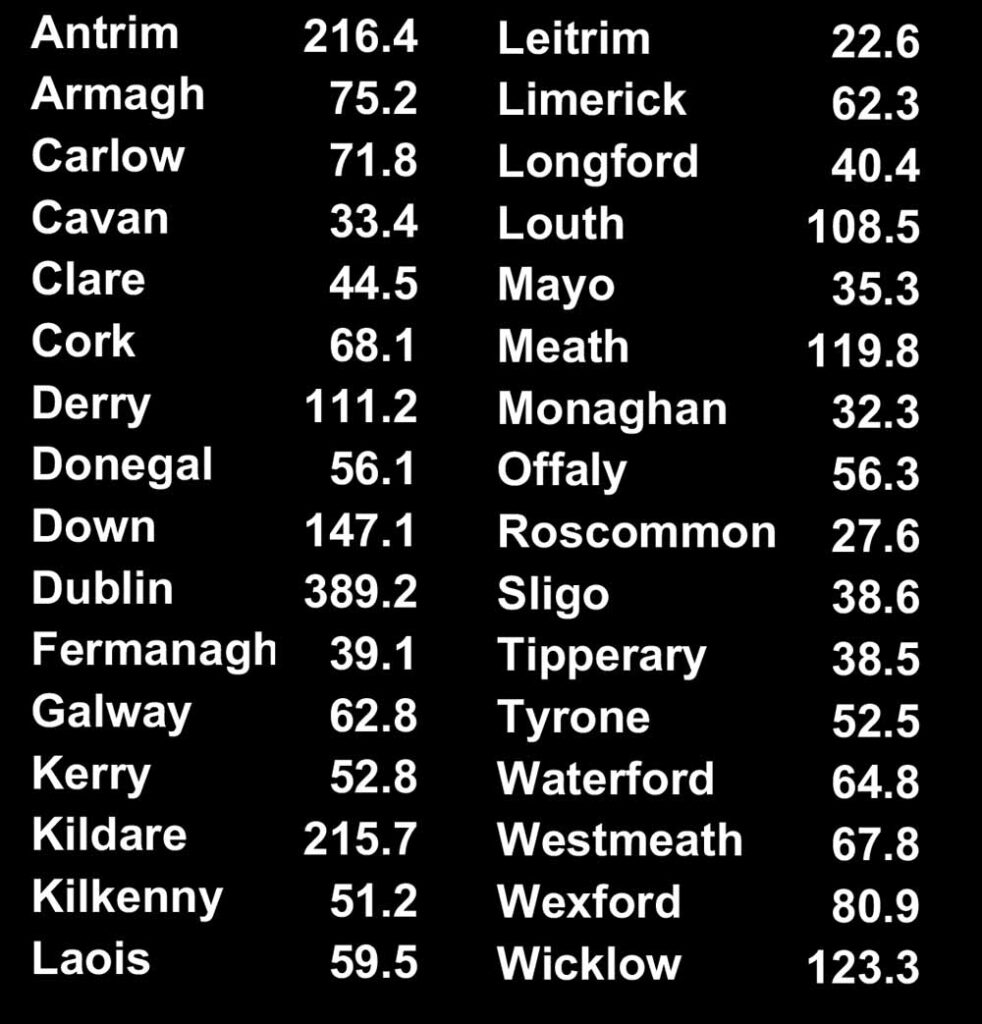
Ireland’s county Cavan is a haven of lakes and rolling hills, with the Shannon-Erne Waterway offering tranquil boating and fishing opportunities. The Cavan County Museum in Ballyjamesduff explores local history, while the Marble Arch Caves, part of a UNESCO Geopark, showcase stunning underground formations. Other attractions include the Killykeen Forest Park’s walking trails. Cavan is Ireland’s 19th largest county by size (1,891 sq km) and eighth smallest by population (81,704). Population peaked at 243,158 in 1841 and reached its lowest point, 52,618 in 1971. In terms of hospitality, Cavan is Ireland’s 20th most visited tourist county with around 111,000 international visitors per year.
IIntroduction – Adventure – Anthem – Archaeology – Attractions – Awards – Birdwatching – Camping – Castles – Churches – Contact list – Cycling – Dining – Equestrian – Festivals – Fishing – Folklore – Gardens – Golf – Graveyards – Happening – Haunted – Highest – Hiking – History – Holy Wells – Hotels – Hotels top 8 – Hunting & shooting – Instagrammable – Itineraries – Largest town – Luxury – MICE – Movies – Music – New – Name – Novelists – Off the beaten track – Poets – Pubs – Quotes – Random Facts – Restaurant Awards – Sacred Places – Saints – Songs – Spas – Sports – Sunsets – Sustainable – Things to do – Towns – Video – Villages – Walking – Wanderlist – Weddings – Wild swimming – Writers – 1837– 1846 – 1852 – 1909 – 1955 – 1980 –