- Saint Brigid’s Well (Brideswell, Curraghboy): Pattern day: Last Sunday in July (Garland Sunday, linked to Lughnasa). Located in the village of Brideswell, this is one of Roscommon’s most famous wells, dedicated to Saint Brigid. The annual pattern, a significant event in south Roscommon, involves Mass, prayers, and community festivities, historically attracting locals and diaspora. The well is associated with general healing and blessings, with pilgrims leaving clooties (rags) or medals on nearby trees. The site remains active, with a carnival-like atmosphere during the pattern.
- Saint Patrick’s Well (Cornapallis, near Castlestrange): Pattern day: March 17 (Saint Patrick’s feast day, though Mass is held on an unspecified date). Situated in Cornapallis, this well is signposted and popular, featuring a modern altar and benches for services. It’s a small, dry hole in a grotto, with a cross and statue above, surrounded by a pond-like enclosure. Associated with cures for sore body parts and eye ailments, it’s an active pilgrimage site where pilgrims leave coins or hair ties. Uniquely, Saint Patrick’s Day meals were sometimes cooked with its water.
- t. Ronan’s Well (Shraduff, Taughmaconnell): Pattern day: August 11 (Saint Ronan’s feast day, though not actively observed). Located in Mr. O’Connell’s field, this well is encircled by a stone wall with a bush overhead and a tree nearby. A stone slab bears a carved image of Jesus on the cross, a cock, a pot, and a hammer. Dedicated to Saint Ronan, it’s associated with general healing, with pilgrims performing rounds and leaving offerings like rosaries or rags. The well is part of Taughmaconnell’s historic landscape, near old castles and a bishop’s grave.
- Saint Patrick’s Well (Elphin): Pattern day: March 17 (Saint Patrick’s feast day, though not confirmed for active observance). Situated in Elphin, this well is linked to a legend where Saint Patrick baptized King Laoghaire’s daughters, Ethna and Fedelma, after creating the well with his staff due to a lack of water. It’s associated with general healing and blessings, with pilgrims historically performing rounds. The well remains a notable site in local folklore, though active pilgrimages have declined.
- Saint Malachy’s Well (Taughmaconnell): Pattern day: November 3 (Saint Malachy’s feast day, though not actively observed). Also in Taughmaconnell, this well is part of the parish’s trio of holy wells. Dedicated to Saint Malachy, it’s less documented but associated with curing ailments like rheumatism. Pilgrims would perform rounds, reciting prayers and leaving tokens such as medals or rags. The well’s setting near historic sites underscores its cultural significance.
- Saint Brigid’s Well (Drum, near Athleague): Pattern day: February 1 (Saint Brigid’s feast day, though not actively observed). Part of the Drum Monastic Settlement, this well was restored in 1990 and features a life-size statue of Saint Brigid added in 2010. It’s linked to a community of Patrician monks and associated with general healing. Pilgrims leave offerings like coins or clooties on nearby trees, following rounds. The well is near a Romanesque abbey and medieval church, enhancing its historical context.
- Saint Attracta’s Well (Killaraght, near Lough Gara): Pattern day: August 11 (Saint Attracta’s feast day, historically observed). Located in Killaraght, this well is tied to Saint Attracta, who prayed there. It was a major pilgrimage site until the 19th century, attracting hundreds for rounds and offerings like rags or coins. Associated with general healing, its pattern day was a significant event, though it’s less active today. The well’s proximity to Lough Gara adds to its scenic and spiritual appeal.
- Saint Barry’s Well (Tulsk): Pattern day: September 15 (Saint Barry’s feast day, though not actively observed). Also known as Ogulla Well, this site near Tulsk is linked to Saint Barry and associated with cures for eye ailments and general health. Pilgrims perform rounds and leave offerings like rosaries or clooties. The Roscommon Holy Wells Project highlights its heritage significance, and it remains a site of local devotion, though less frequented today.
- Saint Brigid’s Well (Hollywell, near Ballinderry): Pattern day: February 1 (Saint Brigid’s feast day, though not actively observed). According to folklore, Saint Brigid rested here after being driven from Ballinderry, blessing the well and endowing it with a cure for skin diseases like itch. Pilgrims visited for prayers and healing, leaving tokens like rags. The well’s fame has diminished, but it remains part of Roscommon’s rich Brigid tradition.
- Saint Oran’s Well (near Oran): Pattern day: February 19 (Saint Oran’s feast day, though not confirmed for active observance). Located near Oran, this well is associated with a story of an elderly woman cured of rheumatism after visiting. It’s linked to general healing, with pilgrims performing rounds and leaving offerings like medals or coins. The well is part of Roscommon’s extensive holy well network, though less prominent today.
- Saint Lasserian’s Well (near Elphin): Pattern day: April 18 (Saint Lasserian’s feast day, though not actively observed). One of three wells near Elphin, dedicated to Saint Lasserian (or Laserian), this site is associated with general healing and blessings. Pilgrims historically performed rounds, reciting prayers and leaving tokens like rags or rosaries. Its significance ties to the area’s early Christian heritage, though active devotion has waned.
- Tobar na Súl (Eye Well, near Rathcroghan): Pattern day: Not specifically recorded, possibly August 1 (Lughnasa) or a local saint’s feast. Located near the ancient site of Rathcroghan, this well is named for its reputed ability to cure eye ailments. It likely predates Christianity, with pagan associations to the Morrigan and Oweynagat (Battle Cave). Pilgrims performed rounds and left offerings like coins or clooties, though the site is less visited today.
Visiting
- Roscommon has at least 85 recorded holy wells, with a notable concentration dedicated to Saint Brigid, reflecting her prominence in local tradition.
- Pattern days often align with saints’ feast days or Celtic festivals like Lughnasa, involving rituals such as sunwise (deiseal) circumambulation, rosary recitation, drinking or applying well water, and leaving votive offerings (rags, coins, rosaries). These practices peaked during the Penal Laws when Catholics used wells as covert worship sites but declined in the 19th century due to church reforms and social changes.
- Many wells are near monastic sites, churches, or ancient landscapes like Rathcroghan, suggesting pre-Christian origins adapted for Christian use, often for baptisms.
- The Roscommon Holy Wells Project (2023–2024), led by Tamlyn McHugh, surveyed 85 wells, documenting their heritage and customs, with findings displayed in a 2024 exhibition at Roscommon Library.
- The Schools’ Collection (dúchas.ie) provides valuable folklore from the 1930s, though some wells lack detailed records due to disrepair or fading traditions.
- For further exploration, visit the Roscommon Holy Wells Project’s Story Map (heritageweek.ie) or dúchas.ie for folklore. Always approach these sites respectfully, as they remain culturally and spiritually significant.
Holy Wells
Antrim – Armagh – Carlow – Cavan – Clare – Cork – Derry – Donegal – Down – Dublin – Fermanagh – Galway – Kerry – Kildare – Kilkenny – Laois – Leitrim – Limerick – Longford – Louth – Mayo – Meath – Monaghan – Offaly – Roscommon – Sligo – Tipperary – Tyrone – Waterford – Westmeath – Wexford – Wicklow
Sacred Places
Antrim – Armagh – Carlow – Cavan – Clare – Cork – Derry – Donegal – Down – Dublin – Fermanagh – Galway – Kerry – Kildare – Kilkenny – Laois – Leitrim – Limerick – Longford – Louth – Mayo – Meath – Monaghan – Offaly – Roscommon – Sligo – Tipperary – Tyrone – Waterford – Westmeath – Wexford – Wicklow
County Roscommon:
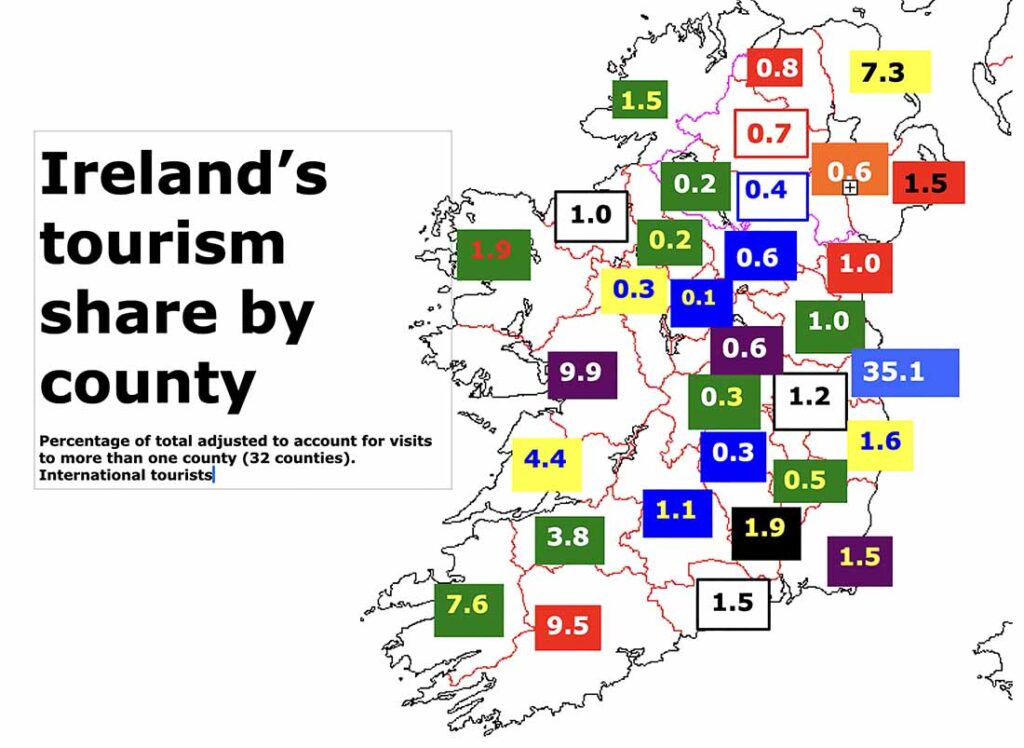
Ireland’s county Roscommon combines historic sites with tranquil landscapes, with Roscommon Castle’s imposing ruins offering a glimpse into medieval Ireland. Lough Key Forest Park provides boating and treetop canopy walks, while the Arigna Mining Experience explores the county’s industrial past. Other attractions include the sacred site of Rathcroghan, linked to ancient mythology. Roscommon is Ireland’s 11th largest county by size (2,463 square km) and eighth smallest by population (70,259). Population peaked at 253,591 in 1841 and reached its lowest point, 53,519 in 1971. In terms of hospitality, Roscommon is Ireland’s 31st most visited and Ireland’s second least visited tourist county with around 25,000 international visitors per year.
Introduction – Adventure – Anthem – Archaeology – Attractions – Awards – Birdwatching – Camping – Castles – Churches – Contact list – Cycling – Dining – Equestrian – Festivals – Fishing – Folklore – Gardens – Golf – Graveyards – Happening – Haunted – Highest – Hiking – History – Holy Wells – Hotels – Hotels top 8 – Hunting & shooting – Instagrammable – Itineraries – Largest town – Luxury – MICE – Movies – Music – Name – New – Novelists – Off the beaten track – Poets – Pubs – Quotes – Random Facts – Restaurant Awards – Sacred Places – Saints – Songs – Spas – Sports – Sunsets – Sustainable – Things to do – Towns – Video – Villages – Walking – Wanderlist – Weddings – Wild swimming – Writers – 1837 – 1846– 1852 – 1909 – 1955 – 1980 –