- Saint Patrick’s Well, Cartron, Granard: Pattern day: March 17 (Saint Patrick’s Day), historically observed. Located in Cartron near Granard, this well is dedicated to Saint Patrick, who reportedly blessed it. Known for curing ailments like sore eyes, sore throats, toothaches, headaches, and cattle diseases (e.g., murrain, milk fever), pilgrims performed rounds and left clooties, as noted in a 1938 dúchas.ie account. Water was applied to affected parts for cures. Now on private land, it’s less visited but retains local significance. Cartron, Granard, Co. Limerick.
- Saint Brigid’s Well, Ardagh: Pattern day: February 1 (Saint Brigid’s Day), though patterns are rare today. In Ardagh, this well is dedicated to Saint Brigid, Ireland’s patroness. Used for healing, particularly women’s ailments, pilgrims performed rounds and left clooties or Brigid’s crosses on nearby bushes. Its connection to Ardagh’s historic village, once a monastic center, adds depth. Maintained but less prominent, it reflects Longford’s devotion to Brigid. Ardagh, Co. Longford.
- Tobar na mBan Naomh (Well of the Holy Women), Unknown Specific Location: Pattern day: Unknown, possibly August 15 (Feast of the Assumption). Noted in www.askaboutireland.ie, this well’s name suggests dedication to holy women, possibly linked to the Virgin Mary or female saints. Used for general healing, pilgrims performed rounds and left offerings. Its exact location is unclear, reflecting Longford’s sparse documentation, but it underscores the county’s reverence for sacred feminine figures. Now likely neglected. Unspecified, Co. Longford.
- Tobar Righ an Domhnaigh (Well of the King of Sunday), Unknown Specific Location: Pattern day: Unknown, possibly linked to Christ or Sunday devotions. Named for the “King of Sunday” (Christ), this well, mentioned in www.askaboutireland.ie, was a pilgrimage site for spiritual blessings. Pilgrims performed Stations of the Cross and left clooties or coins. Its obscure location and lack of specific cures suggest it’s now forgotten, but it highlights Longford’s unique well-naming traditions. Unspecified, Co. Longford.
- Tobergowna (Well of Gowna), Near Gowna: Pattern day: Unknown, possibly Lughnasa (August 1). Near the Longford-Cavan border, this well’s name may derive from its proximity to Lough Gowna. Used for general healing, pilgrims performed rounds, as noted in www.askaboutireland.ie. Its rural setting and lack of a named saint suggest pre-Christian origins. Now likely overgrown, it remains part of local folklore. Near Gowna, Co. Longford.
- Saint Foran’s Well, Ballymore, Granard: Pattern day: Unknown, possibly tied to Saint Foran’s feast day (date uncertain). In Laurence Geraghty’s field in Ballymore, this well is dedicated to Saint Foran, a local saint. Known for curing worms in children, it features a stone with Saint Foran’s thumbprint, per dúchas.ie. Pilgrims performed rounds under a lone bush, leaving clooties. Its obscure saint and specific cure make it unique, though it’s now rarely visited. Ballymore, Granard, Co. Longford.
- Holy Well, Granardkille, Granard: Pattern day: March 17 (Saint Patrick’s Day), with historical gatherings. In a field once owned by Thomas Doherty, now George Burns’, near Granardkille, this well was blessed by Saint Patrick to promote Christianity against Druidic spells, per dúchas.ie. Used for healing, pilgrims performed rounds, with three trees and a cupan noted in 1837. Its rural setting and Saint Patrick lore keep it significant, though patterns are minimal. Granardkille, Granard, Co. Longford.
- Holy Well, Bawn, Drumlish: Pattern day: August 1 (Lughnasa), for wart cures. In Tom Quinn’s field in Bawn, 2 miles from Drumlish, this unique hillside well consists of a 12-inch stone with a 1-inch central hole, covered by an oval stone, per dúchas.ie. Known for curing warts, pilgrims threw pins into the well and tied rags to a low bush. Its distinct structure and specific cure make it notable, though it’s now obscure. Bawn, Drumlish, Co. Longford.
- Saint Martin’s Well, Fermoyle, Lanesborough: Pattern day: November 11 (Saint Martin’s Day), historically observed. In Fermoyle, a few miles from Lanesborough, this well is dedicated to Saint Martin. Known for curing various diseases, pilgrims knelt, prayed, and bathed in the water, per dúchas.ie. A legend tells of Saint Martin appearing to a man after trees around the well were cut, emphasizing its sanctity. Now neglected, it retains local lore. Fermoyle, near Lanesborough, Co. Longford.
- Tobar na Súl, Near Edgeworthstown: Pattern day: Unknown, possibly Lughnasa (August 1). Known as the “Eye Well,” this well near Edgeworthstown was famed for curing eye ailments, a common attribute in Irish wells. Pilgrims bathed their eyes with the water and tied clooties to bushes, per general traditions in Patrick Logan’s The Holy Wells of Ireland. Its rural setting is now obscure, with no modern use recorded. Near Edgeworthstown, Co. Longford.
- Tobar na nGealt, Near Longford Town: Pattern day: Unknown, possibly summer festivals. The “Well of the Insane” near Longford Town was believed to cure mental illnesses, reflecting pre-Christian Otherworldly beliefs. Pilgrims performed rounds and left clooties, as noted in Logan’s The Holy Wells of Ireland. Its location near the county’s urban center makes it obscure, with no active patterns today. Near Longford Town, Co. Longford.
- Holy Well, Cartern, Near Ballinalee: Pattern day: August 15 (Feast of the Assumption), with hundreds visiting annually. In James McNerney’s field in Cartern, this well, possibly dedicated to the Virgin Mary, is visited for curing diseases, per dúchas.ie. Pilgrims perform rounds on August 15, reflecting Lughnasa traditions. Its rural setting and active historical pilgrimage make it significant, though it’s likely neglected now. Cartern, near Ballinalee, Co. Longford.
Practical Notes:
- Access and Condition: Most Longford wells are on private land (e.g., Saint Foran’s, Bawn) or obscure (e.g., Tobar na mBan Naomh); seek permission where needed (check www.longford.ie or local heritage groups). Saint Brigid’s and Saint Patrick’s (Cartron) are better documented, while others, like Tobar na Súl, are hard to locate due to overgrowth or urban sprawl.
- Visiting Tips: Use a map or GPS (www.ihwcbc.omeka.net) (www.ihwcbc.omeka.net), as signage is minimal. Wear waterproof boots for boggy sites, and respect offerings like clooties, pins, or stones. For Granardkille or Cartron, contact local landowners or the Granard Historical Society for access guidance.
- Pattern Days: Where unknown, visits likely peaked in summer (May-August), tied to saints’ feast days or Lughnasa. Patterns declined post-19th century due to Penal Laws, Famine, and church disapproval of “rowdy” festivities, with only informal devotions remaining for most wells.
- Cultural Context: Longford’s wells were Mass sites during Penal Times, with sunwise rounds (deiseal), Rosary prayers, and clooties to transfer ailments. Specialized cures (e.g., eyes, mental illness, warts) reflect pre-Christian beliefs, often enhanced by sacred trees, stones (e.g., Saint Foran’s thumbprint), or unique features like Bawn’s holed stone.
Holy Wells
Antrim – Armagh – Carlow – Cavan – Clare – Cork – Derry – Donegal – Down – Dublin – Fermanagh – Galway – Kerry – Kildare – Kilkenny – Laois – Leitrim – Limerick – Longford – Louth – Mayo – Meath – Monaghan – Offaly – Roscommon – Sligo – Tipperary – Tyrone – Waterford – Westmeath – Wexford – Wicklow
Sacred Places
Antrim – Armagh – Carlow – Cavan – Clare – Cork – Derry – Donegal – Down – Dublin – Fermanagh – Galway – Kerry – Kildare – Kilkenny – Laois – Leitrim – Limerick – Longford – Louth – Mayo – Meath – Monaghan – Offaly – Roscommon – Sligo – Tipperary – Tyrone – Waterford – Westmeath – Wexford – Wicklow
County Longford:
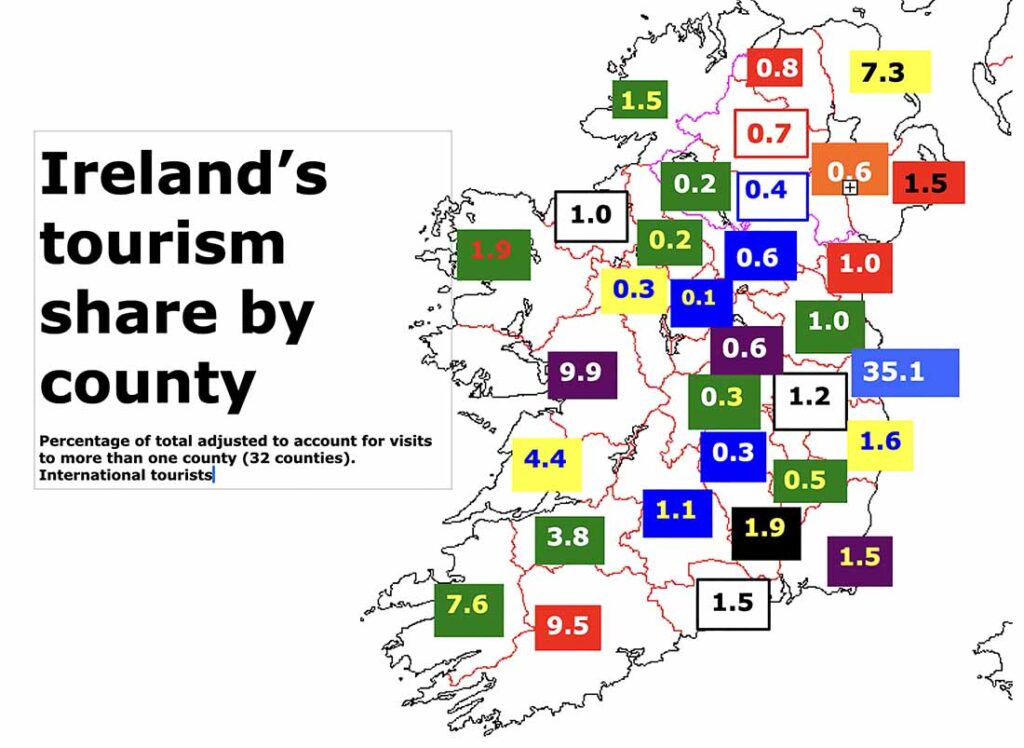
Ireland’s county Longford offers a peaceful blend of history and countryside, with the Corlea Trackway Visitor Centre showcasing an ancient Iron Age road. The county’s St Mel’s Cathedral in Longford town provides architectural beauty, while the River Inny offers opportunities for kayaking and fishing. Other attractions include the rolling farmlands and historic Ardagh village. Longford is Ireland’s fourth smallest county by size and second smallest by population (46,751). Population peaked at 115,491 in 1841 and reached its lowest point, 28,250 in 1971. In terms of hospitality, Longford is Ireland’s 32nd most visited and Ireland’s least visited tourist county with around 22,000 international visitors per year.
Introduction – Adventure – Anthem – Archaeology – Attractions – Awards – Birdwatching – Camping – Castles – Churches – Contact list – Cycling – Dining – Equestrian – Festivals – Fishing – Folklore – Gardens – Golf – Graveyards – Happening – Haunted – Highest – Hiking – History – Holy Wells – Hotels – Hotels top 8 – Hunting & shooting – Instagrammable – Itineraries – Largest town – Luxury – MICE – Movies – Music – Name – New – Novelists – Off the beaten track – Poets – Pubs – Quotes – Random Facts – Restaurant Awards – Sacred Places – Saints – Songs – Spas – Sports – Sunsets – Sustainable – Things to do – Towns – Video – Villages – Walking – Wanderlist – Weddings – Wild swimming – Writers – 1837 – 1846 – 1852 – 1909 – 1955 – 1980 –